Why strength training helps with weight loss
Most people think of weight loss as cardio and salads. Strength training is the quiet partner that makes the whole plan work better.
Harvard Health explains that muscle burns more calories than fat, and that unlike fat, muscle burns calories even at rest. Strength training can also lead to an extra calorie burn after a hard workout.
What strength work does for you
- Builds and protects muscle while you lose weight.
- Supports your metabolism over the long term.
- Makes daily tasks, like carrying shopping and climbing stairs, easier.
- Supports bones and joints.
- Gives you a way to measure progress that is not on the scale, such as lifting more or feeling stronger.
When you lose weight through eating less alone, you can lose muscle as well as fat. Strength training helps you keep more of your muscle, so what you lose is more likely to be fat.
It will not do all the work. Food, sleep and everyday movement still matter.
See how strength work fits a natural weight loss planHow much strength training do you need?
The guidelines are simple, and you can meet them with short sessions.
- NHS: strengthening activities that work all the major muscle groups (legs, hips, back, abdomen, chest, shoulders and arms) on at least 2 days a week.
- NIDDK: at least 2 days a week of muscle-strengthening activities, with at least 1 day of rest between workouts for the same muscle groups.
- Alongside cardio: the NHS suggests at least 150 minutes of moderate-intensity activity a week, or 75 minutes of vigorous activity.
Two sessions of 20 to 30 minutes is a realistic beginner target. You can build up as your fitness improves.
Spread your exercise across the week. The NHS suggests spreading activity over 4 to 5 days a week, or every day.
Want a step-by-step start?
Our Beginner Fitness Guide walks you through a gentle first month of strength, cardio and rest.
A simple beginner routine at home
You do not need a gym. This routine uses body weight and a sturdy chair. Do it twice a week.
Warm up (2 to 3 minutes)
March on the spot, roll your shoulders and circle your hips gently.
The six moves
- Sit-to-stand: stand up from a chair using your legs, not your arms. 8 to 10 slow repetitions.
- Wall push-up: stand an arm's length from a wall, lower your chest slowly and press back. 8 to 10 repetitions.
- Glute bridge: lie on your back with knees bent, lift your hips, then lower. 8 to 10 repetitions.
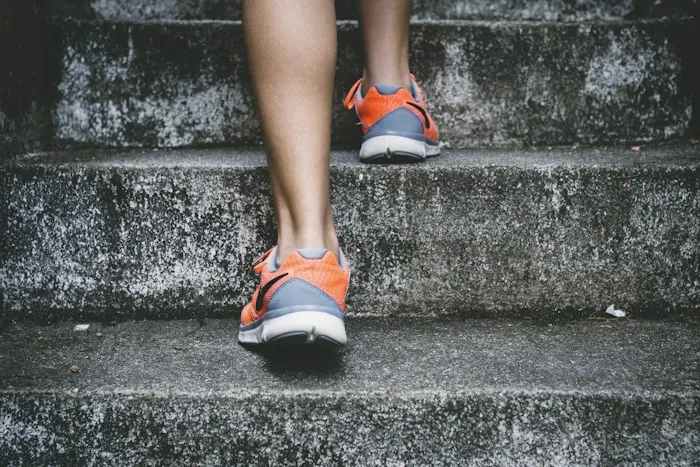
- Step-up: step up and down on a low, stable step. 8 on each leg.
- Bent-over row: with light weights or water bottles, bend at the hips and pull your elbows back. 8 to 10 repetitions.
- Plank on knees or wall: hold a steady line from head to knees or hands to feet for 15 to 20 seconds.
How to do the routine
Do one set of each move. As it gets easier, add a second set. Rest for about a minute between moves.
Move slowly and breathe out on the effort. Stop if you feel pain that is sharp or worsening.
How to progress safely
Progress means making the exercise gradually harder as your body adapts. There are several ways to do this, and you only need one at a time.
- More repetitions. Add 1 or 2 per set each week.
- More sets. Move from one to two, then three.
- More load. Use a heavier weight, a resistance band or a backpack with books.
- Slower tempo. Take three seconds to lower in each repetition.
- Harder versions. Move from wall push-ups to incline push-ups, then floor push-ups.
Keep notes of what you did. A simple log shows how far you have come, even when the scale does not move.
If you feel very sore or tired, take an extra rest day. Sleep and food are part of recovery.
Rest and recovery
The NIDDK suggests at least 1 day of rest between workouts for the same muscle groups. Muscles get stronger while you rest.
See our guide on how many hours of sleep you need to support recovery.
Put it into a weekly plan
Here is one way to combine strength, cardio and rest across a week.
- Monday: strength session (20 to 30 minutes).
- Tuesday: brisk walk (30 minutes).
- Wednesday: rest or gentle stretching.
- Thursday: strength session.
- Friday: brisk walk or another activity you enjoy.
- Saturday: a longer active outing, such as a hike, a bike ride or a swim.
- Sunday: rest and a plan for the coming week.
This adds up to the NHS target of 150 minutes of moderate activity, plus strength on 2 days. Adjust the days to fit your life.
If you are new to exercise, start with one strength session and one or two walks, then build up. Our guide to walking for fitness can help.
Eat to support your training
You do not need special products. Regular balanced meals give your muscles what they need.
The NIDDK lists seafood, lean meats, beans, nuts and low-fat dairy among nutrient-rich foods, and Harvard Health notes protein foods can support metabolism.
- Include a protein at each meal.
- Eat vegetables and whole grains for energy and fiber.
- Do not cut food too low. Very low intake can leave you tired and make training harder.
- Drink water through the day.
Read more in our guides on the best foods for fat loss and the protein calculator.
Strength training myths
Myth 1: It will make you bulky
Building large muscles takes years of heavy training and specific eating. Beginners usually notice firmer, stronger muscles, not bulk.
Myth 2: You can burn fat from one area
Exercising one area does not remove fat only from that area. Fat loss happens across the body, based on your overall plan.
Myth 3: Cardio is better for weight loss
Both help. Cardio uses energy during the session, and strength training builds the muscle that supports your metabolism. Together they work best.
Myth 4: You need heavy weights
Body weight, bands and light weights are enough to start. What matters is challenging your muscles gradually.
Common strength training mistakes
- Doing too much too soon. Start small and build up. Soreness that lasts many days is a sign you overdid it.
- Skipping the warm-up. A few minutes of gentle movement prepares your muscles and joints.
- Rushing. Slow, controlled movements build more strength and lower injury risk.
- Holding your breath. Breathe out on the effort and in on the easy part.
- Copying advanced routines. Start with simple moves, and add difficulty only when they feel easy.
- Ignoring rest. The NIDDK suggests at least 1 day of rest between workouts for the same muscle groups.
- Only training the mirror muscles. Include your back, hips and legs, not only your chest and arms.
If you are unsure about your form, ask a qualified trainer to check your technique once or twice. A few sessions can save you from bad habits.
Stay motivated without relying on the scale
Strength training gives you many ways to see progress, and most of them have nothing to do with weight.
- You can lift a little more than last month.
- You can do more repetitions with the same weight.
- Stairs feel easier.
- Carrying shopping feels lighter.
- Your posture feels better.
- You feel more confident.
Write these wins down. On days when the scale does not move, they show that your plan is working.
Our article on why the scale is not the whole story has more ways to measure progress.
Make it social or fun
Train with a friend, follow a video you enjoy or put on music you like. If you are having fun, you are far more likely to keep going.
Safety and when to check with a professional
Strength training is safe for most people when done with good form and gradual progress.
Talk to your doctor before starting if you have a heart condition, high blood pressure, joint problems, an injury, or if you are pregnant or have not exercised for a long time.
A qualified trainer can check your form in person and tailor a plan to your body.
- Warm up before each session.
- Use slow, controlled movements.
- Breathe out on the effort and do not hold your breath.
- Stop if you feel sharp pain, dizziness or chest discomfort.
This article is general education, not personal medical advice. Its reviewer, Meena Narayanan, holds a personal training credential, which is not a medical or dietetics credential. Talk to your doctor before you change your eating or exercise, especially if you have a health condition, take medicines, are pregnant, or have ever had an eating disorder.
Recap: the main points
- Muscle burns more calories than fat, even at rest.
- Do strength work on at least 2 days a week, with rest days between the same muscles.
- Start with bodyweight moves and progress slowly.
- Combine strength, walking and balanced meals.
- Check with your doctor first if you have a health condition.
Strength training for weight loss: frequently asked questions
It supports weight loss by building muscle, which burns more calories than fat, even at rest. It works best alongside balanced eating and regular activity.
The NHS and NIDDK both suggest strength activities on at least 2 days a week, with at least 1 day of rest between workouts for the same muscle groups.
No. Bodyweight moves, resistance bands and light household weights are enough to start.
Both help. The NHS suggests at least 150 minutes of moderate activity a week plus strength work on at least 2 days.
Not usually. Building large muscles takes years of heavy training. Most beginners become stronger and firmer.
For most people, yes, with good form and gradual progress. Check with your doctor first if you have a health condition or injury.
Want a full fitness plan? Read our Beginner Fitness Guide.
Related reading: Weight Management Guide
Sources and further reading
We checked the figures and guidance in this article against these sources. This article does not give personal medical advice.
- NHS: Physical activity guidelines for adults aged 19 to 64
- NIDDK: Health tips for adults
- Harvard Health: Can you increase your metabolism?
- NHS: 12 tips to help you lose weight
Want more? Head back to the Weight Management hub or read the Start Here guides.