
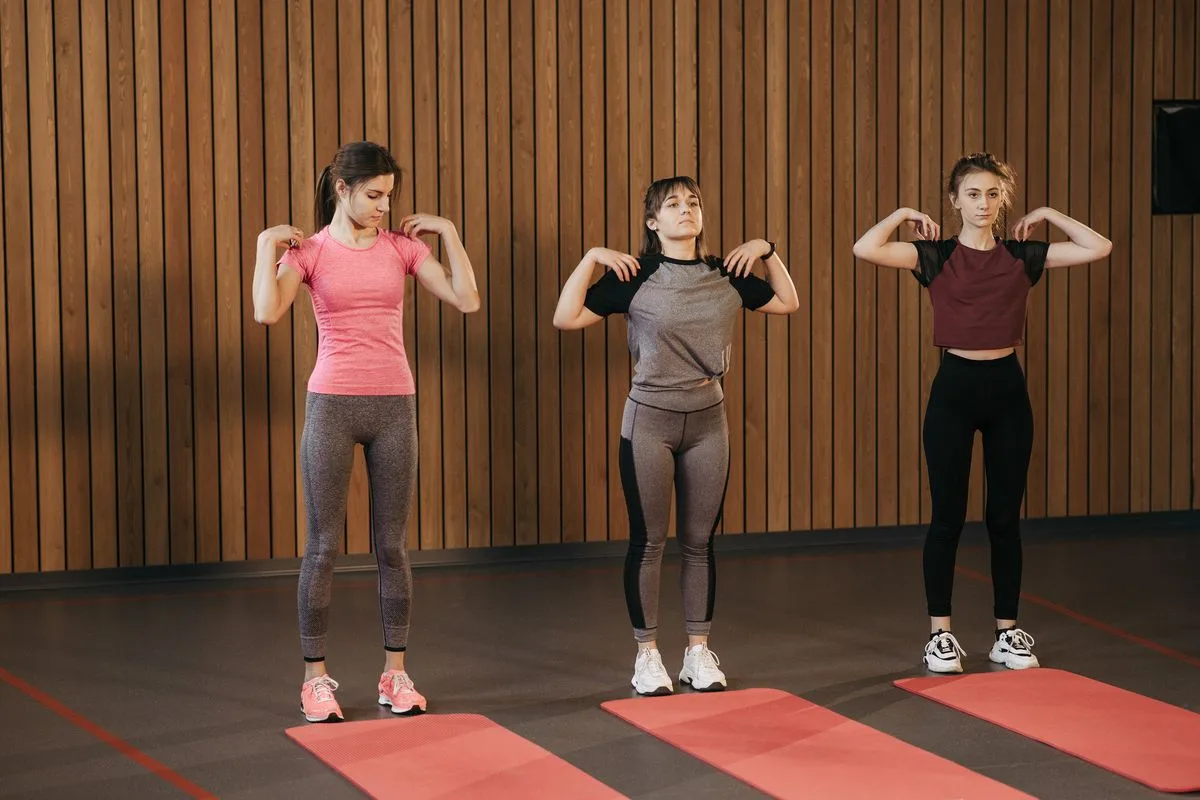
Why warming up and cooling down matter
It is tempting to skip the warm-up when you are short of time. But Harvard Health says starting a workout with cold muscles can lead to injury, and that warming up pumps nutrient-rich, oxygenated blood to your muscles as it speeds up your heart rate and breathing.
A cool-down does the opposite. It helps your body settle. Harvard Health says it helps prevent muscle cramps and dizziness while gradually slowing your breathing and heart rate.
Both steps take only a few minutes. They are cheap insurance for your body, and they make exercise feel better.
Use them in our simple home workoutHow to warm up
Harvard Health says a good warm-up should last five to 10 minutes and work all major muscle groups. It gives examples such as jumping jacks and lunges, walking in place while gently swinging your arms, or even dancing to a few songs.
A simple 7-minute warm-up
- Minutes 1 to 2: march on the spot, swinging your arms.
- Minute 3: shoulder rolls and arm circles.
- Minute 4: hip circles and gentle side bends.
- Minute 5: bodyweight squats or sit-to-stands.
- Minute 6: gentle lunges or step-backs.
- Minute 7: a few easy versions of your workout moves.
Start easy and increase the effort gradually. By the end, you should feel warmer and a little more energized, but not tired.
Want workouts to go with your warm-up?
The Beginner Fitness Guide gives you a gentle month of strength, cardio and rest.
How to cool down
Harvard Health suggests spending five to 10 minutes cooling down through a sequence of slow movements, including stretching exercises that relax and lengthen muscles throughout your body and improve your range of motion.
- Walk slowly for two to three minutes until your breathing settles.
- Do gentle stretches for your legs, hips, back, chest and shoulders.
- Breathe slowly and evenly.
- Drink some water.
Do not stop suddenly and sit down straight after a hard effort. Slowing down gradually helps prevent dizziness.

Stretching tips
Harvard Health says to hold each stretch for 10 to 30 seconds, and that the longer you can hold a stretch, the better for improving your flexibility.
- Stretch when your muscles are warm, such as after a workout.
- Move into a stretch slowly, until you feel a gentle pull.
- Never bounce, and never stretch into sharp pain.
- Breathe out as you deepen the stretch.
- Stretch both sides equally.
Key stretches
- Quadriceps: stand and pull one foot toward your buttock.
- Hamstrings: place a heel forward and hinge at the hips.
- Calves: step one foot back with the heel down.
- Chest: clasp hands behind you and lift your chest.
- Shoulders: pull one arm across your chest.
- Hip flexors: a gentle low lunge.
Warm-up and cool-down by workout type
Before a walk or run
Walk slowly for five minutes, then pick up your pace. Cool down with five minutes of slower walking and calf and thigh stretches. See our guide to walking for fitness.
Before strength training
Do the general warm-up, then one or two light sets of your first exercise. Cool down with the stretches above.
Before HIIT
Take the full 5 to 10 minutes and build up gradually to harder efforts. After hard intervals, take the full cool-down. See our article on HIIT workouts.
Before yoga or stretching sessions
A few minutes of gentle movement, such as cat-cow and easy walking, prepares your body. See our 10-minute morning yoga routine.
How to progress safely
Progress means making exercise a little harder as your body adapts. You only need to change one thing at a time. Harvard Health advises choosing a weight or resistance that is challenging but manageable, and says that if you are grunting or getting stuck in the middle of a lift, you are using too much weight.
- More repetitions. Add one or two per set each week, up to about 12.
- More sets. Move from one set to two, as Harvard Health suggests.
- More load. Use a heavier weight, a resistance band or a backpack with books.
- Slower tempo. Take three seconds to lower in each repetition.
- Harder versions. Move from wall push-ups to incline push-ups, then floor push-ups.
- Less rest. Shorten the breaks between moves a little.
Give each change a week or two. If a week feels too hard, go back to the earlier level. Progress is not a straight line.
If you are older or returning to exercise
You can start at any age. If you are older, have not exercised for a while or have joint problems, choose gentle versions and build up slowly.
- Use a sturdy chair or wall for support.
- Choose low-impact moves, such as walking, wall press-ups and sit-to-stands.
- Add balance work, like the exercises in our guide to balance exercises at home.
- Read strength training after 40 for more tips.
- Check with your doctor before you start, especially if you have a health condition.
Harvard Health says most people can safely take up walking, and it is a good place to begin if you are unsure.
Stay motivated
- Pick a time that suits your energy, and put it in your calendar.
- Start with five minutes on hard days.
- Choose exercises you enjoy.
- Exercise with a friend, in person or online.
- Play music or a podcast.
- Celebrate small wins that are not food.
Habits stick when they are easy and enjoyable. If a routine feels like a chore, change it, do not quit. Our article on how to build a habit that sticks has more ideas.
Track your progress
A simple record shows you how far you have come, even when the scale does not move.
- Write down the date, the exercises and how you felt.
- Note repetitions and sets, or how long you held a plank.
- Rate your energy and mood from 1 to 5.
- Notice everyday wins, such as easier stairs or lighter shopping bags.
- Review every four weeks and choose one small change.
A calendar with ticks works just as well as an app. The point is to see the pattern.
If you only have a few minutes
Some days you will be short of time. You can still protect your body. Shorten the main workout before you shorten the warm-up and cool-down.
- Two-minute warm-up: march on the spot, do 10 bodyweight squats and roll your shoulders.
- Two-minute cool-down: walk slowly and do two or three stretches, holding each for 10 seconds or more.
- Build in your day: walk to the start of your workout, so the walk is your warm-up.
- Use the stairs: a gentle stair climb warms the legs, with a rail for safety.
A short warm-up is better than none. Even a couple of minutes raises your heart rate and loosens your joints.
Other habits after a workout
A cool-down is the first step of recovery. A few more habits help you feel better the next day.
- Drink water.
- Eat a balanced meal or snack with protein and carbohydrates.
- Change out of sweaty clothes.
- Take a warm shower.
- Get a good night's sleep.
See our guides on sleeping better after a workout and rest and recovery.
Who needs extra care
Most people can warm up and stretch safely. But some people need to be careful.
- If you have a joint problem, back pain or a recent injury, ask a doctor or physiotherapist about the right movements.
- If you are pregnant, ask your doctor about safe stretches.
- If you are older or have balance problems, hold a chair or wall for support.
- If you feel dizzy, stop and sit down.
Harvard Health notes that cool-downs help prevent dizziness, so do not skip them.
Common mistakes
- Skipping the warm-up. Cold muscles are more likely to be injured, says Harvard Health.
- Warming up too hard. It should feel easy.
- Stretching cold. Save deep stretches for after your workout.
- Bouncing in stretches. Hold gently.
- Stopping suddenly. Cool down gradually.
- Stretching into pain. A gentle pull is enough.
If you have an injury, a health condition or dizziness, talk to your doctor or a physiotherapist about the right warm-up and stretches for you.
This article is general education, not personal medical advice. Its reviewer, Meena Narayanan, holds a personal training credential, which is not a medical credential. Talk to your doctor before you start or change an exercise routine, especially if you have a health condition, an injury, dizziness, take medicines, are pregnant or have not exercised for a long time. Stop and get medical help for chest pain, severe breathlessness, fainting or sharp pain.
Recap: the main points
- Warm up for five to 10 minutes with movement that works all major muscle groups.
- Cool down for five to 10 minutes with slow movement and stretching.
- Hold stretches for 10 to 30 seconds.
- Cold muscles are more likely to be injured, according to Harvard Health.
- Never stretch into sharp pain.
Warming up and cooling down: frequently asked questions
Harvard Health says a good warm-up should last five to 10 minutes and work all major muscle groups.
Harvard Health suggests five to 10 minutes of slow movement, including stretching.
Harvard Health says to hold each stretch for 10 to 30 seconds. The longer you hold, the better for flexibility.
Yes. Shorten the main workout instead of skipping the warm-up.
Gentle movement before, and stretching after, when your muscles are warm, is a good approach.
Ease off. A gentle pull is fine, but sharp pain is not. Talk to your doctor if pain persists.
Want a full plan? Read our Beginner Fitness Guide.
Related reading: A Beginner's Tutorial to Starting a Running Program
Sources and further reading
We checked the figures and guidance in this article against these sources. This article does not give personal medical advice.
- Harvard Health: Exercise 101, don't skip the warm-up or cool-down
- Harvard Health: Add strength training to your fitness plan
- Harvard Health: Interval training, a shorter, more enjoyable workout?
- Harvard Health: Do you need to see a doctor before starting your exercise program?
Want more? Head back to the Fitness hub or read the Start Here guides.