Why try yoga in the morning?
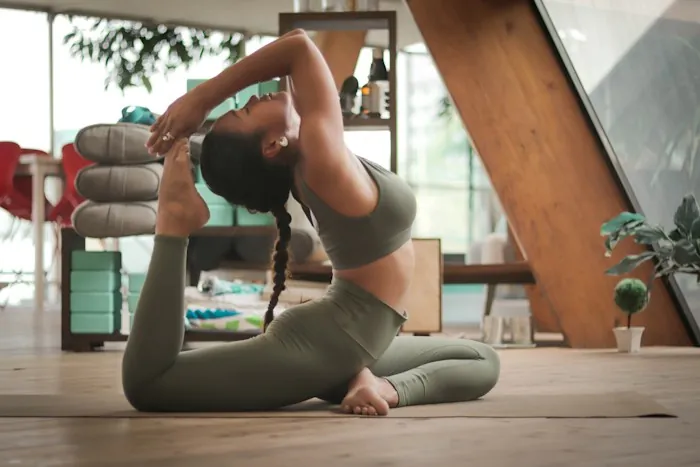
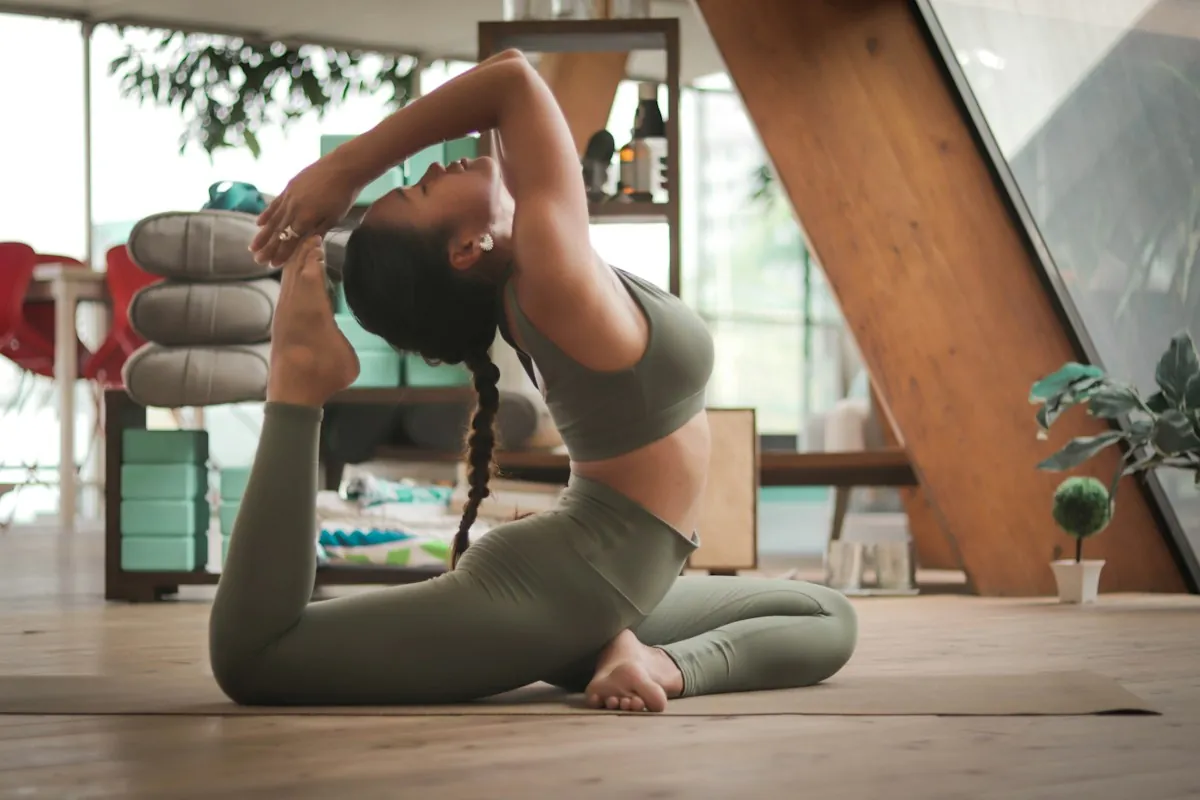
Morning yoga is a gentle way to wake up your body, ease stiffness from sleep and start the day with a calm mind. It takes very little time and needs only a mat, or a soft rug.
The NCCIH says yoga may help improve general wellness by relieving stress and supporting good health habits, and that studies show it can improve sleep across different populations.
It is also a good introduction to exercise if you are new to it. You do not need to be flexible to start. You only need to move gently.
Try another calm morning habit: mindful walkingSafety first
The NCCIH says yoga is generally considered safe for healthy people when done properly. Sprains and strains to the knees or lower legs sometimes happen, and serious injuries are rare.
- Learn from a qualified instructor when you can, in person or through a trusted class.
- Avoid extreme poses at first, such as headstands, lotus position and forceful breathing.
- Be careful with heated rooms.
- Older adults, especially those 65 and above, should take extra care, since the NCCIH notes yoga-related injuries treated in emergency departments are higher in this group. A gentle or seniors class can help.
- If you are pregnant, avoid hot yoga and long periods lying on your back, and ask your doctor.
- If you have knee or hip injuries, spine disease or glaucoma, some poses may need changes.
This article is general education, not personal medical advice. Its reviewer, Meena Narayanan, holds a personal training credential, which is not a medical credential. Talk to your doctor before you start or change an exercise routine, especially if you have a health condition, an injury, dizziness, take medicines, are pregnant or have not exercised for a long time. Stop and get medical help for chest pain, severe breathlessness, fainting or sharp pain.
The 10-minute routine
Do each step slowly. Breathe in through your nose and out through your nose or mouth. Stop if anything hurts.
Minute 1: Breathing (seated or standing)
Sit comfortably or stand tall. Rest your hands on your belly. Take five slow breaths, letting your belly rise as you inhale and fall as you exhale.
Minutes 2 to 3: Cat-cow
Come onto hands and knees. Inhale, drop your belly and lift your chest. Exhale, round your back and tuck your chin. Repeat slowly for about a minute.
Minutes 4 to 5: Child's pose and gentle twist
Sit back on your heels and fold forward, resting your forehead down, for five slow breaths. Then, from hands and knees, slide one arm under your body for a gentle twist on each side.
Minutes 6 to 7: Downward-facing dog (or a chair version)
Lift your hips into an upside-down V, bending your knees as much as you like. Pedal your feet gently. If your wrists or shoulders feel sore, try a chair or counter version.
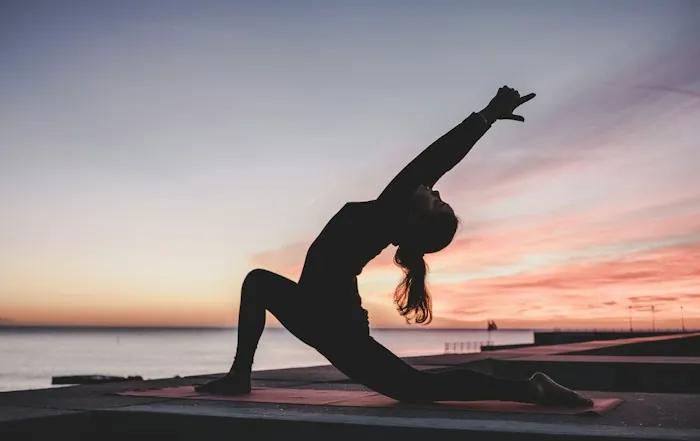
Minutes 8 to 9: Low lunge and forward fold
Step one foot forward into a gentle lunge, then switch. Then stand and fold forward with soft knees, letting your head and arms hang.
Minute 10: Mountain pose and closing breaths
Stand tall with feet hip-width apart. Take three slow breaths, feeling your feet on the floor. Notice how your body feels.
Modifications for different bodies
- Stiff or tight: use a folded blanket, a yoga block or a cushion under your hips or hands.
- Sensitive wrists: make fists or come onto your forearms.
- Sensitive knees: pad under your knees, or use chair versions of poses.
- Limited balance: stand near a wall or chair.
- Low energy: do just the breathing and cat-cow, and stop there.
Yoga should feel like a stretch, not pain. If you feel pain in a joint, stop and adjust.
Want a bigger plan for your body?
The Beginner Fitness Guide shows how to mix strength, cardio and gentle mobility.
What can yoga help with?
The NCCIH summarizes research on yoga. It says yoga may help with general wellness, stress, sleep and pain. It reports modest benefits for low-back pain, and says yoga can be a helpful addition to treatment for depression.
It also says a 2022 review found reductions in body weight, BMI, body fat and waist size in some studies. These are general findings, and results vary.
Yoga is not a treatment for any condition on its own. If you have a health problem, talk to your doctor about how yoga can fit into your care.
How to progress safely
Progress means making exercise a little harder as your body adapts. You only need to change one thing at a time. Harvard Health advises choosing a weight or resistance that is challenging but manageable, and says that if you are grunting or getting stuck in the middle of a lift, you are using too much weight.
- More repetitions. Add one or two per set each week, up to about 12.
- More sets. Move from one set to two, as Harvard Health suggests.
- More load. Use a heavier weight, a resistance band or a backpack with books.
- Slower tempo. Take three seconds to lower in each repetition.
- Harder versions. Move from wall push-ups to incline push-ups, then floor push-ups.
- Less rest. Shorten the breaks between moves a little.
Give each change a week or two. If a week feels too hard, go back to the earlier level. Progress is not a straight line.
If you are older or returning to exercise
You can start at any age. If you are older, have not exercised for a while or have joint problems, choose gentle versions and build up slowly.
- Use a sturdy chair or wall for support.
- Choose low-impact moves, such as walking, wall press-ups and sit-to-stands.
- Add balance work, like the exercises in our guide to balance exercises at home.
- Read strength training after 40 for more tips.
- Check with your doctor before you start, especially if you have a health condition.
Harvard Health says most people can safely take up walking, and it is a good place to begin if you are unsure.
Common myths
Myth 1: You have to feel very sore to get results
Mild tiredness is normal, but severe or lasting soreness is a sign to ease off. Progress comes from steady, repeated effort.
Myth 2: You can spot-reduce fat
Working one area does not remove fat only from that area. Fat loss happens across your body.
Myth 3: More is always better
Muscles adapt during rest. The NIDDK suggests at least 1 day of rest between workouts for the same muscle groups.
Myth 4: Short workouts do not count
NHS Better Health says even 10 minutes a day can make a difference, and the NHS says you can break weekly activity into shorter sessions.
Track your progress
A simple record shows you how far you have come, even when the scale does not move.
- Write down the date, the exercises and how you felt.
- Note repetitions and sets, or how long you held a plank.
- Rate your energy and mood from 1 to 5.
- Notice everyday wins, such as easier stairs or lighter shopping bags.
- Review every four weeks and choose one small change.
A calendar with ticks works just as well as an app. The point is to see the pattern.
Stay motivated
- Pick a time that suits your energy, and put it in your calendar.
- Start with five minutes on hard days.
- Choose exercises you enjoy.
- Exercise with a friend, in person or online.
- Play music or a podcast.
- Celebrate small wins that are not food.
Habits stick when they are easy and enjoyable. If a routine feels like a chore, change it, do not quit. Our article on how to build a habit that sticks has more ideas.
Recover well between workouts
Recovery is where you get stronger. Give your body what it needs between sessions.
- Sleep at least seven hours, and keep a regular schedule.
- Eat regular meals with protein, vegetables and whole grains.
- Drink water through the day.
- Take at least 1 day of rest between workouts for the same muscle groups, as the NIDDK suggests.
- Move gently on rest days, with a walk or light stretching.
Read our guide to rest and recovery to learn how to read your body's signals.
Make it a habit
- Roll out your mat the night before.
- Do it right after you wake, before you check your phone.
- Start with just three minutes on busy days.
- Do it on a rest day from strength training too.
- Track it on a calendar.
Our article on how to build a habit that sticks and our morning routine guide show how to fit yoga into a morning.
Recap: the main points
- A 10-minute routine of breathing, cat-cow, child's pose, downward dog, lunges and a fold is a great start.
- Move slowly, and breathe steadily.
- The NCCIH says yoga is generally safe for healthy people when done properly, and beginners should avoid extreme poses.
- Take extra care if you are older, pregnant or have a health condition.
- Make it a habit by tying it to your morning.
Morning yoga: frequently asked questions
It is a great start. Short, regular sessions build a habit, and you can lengthen them later.
No. You start where you are, and flexibility improves gradually. Use props if you need them.
The NCCIH says yoga is generally safe for healthy people when performed properly, under the guidance of a qualified instructor. Injuries are usually sprains and strains.
Often with modifications, but ask your doctor. The NCCIH says pregnant women should avoid hot yoga and prolonged stillness poses.
The NCCIH says studies show yoga may help manage stress and improve sleep, though results vary.
Talk to your doctor before you start if you have a health condition, an injury, or knee, hip or spine problems.
Want a full plan? Read our Beginner Fitness Guide.
Sources and further reading
We checked the figures and guidance in this article against these sources. This article does not give personal medical advice.
Want more? Head back to the Fitness hub or read the Start Here guides.