What makes a fat healthy?
Fat is not the enemy. Your body needs it for energy, for absorbing some vitamins and for building cells. The question is which types you eat, and how much.
The NHS explains that eating too much saturated fat can raise LDL, or bad, cholesterol in your blood, while replacing saturated fats with some unsaturated fats can help to lower your cholesterol level.
The main types
- Unsaturated fats. Found in plant oils, nuts, seeds, avocados and oily fish. These are the ones to choose more often.
- Saturated fats. Found in fatty meat, butter, cheese, cream, coconut and palm oils, and foods like biscuits, cakes and pastries. Limit these.
- Trans fats. Found in small amounts in meat and dairy and in partially hydrogenated oils. The NHS says the recommended maximum is about 5 g a day.
Healthy fat 1: Oily fish
Oily fish is the best-known source of omega-3 fats. The NHS lists kippers, herring, trout, sardines, salmon and mackerel, and says omega-3 is essential because your body cannot make it.
The NHS suggests eating at least 2 portions of fish a week, with 1 portion being oily fish.
- Grill or bake salmon with vegetables.
- Put canned sardines or mackerel on wholegrain toast.
- Add trout to salads.
- Choose fresh, frozen or canned. Canned fish in water or oil can be a budget option.
If you do not eat fish, the NHS lists flaxseed (linseed) oil, rapeseed oil, walnuts and omega-3-enriched eggs as vegetarian sources of omega-3.
Healthy fat 2: Olive oil and rapeseed oil
The NHS lists olive oil, rapeseed oil and spreads made from these oils as sources of monounsaturated fat. It also lists rapeseed, corn and sunflower oils as sources of omega-6 fats.
- Use a small amount of olive oil to roast vegetables.
- Dress salads with olive oil and lemon.
- Cook with rapeseed oil in place of butter.
- Measure oil with a spoon, since it adds calories quickly.
Swapping butter or lard for these oils is a practical way to follow the NHS advice to swap saturated fats for unsaturated fats.
Want to build meals around healthy fats?
The Healthy Eating Guide shows how to balance vegetables, protein, grains and healthy fats.
Healthy fat 3: Nuts
The NHS lists almonds, brazils and peanuts as sources of monounsaturated fat, and walnuts, almonds and cashews as sources of omega-6 fats. The NIDDK also lists nuts among nutrient-rich foods.
- Keep a small handful of unsalted nuts as a snack.
- Add chopped nuts to oatmeal, salads and stir-fries.
- Choose unsalted and unsweetened varieties.
- Watch portion sizes, because nuts are high in calories.
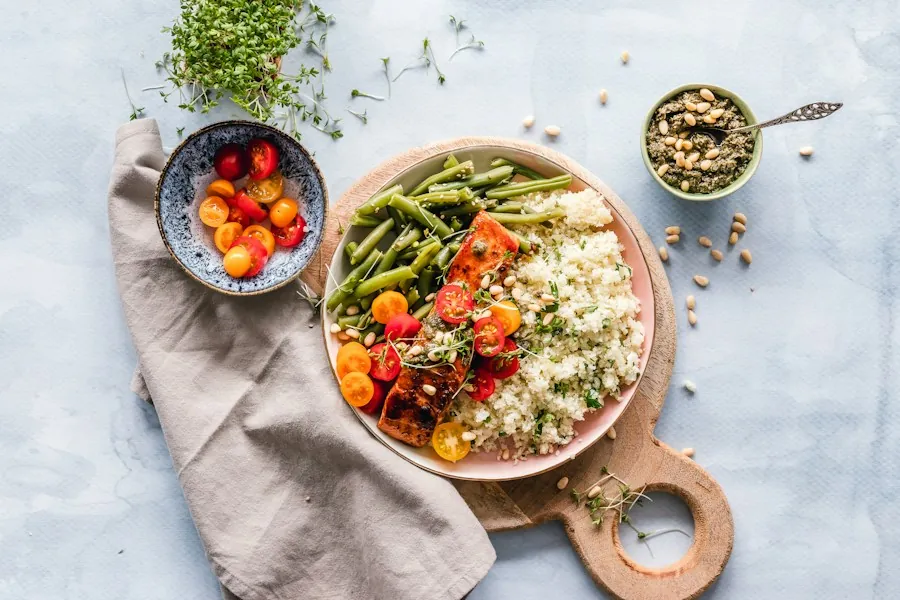
Healthy fat 4: Seeds
The NHS lists flaxseed (linseed) oil as a source of omega-3. Seeds such as flax, chia, pumpkin and sunflower are easy to add to meals, and they also provide fiber.
- Sprinkle seeds on yogurt, oatmeal and salads.
- Add ground flaxseed to smoothies or porridge.
- Mix seeds into bread dough and baked goods.
Ground flaxseed is easier to digest than whole seeds.
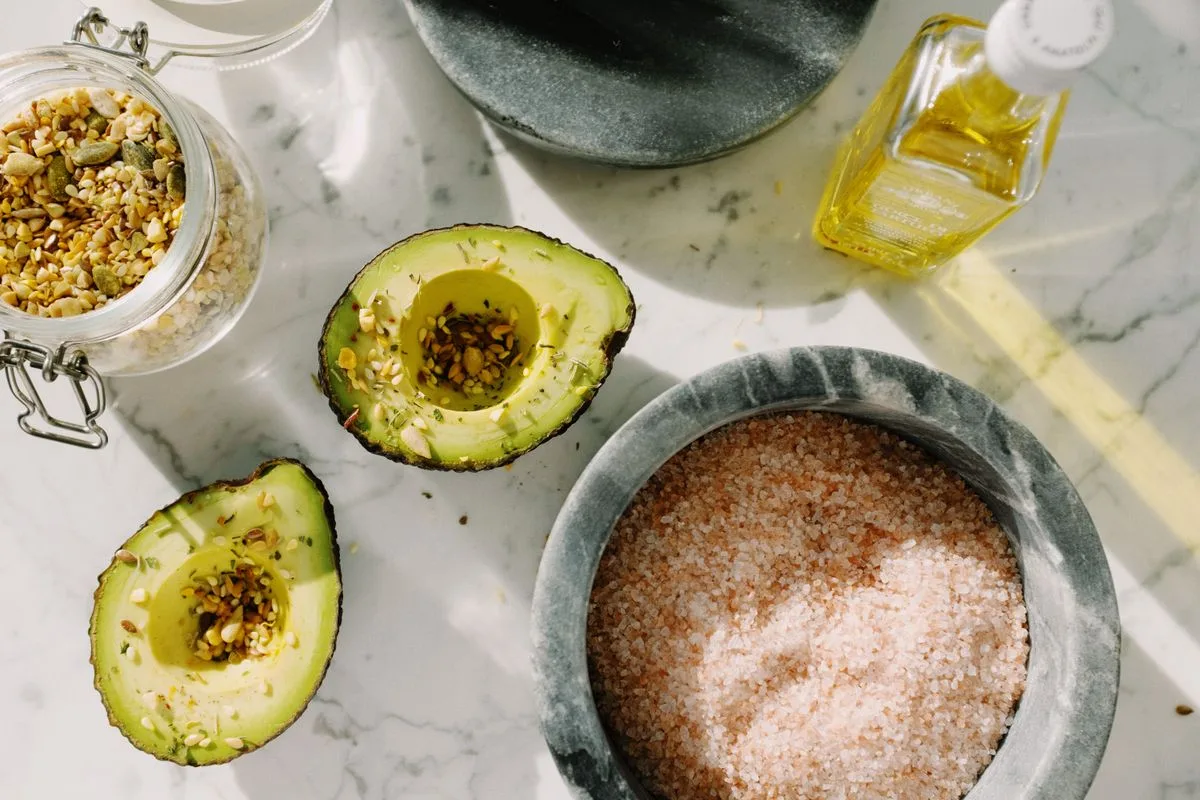
Healthy fat 5: Avocado
The NHS lists avocados as a source of monounsaturated fat. They are also a source of fiber and are used in many cuisines.
- Mash avocado on wholegrain toast with an egg.
- Add slices to salads and sandwiches.
- Blend into dips, or use in place of mayonnaise in sandwiches.
A little goes a long way, since avocados are energy-dense.
How much fat is right?
Official advice focuses on the type more than a fixed amount. The NHS limits saturated fat to 30 g a day for men and 20 g a day for women, and about 5 g of trans fats.
In practice, that means using small amounts of healthy fats, and choosing lean meats and lower-fat dairy where you can. NIDDK also suggests choosing fat-free or low-fat milk and yogurt.
- Use a spoon to measure oil.
- Choose grilling, baking, steaming and roasting more often than frying.
- Trim visible fat from meat and take the skin off poultry.
- Check labels for saturated fat, and choose products with more green than red.
Our guide on how to read a nutrition label shows you how.
Easy swaps
- Butter on toast to a thin layer of avocado.
- Cream-based sauces to tomato-based sauces with olive oil.
- Fatty meats to fish, poultry or beans.
- Biscuits and cakes to fruit and a small handful of nuts.
- Palm and coconut oil to rapeseed or olive oil.
Swap one item at a time. Small changes are easier to keep than a full clear-out.
A simple seven-day plan
Add one small change each day, and keep the earlier ones going. By the end of the week you will have several new habits.
- Day 1: swap butter for olive or rapeseed oil in one meal.
- Day 2: add a small handful of unsalted nuts as a snack.
- Day 3: eat oily fish, such as salmon or sardines.
- Day 4: sprinkle seeds over breakfast.
- Day 5: add avocado to lunch.
- Day 6: check saturated fat on the label of a food you buy often.
- Day 7: review the week and keep the swaps you liked.
You do not need to follow this plan exactly. Use it as a guide and swap foods for ones you enjoy, can afford and can get locally.
Aim for progress, not perfection. If a day goes off plan, start again the next day.
Common mistakes to avoid
- Adding healthy fats on top of everything else. Swap, do not just add.
- Ignoring portions. Fats are energy-dense, so measure oil with a spoon.
- Choosing fried fish or salted, coated nuts. Preparation matters.
- Believing all supplements are equal. Talk to your doctor before taking fish oil.
- Cutting all fat. You need some fat for health.
Focus on the overall pattern. Mostly whole foods, healthier fats, and less saturated fat is a good direction.
Cooking with healthy fats
How you cook matters as much as which fat you choose. Even a healthy oil adds up quickly if you use a lot.
- Roast and bake. Toss vegetables in a spoonful of oil and roast them until golden.
- Grill or steam fish. This keeps added fat low.
- Stir-fry quickly. Use a small amount of oil and plenty of vegetables.
- Use non-stick pans. They need less oil.
- Dress salads lightly. A teaspoon of oil with lemon or vinegar is often enough.
- Skip deep frying. Frying in a lot of oil adds many calories.
For flavor without extra fat, use garlic, herbs, spices, lemon and vinegar. They add taste with almost no calories.
Healthy fats on different diets and budgets
- Vegetarian: use nuts, seeds, avocado, plant oils, and eggs enriched with omega-3, as the NHS lists.
- Vegan: use flaxseed oil, rapeseed oil, walnuts, seeds and avocado. Talk to a dietitian about your overall omega-3 intake.
- On a budget: choose canned oily fish, rapeseed oil, peanuts and seeds, which are often cheaper than fresh fish and specialty products.
- For weight loss: keep portions small and choose fats that keep you full. See our best foods for fat loss.
You do not need every food in this list. Pick two or three that you enjoy and eat them regularly.
Healthy fats and your cholesterol
Cholesterol is a waxy substance in your blood. Some is needed by your body, but high levels of LDL, or bad, cholesterol raise health risks. The NHS says eating too much saturated fat can raise LDL cholesterol.
Food is only one factor. Age, genes, weight, activity and smoking also affect your levels.
- Ask your doctor if you should have your cholesterol checked.
- Follow their advice if they suggest medicines as well as diet changes.
- Keep up regular activity. The NHS suggests 150 minutes of moderate activity a week.
- Swap saturated fats for unsaturated fats, as the NHS advises.
If you are already taking cholesterol medicine, do not stop it because you have changed your diet. Talk to your doctor first.
Who should check first
Healthy fats are good for most people, but individual needs differ. Talk to your doctor or a dietitian if you have high cholesterol, heart disease, gallbladder problems or a nut allergy, or if you take blood thinners and are thinking about fish oil supplements.
Omega-3 supplements are not the same as eating fish, and they are not right for everyone.
This article is general education, not personal dietary or medical advice. Its reviewer, Meena Narayanan, holds a personal training credential, which is not a dietetics or medical credential. Talk to your doctor or a registered dietitian before you change your diet or take supplements, especially if you have a health condition, take medicines, are pregnant or are older.
Recap: the main points
- Choose unsaturated fats more often, and limit saturated fat.
- Top sources: oily fish, olive and rapeseed oil, nuts, seeds and avocado.
- Eat at least 2 portions of fish a week, with 1 oily, as the NHS suggests.
- Fats are energy-dense, so use small amounts.
- Talk to your doctor about cholesterol, allergies and supplements.
Healthy fats: frequently asked questions
Unsaturated fats from oily fish, olive and rapeseed oil, nuts, seeds and avocado are the main healthy choices, according to NHS guidance.
The NHS suggests at least 2 portions of fish a week, with 1 portion being oily fish.
The NHS gives limits of 30 g a day for men and 20 g a day for women.
The NHS says replacing saturated fats with some unsaturated fats can help to lower your cholesterol level.
They are energy-dense, so portions matter. A small handful of nuts or a portion of avocado fits well in a balanced diet.
Most people can get omega-3 from food. Talk to your doctor before taking supplements.
Want the full picture? Read our Healthy Eating Guide.
Sources and further reading
We checked the figures and guidance in this article against these sources. This article does not give personal medical advice.
- NHS: Fat, the facts
- NIDDK: Health tips for adults
- NHS: Eight tips for healthy eating
- NHS: Meat in your diet
Want more? Head back to the Nutrition hub or read the Start Here guides.