
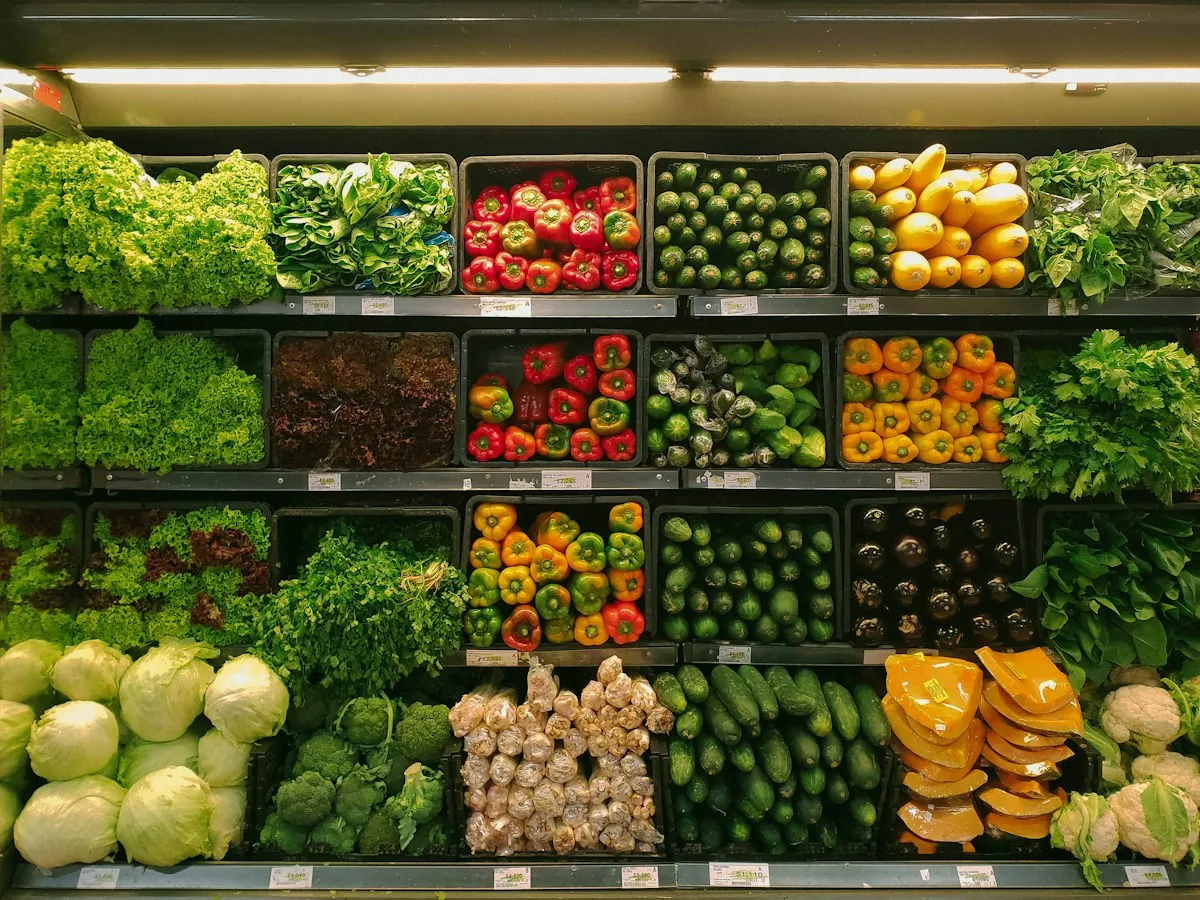
What does healthy eating actually mean?
Healthy eating means eating a variety of mostly whole foods, in amounts that suit your body and your life.
The World Health Organization (WHO) describes a healthy diet as one built on minimally processed foods.
These foods are low in unhealthy fats, free sugars and sodium. Read the WHO fact sheet.
Notice what is missing. There is no single superfood, no banned list and no perfect day.
What matters is your pattern over weeks and months. One pizza night does not undo a good week.
Three ideas to hold on to
- Variety. Different foods give different nutrients, so aim for many colors and types.
- Balance. Fill most of your plate with plants, with a smaller share from protein and healthy fats.
- Moderation. Foods high in sugar, salt and saturated fat can fit. They just do not need to be at every meal.
What healthy eating is not
It is not a crash diet, a cleanse or a set of rules that leave you feeling guilty. Those plans are hard to keep and often backfire.
If food feels stressful, or you have a history of disordered eating, talk to a doctor or registered dietitian before you change how you eat.
This guide gives general advice for healthy adults. Needs change with age, pregnancy, health conditions and medicines. A registered dietitian can build a plan around you.
How to build a balanced plate
A simple way to eat well is to fill your plate in proportions, not to weigh your food.
The Harvard Healthy Eating Plate is a handy model. Fill about half of your plate with vegetables and fruit.
Split the other half between whole grains and healthy protein, roughly a quarter each.
Add a little healthy oil, and drink water, tea or coffee with little or no sugar.
The NHS Eatwell Guide uses similar ideas. It shows starchy foods as just over a third of what we eat, with fruit and vegetables taking a similar share.
A five-step plate check
- Look at your plate before you eat.
- Is about half of it vegetables or fruit?
- Is there a protein food, such as beans, fish, eggs, tofu, chicken or yogurt?
- Is there a whole grain or other starchy food, like brown rice, oats or a potato with the skin on?
- Is there a little healthy fat, such as olive oil, nuts or avocado?
If you can say yes to most of these, the meal is in good shape.
Portions without scales
You do not need to weigh food. Your own hand is a rough guide.
A palm is about one serving of protein. A cupped hand is about one serving of grains or starchy foods. These are rough estimates, not strict rules.
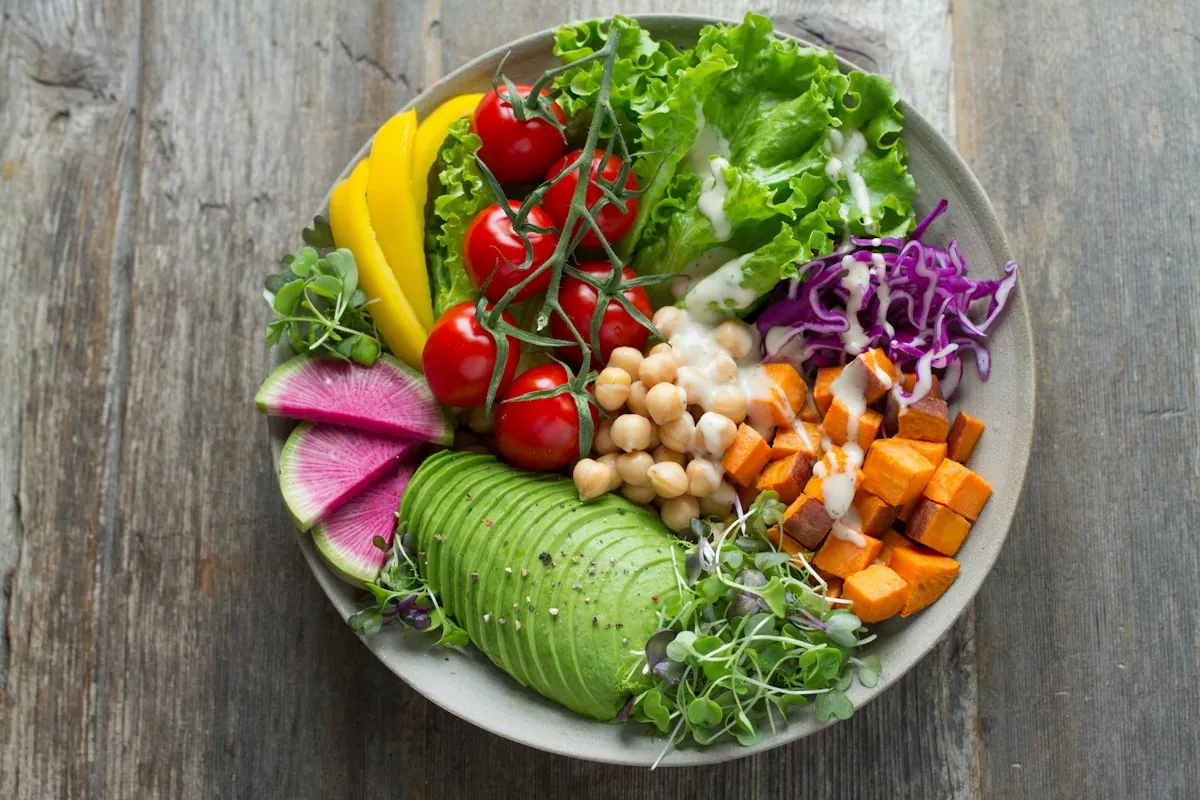
Vegetables and fruit: the 400-gram target
Aim for at least 400 grams of vegetables and fruit a day. That is about five portions.
The WHO advises at least 400 g a day for everyone over 10 years old, not counting starchy roots such as potatoes.
The NHS 5 A DAY advice uses the same idea. One portion is 80 g, for example one medium apple or three heaped tablespoons of cooked vegetables.
Easy ways to reach five portions
- Add a handful of spinach to eggs, soups or pasta sauce.
- Keep a bowl of fruit where you can see it.
- Snack on carrots, cucumber or cherry tomatoes with hummus.
- Aim for two different vegetables at dinner.
- Top your breakfast with berries or a sliced banana.
Fresh, frozen or canned?
All three count. Frozen vegetables are frozen soon after picking, so they often keep most of their nutrients.
Choose canned vegetables and beans with no added salt. Choose canned fruit in juice rather than syrup.
Juice can count as one portion at most. Whole fruit is the better choice because it keeps its fiber.
Eat a range of colors
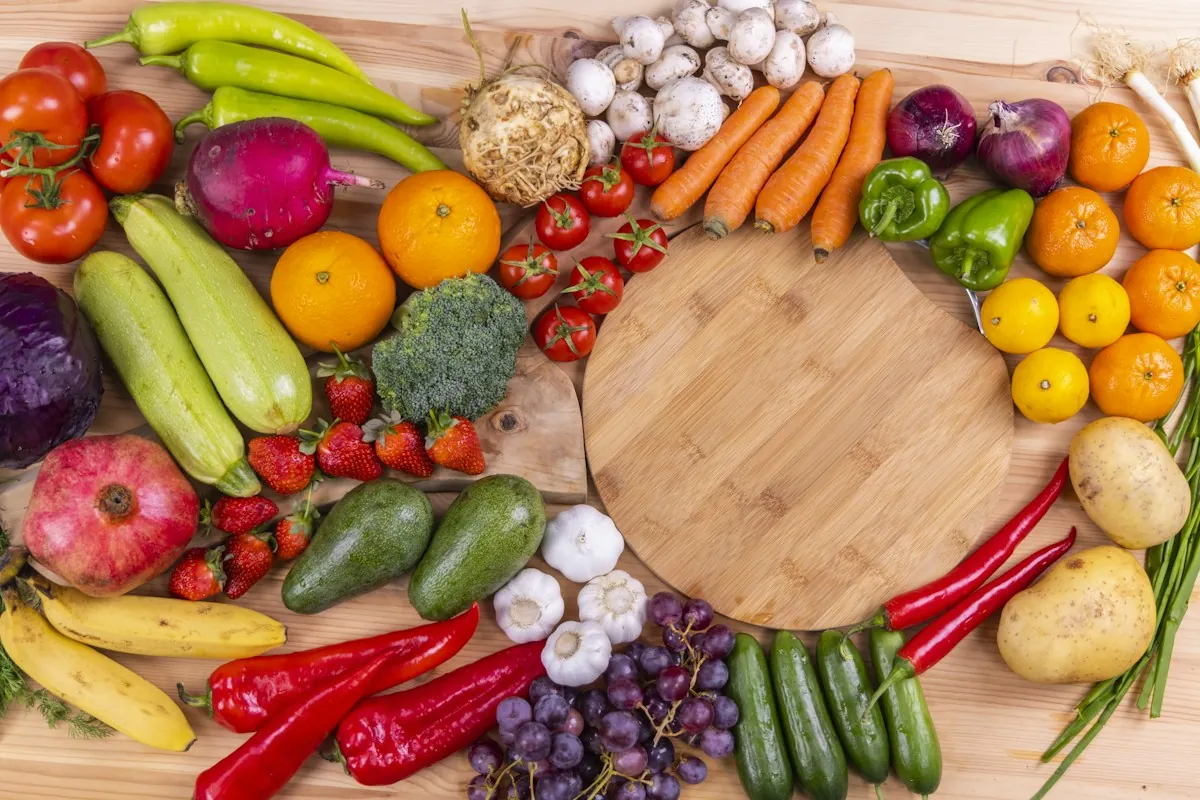
Different colors often mean different nutrients. Red tomatoes, orange carrots, green broccoli and purple cabbage each bring something different.
A mixed plate is a simple way to cover more nutrients without any tracking.
Whole grains and fiber
Choose whole grains most of the time, and aim for at least 25 grams of fiber a day.
The WHO says adults should aim for at least 25 g of naturally occurring fiber a day. In the UK, fiber is spelled fibre.
Many people fall short of that number.
Why whole grains?
Whole grains keep the fiber-rich outer layers of the grain. Refined grains, like white bread and white rice, have lost most of them.
Fiber helps digestion, feeds helpful gut bacteria and helps you feel full.
Diets high in fiber are linked with a lower risk of heart disease and type 2 diabetes, says the Harvard Nutrition Source.
Simple swaps
- Brown rice, barley or bulgur instead of white rice.
- Whole grain bread instead of white bread.
- Oats instead of a sugary cereal.
- Whole wheat pasta, or half whole wheat and half regular.
- Potatoes with the skin left on.
How to read a bread label
Words like "multigrain" and "wheat bread" do not always mean whole grain. Look for "whole wheat" or "whole grain" as the first ingredient.
Add fiber slowly
A sudden jump in fiber can cause gas and bloating. Add one new fiber food at a time over a few weeks, and drink water through the day.
Protein: how much and from where
Most healthy adults need at least 0.8 grams of protein per kilogram of body weight each day.
That is the minimum suggested by the National Academy of Medicine, says the Harvard Nutrition Source.
For a 140-pound (64 kg) person, it comes to about 50 grams a day.
Needs can be higher for people who train hard and for some older adults. A registered dietitian can help you set a number.
Good protein sources
- Beans, lentils and chickpeas.
- Fish, including a portion of oily fish such as salmon or sardines.
- Eggs.
- Chicken, turkey and other lean meat.
- Tofu and tempeh.
- Yogurt, milk and cheese.
- Nuts and seeds.
Spread it through the day
Try to include a protein food at each meal. It helps you feel full for longer.
Harvard advises limiting red meat and avoiding processed meats such as bacon and sausage. See the Healthy Eating Plate for details.
What about protein powders?
Most people can meet their needs from food. Powders are optional and are not a shortcut to better health.
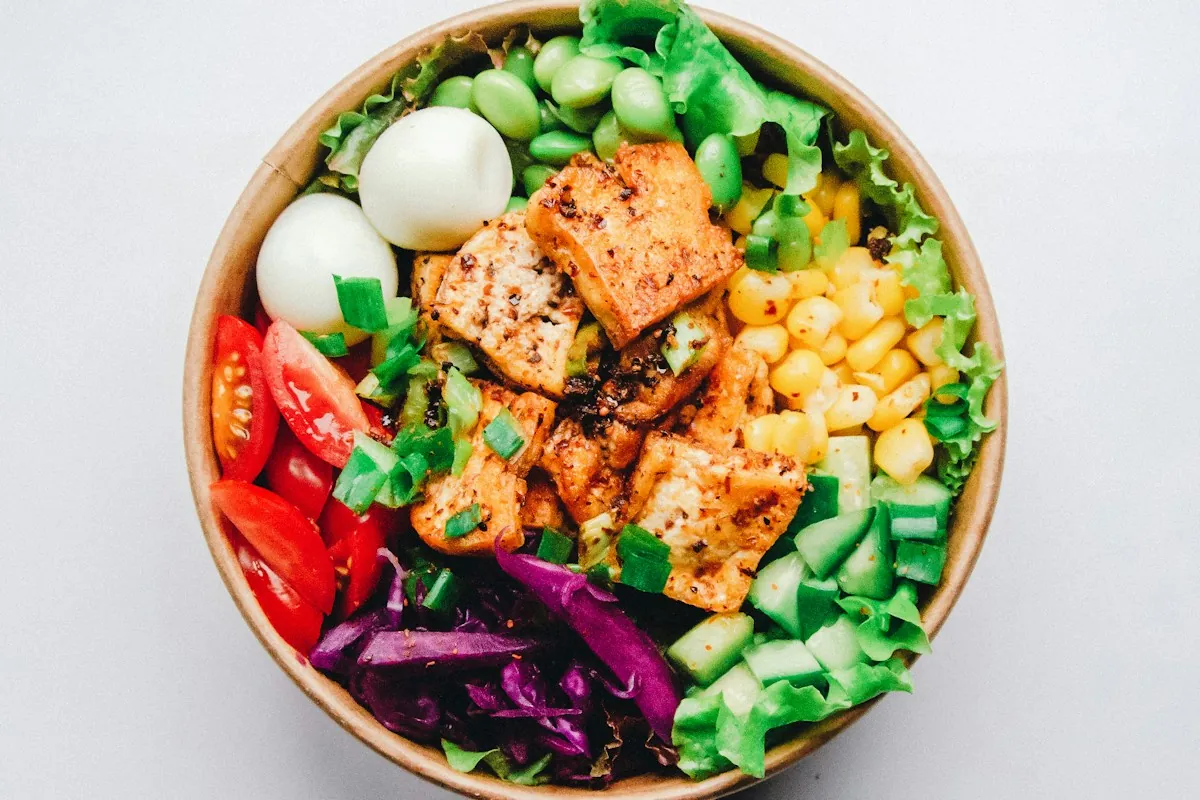
Fats, sugar and salt: what to limit
You do not need to ban any food. You do need to keep an eye on unhealthy fats, added sugar and salt.
Fats
Fat is not the enemy, because your body needs it. The type matters most.
Choose unsaturated fats most of the time. Good sources are olive oil, nuts, seeds, avocado and oily fish.
The NHS notes that unsaturated fats from plants are the healthier choice.
The WHO says saturated fat should be under 10% of your daily energy. On a 2,000-calorie day, that is about 22 grams.
Saturated fat is common in butter, cheese, fatty meat, pastries and many fried foods.
Sugar
The WHO says free sugars should be under 10% of daily energy. Under 5% gives extra benefits.
Free sugars are sugars added to foods and drinks, plus the sugars in honey, syrups and fruit juice.
On a 2,000-calorie day, that is about 50 grams at 10% and about 25 grams at 5%.
Sugary drinks are the easiest place to cut back.
Salt
The WHO says adults should eat less than 5 grams of salt a day. That is about one teaspoon.
A large share of the salt we eat comes from packaged and restaurant foods, not the salt shaker.
Read the label in four steps
- Check the serving size first.
- Compare similar foods using the per 100 g column.
- Look at fiber, sugar, salt and saturated fat.
- Scan the ingredients. They are listed from largest amount to smallest.
Treats belong in a healthy diet. The goal is a pattern where most of your food is whole or minimally processed.
Water and other drinks
Water is the best everyday drink, and most people need about 6 to 8 glasses of fluid a day.
The NHS Eatwell Guide suggests 6 to 8 cups or glasses of fluid a day. It is a guide, not a rule.
You may need more if it is hot, if you are active, or if you are pregnant or breastfeeding.
Water, milk, tea and coffee all count toward your fluid.
Simple hydration habits
- Drink a glass of water with each meal.
- Carry a refillable bottle.
- Add lemon, cucumber or mint if plain water feels boring.
- Check your urine. Pale yellow is a good sign.
Drinks to limit
Soda, energy drinks and sweetened coffee drinks can add a lot of sugar fast.
Fruit juice has sugar too, so keep it to a small glass. If you drink alcohol, keep to the limits in your country's guidelines.

Plan, shop and prep without stress
A little planning makes the healthy choice the easy choice on a busy day.
A one-hour weekly routine
- Pick three or four dinners for the week. Repeats are fine.
- Check what you already have in the fridge and pantry.
- Write a shopping list grouped by store section.
- Shop once, and start with the produce.
- Prep one thing. Wash and chop vegetables, or cook a pot of grains or beans.
Stock a simple pantry
- Canned beans, chickpeas and lentils.
- Oats, brown rice and whole wheat pasta.
- Frozen vegetables and fruit.
- Canned fish, nuts and seeds.
- Olive oil, herbs and spices.
Cook once, eat twice
Double a soup, chili or curry, and freeze half. On a tired evening, dinner is already done.
When you are short on time
Use the plate rule with ready-made help. A rotisserie chicken, a bagged salad and a pouch of brown rice make a balanced meal in five minutes.
Want to calculate your personalized daily protein intake? Try our free Protein Calculator
Your first seven days
Do not change everything at once. Add one small habit each day, and keep the ones that feel easy.
| Day | Small habit to add |
|---|---|
| Day 1 | Add one vegetable to lunch or dinner. |
| Day 2 | Swap one refined grain for a whole grain. |
| Day 3 | Add a protein food to breakfast. |
| Day 4 | Swap one sugary drink for water. |
| Day 5 | Read the label on one packaged food. |
| Day 6 | Plan three dinners for next week. |
| Day 7 | Review. What felt easy? Keep those habits. |
After week one
Keep the habits that felt easy. Add one new habit each week.
After a month, several small changes will start to feel normal. That is how healthy eating lasts.
When to get personal advice
Speak to a registered dietitian or doctor before making big changes if any of these apply to you.
- You are pregnant or breastfeeding.
- You have diabetes, kidney disease, heart disease or another long-term condition.
- You have food allergies or intolerances.
- You have a history of disordered eating.
- You take medicines that interact with food.
Unplanned weight loss, ongoing stomach trouble or fear around food need a doctor's attention. Online advice cannot replace it.
Your healthy eating checklist
Use this checklist as a weekly check-in. Tick what you did, and skip what you did not. Your ticks are saved on this device only.
Weekly healthy eating checklist
0 of 8 done
Want the printable version? Send it to my inbox.
Healthy eating: frequently asked questions
Build most meals from vegetables, fruit, whole grains and protein, and limit sugary drinks, salty snacks and heavily processed foods. Variety and balance matter more than any single food or rule.
Aim for at least 400 grams a day, which is about five portions of 80 grams each. The WHO and the NHS both give this target. Fresh, frozen and canned options all count.
Most healthy adults need at least 0.8 grams of protein per kilogram of body weight. For a 64 kg (140 pound) person, that is about 50 grams a day. Needs can be higher for very active people and some older adults.
No. You can start with plate proportions, portion habits and swaps. Some people find calorie counting useful for a specific goal, and a registered dietitian can guide you if you want to try it.
Yes, in moderation. Focus on minimally processed foods most of the time, and use the label to check fiber, sugar, salt and saturated fat in packaged foods.
The NHS suggests 6 to 8 cups or glasses of fluid a day. You may need more in hot weather, when you are active, or if you are pregnant or breastfeeding.
Start with one meal. Add a vegetable to something you already eat, then try the seven-day starter plan in Chapter 9. Simple, repeatable meals beat complicated recipes.
Sources and further reading
We checked targets and health claims against these sources. Figures are rounded, and calorie-based numbers assume a 2,000-calorie day.
- Harvard T.H. Chan School of Public Health, The Nutrition Source: Healthy Eating Plate
- Harvard T.H. Chan School of Public Health, The Nutrition Source: Protein
- Harvard T.H. Chan School of Public Health, The Nutrition Source: Fiber
- World Health Organization: Healthy diet fact sheet
- World Health Organization: Sodium reduction fact sheet
- NHS: The Eatwell Guide
- NHS: Why 5 A DAY?
- NHS: Water, drinks and nutrition
- NHS: 8 tips for healthy eating
- MedlinePlus (US National Library of Medicine): Nutrition
- National Institute of Diabetes and Digestive and Kidney Diseases (NIH): Healthy eating and physical activity for life
- USDA FoodData Central
Explore more in the Nutrition hub, or browse all HSW guides.