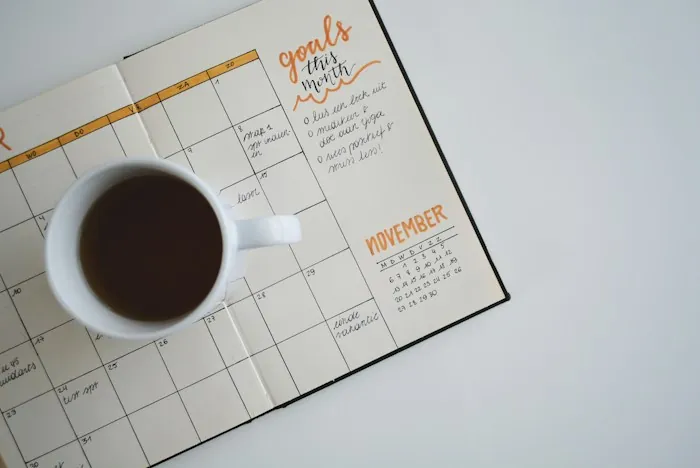

Why a short morning routine helps
The first part of your day sets the tone. If you wake late, rush and skip breakfast, the rest of the day can feel like catching up. A short, repeatable routine gives you a steady start.
It does not need to be long. Fifteen minutes is enough to look after your body, your mind and your day.
The point is not to achieve a perfect morning. It is to do a few small things you know help, at about the same time each day, so they become automatic.
See how to design a daily routine around your morningsThe 15-minute routine, step by step
Minute 0 to 1: Wake at a steady time
The NHS says going to bed and getting up at similar times each day helps your body know when it is time to sleep, and that this holds on days when you are not working. Choose a wake-up time you can keep most days.
Minute 1 to 3: Drink water and open the curtains
Drink a glass of water. The NHS suggests 6 to 8 glasses of fluid a day, so this is a good start. Open the curtains and let in the light.
Minute 3 to 8: Move for five minutes
Stretch, walk around the house or do a few gentle exercises. NHS Better Health says even 10 minutes a day can make a difference, and you can build up. Harvard Health suggests a warm-up of 5 to 10 minutes if you plan a full workout later.
Minute 8 to 10: Take a mindful minute or two
Sit or stand quietly. Notice your breath and your body. The NHS describes mindfulness as paying attention to what is going on inside and outside yourself, moment by moment. Try our guide to mindfulness for beginners, or a few rounds of box breathing.
Minute 10 to 14: Eat a balanced breakfast
The NHS advises not skipping meals, because it can lead to more hunger-driven snacking. Choose something with fiber and protein, such as oats with yogurt and fruit, or eggs on wholegrain toast.
Minute 14 to 15: Plan your day
Choose your top three tasks and decide when you will move and what you will eat for lunch. This short plan removes many decisions later.
Want a plan for the whole day?
The Start Here guides show how to build small habits into a steady routine.
Variations for different mornings
- The 5-minute version: water, a two-minute stretch and a quick plan.
- The energizing version: a brisk walk outdoors for the movement step. See our walking guide.
- The calm version: gentle stretching and a longer mindful minute.
- The weight-goal version: see our morning routine for weight loss.
- The parent version: do it with the children, and turn the movement into a game.

Adapting it to your situation
- If you are just starting out: begin with five to ten minutes, and build up slowly.
- If you have a health condition: ask your doctor what is safe, and which signs mean stop.
- If you live alone: tell someone your plan, and keep a phone within reach.
- If you care for someone else: use short bursts, and share activity with them if possible.
- If you have limited mobility: choose seated or supported versions of exercises.
The habit is the same for everyone. Only the setting and the pace change.
A worked example: from rushed to steady
Nia used to hit snooze three times and rush out with no breakfast. She decides to try a 15-minute routine, one step at a time.
In week one she only drinks a glass of water and opens the curtains. In week two she adds five minutes of stretching. In week three she adds a simple breakfast.
By week four, she has the full routine. Some mornings she does the five-minute version, and that is fine.
The routine grew slowly. That is why it lasted.
A four-week build
- Week 1: wake at a steady time and drink water.
- Week 2: add five minutes of movement.
- Week 3: add a balanced breakfast.
- Week 4: add a mindful minute and a quick plan.
Add the next step only when the earlier ones feel automatic.
Keeping it going
- Pick a fixed time that suits your energy.
- Link it to something you already do.
- Use a calendar or diary to tick off each day.
- Do it with a friend or family member.
- Celebrate progress that is not about weight or speed.
- Restart the next day if you miss one.
Our article on how to build a habit that sticks has more ideas.
Common mistakes to avoid
- Doing too much. Start with two or three steps.
- Checking your phone first. Emails and news can raise stress.
- Skipping breakfast. The NHS advises against skipping meals.
- Waking much earlier to fit it in. Sleep comes first.
- Giving up after a slip. Restart the next day.
The best routine is one you enjoy and can keep.
Myths worth dropping
Myth 1: You have to wake at 5 a.m.
No. A steady time that suits your life is enough.
Myth 2: A morning routine has to be long
Five to fifteen minutes can be plenty.
Myth 3: It has to be perfect
A rough routine you keep beats a perfect one you drop.
Questions to ask yourself
A few honest questions help you tailor these ideas to your own life.
- What do I want my mornings to feel like?
- Which step feels easiest?
- What time can I keep most days?
- What could I prepare the night before?
- Who could support me?
When to get support
These are everyday habits. Talk to your doctor if you have a health condition, persistent tiredness, low mood lasting weeks or symptoms that worry you.
A doctor, pharmacist or dietitian can look at your situation and tailor advice.
This article is general education, not personal medical or dietary advice. Its reviewer, Meena Narayanan, holds a personal training credential, which is not a medical or dietetics credential. Talk to your doctor before you change your exercise or eating habits, especially if you have a health condition, take medicines or are pregnant.
Track how it goes
A light record helps you see what works. It takes less than a minute.
- Tick a calendar on days you do the habit.
- Note your energy on a 1 to 5 scale.
- Write one line about what helped or got in the way.
- Review every two weeks and change one thing.
You may notice that some steps make a big difference and others do little. Keep the ones that help.
Common questions
Can I have coffee first?
Yes, if it suits you. Drink some water too. The NHS notes that caffeine can make you feel more awake, and suggests avoiding it later in the day if it affects your sleep.
Should I exercise before breakfast?
Either works. Some people prefer a light snack first. If you feel dizzy, weak or unwell when you exercise on an empty stomach, eat something first and talk to your doctor.
What if I hit snooze?
Try putting your alarm across the room, and going to bed a little earlier. A steady wake-up time helps your body clock, as the NHS suggests.
Adapting your routine to your life
- Shift workers: treat "morning" as the start of your day, whenever that is, and keep the same steps after you wake.
- Parents: keep it to five minutes, or do it with the children.
- Remote workers: use the routine in place of a commute, and finish with a short walk.
- Older adults: choose gentle movement, and check with your doctor about exercise.
- Night owls: keep a steady, later wake-up time rather than forcing a very early one.
The steps stay the same. Only the timing changes.
Link your morning to your evening
A steady morning starts with a steady night. If you often wake tired, look at your evening first. The NHS suggests a regular bedtime, a quiet, dark, cool bedroom and less screen time before bed.
Try going to bed 15 minutes earlier for a week, and see whether the routine feels easier. Small changes at night make mornings kinder.
- Switch off screens an hour before bed.
- Keep caffeine for earlier in the day.
- Write tomorrow's plan before you sleep.
- Keep your alarm across the room.
Set yourself up the night before
- Prepare breakfast, such as overnight oats.
- Lay out clothes and shoes.
- Fill a water bottle.
- Write tomorrow's top three tasks.
- Turn off screens an hour before bed, as the NHS suggests.
- Set your alarm, and keep your phone out of reach.
A good morning often starts with a good night. See our guides to improving sleep quality and the 30-minute wind-down routine.
Recap: the main points
- A 15-minute routine can include water, movement, a mindful minute, a balanced breakfast and a quick plan.
- Wake at a steady time, as the NHS suggests.
- Even 10 minutes of activity can make a difference.
- Do not skip breakfast, and drink enough fluid.
- Keep it small, and adjust it to your life.
15-minute morning routine: frequently asked questions
Choose a few small habits you enjoy, such as water, gentle movement, a mindful minute, breakfast and a quick plan for the day.
Yes. Short routines are easier to keep, and you can extend them if you like.
No. Choose a wake-up time you can keep most days, as the NHS suggests regular sleep and wake times.
Any time you can move works. NHS Better Health says even 10 minutes a day can make a difference.
Use the 5-minute version and keep the steps small. Sleep and consistency matter more than an early start.
Start again the next day. One missed morning does not undo your habit.
Want a step-by-step start? Explore the Start Here guides.
Sources and further reading
We checked the figures and guidance in this article against these sources. This article does not give personal medical advice.
- NHS Every Mind Matters: How to fall asleep faster and sleep better
- NHS Better Health: Lose weight
- NHS: Eight tips for healthy eating
- NHS: 12 tips to help you lose weight
- NHS: Mindfulness
- Harvard Health: Exercise 101, don't skip the warm-up or cool-down
Want more? Head back to the Healthy Living hub or read the Start Here guides.