What sleep hygiene actually means
Sleep hygiene refers to the habits and environmental conditions that support good sleep: when you go to bed, what your bedroom looks and feels like, what you eat and drink and when, and how you spend the hour before lights out. None of these habits guarantee perfect sleep on their own. Together, though, they remove many of the common obstacles that keep people tossing and turning.
Think of sleep hygiene as clearing the path rather than forcing sleep to happen. You cannot command yourself to fall asleep, but you can make the conditions far more favourable.
The 10-habit checklist
| Habit | Why it helps |
|---|---|
| 1. Wake at the same time daily | Anchors your body clock more reliably than a fixed bedtime does |
| 2. Get daylight soon after waking | Morning light exposure helps set your circadian rhythm |
| 3. Keep the bedroom cool | A drop in body temperature helps trigger sleep onset |
| 4. Keep the room dark | Light, even dim light, can suppress melatonin production |
| 5. Limit caffeine after midday | Caffeine's long half-life means afternoon cups can linger into the night |
| 6. Avoid alcohol close to bedtime | Alcohol fragments sleep in the second half of the night |
| 7. Wind down screens an hour before bed | Reduces both light exposure and mental stimulation before sleep |
| 8. Use the bed only for sleep | Strengthens the mental association between bed and sleep |
| 9. Move your body during the day | Regular activity is linked with deeper, more consolidated sleep |
| 10. Have a consistent wind-down routine | Repeated cues signal to your brain that sleep is coming |
Getting your bedroom environment right
Three environmental factors have the strongest evidence behind them: temperature, light and noise.
Temperature: most people sleep best in a room between about 16 and 19 degrees Celsius. Your core body temperature naturally drops as you fall asleep, and a cooler room supports that process rather than fighting it.
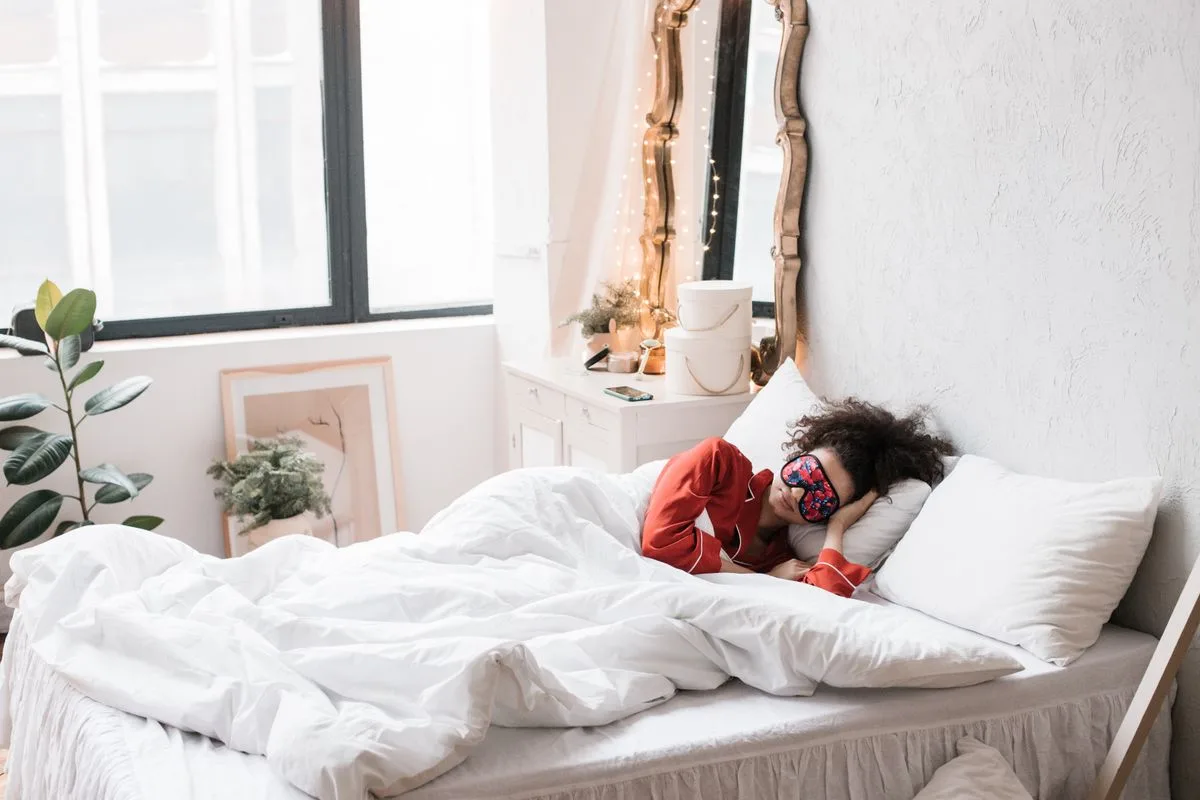
Light: even small amounts of light at night can interfere with melatonin, the hormone that signals it is time to sleep. Blackout curtains, an eye mask, or simply turning electronics to face away from the bed all help.
Noise: sudden or variable noise disrupts sleep more than constant background sound. If you cannot control outside noise, a fan, white noise machine, or earplugs can mask it with something steadier.
It is tempting to focus entirely on when you go to bed, but a consistent wake time, even on weekends, is actually the stronger anchor for your body clock. Let your bedtime follow naturally from feeling sleepy rather than forcing it to a fixed hour.
Daytime habits that affect nighttime sleep
What you do during the day shapes how well you sleep at night just as much as your evening routine does.
- Morning and daytime light exposure: getting outside, especially in the first hour after waking, helps anchor your circadian rhythm and makes melatonin release more predictable that evening.
- Regular movement: people who are physically active generally fall asleep faster and spend more time in deep sleep, though intense exercise very close to bedtime can be overstimulating for some.
- Caffeine timing: caffeine has a half-life of roughly five to six hours, meaning half of a 2pm coffee is still in your system at 7 or 8pm. If you are sensitive to it, aim to stop by early afternoon.
- Napping: short naps can be refreshing, but long or late naps can reduce your drive to sleep at night.
Want a structured wind-down routine?
Our 30-minute wind-down routine gives you a minute-by-minute template for the hour before bed.
Common mistakes that undo good habits
- Trying to catch up on sleep with weekend lie-ins: this shifts your body clock and can make Monday night harder, not easier.
- Checking the clock when you cannot sleep: watching the minutes tick by increases anxiety and makes falling back asleep harder. Turn the clock face away if this is a habit of yours.
- Lying in bed awake for long stretches: if you are not asleep after about 20 minutes, get up, do something calm and dim, and return to bed when you feel sleepy again.
- Using alcohol as a sleep aid: it may help you fall asleep faster but fragments sleep later in the night, leaving you less rested.
- Expecting instant results: new sleep habits often take one to two weeks to show their full effect as your body clock adjusts.
When to see a doctor
Good sleep hygiene resolves a lot of everyday sleep difficulty, but it is not a substitute for medical care when something more is going on. See a doctor if you experience loud snoring with pauses in breathing, ongoing insomnia that good habits have not improved after several weeks, excessive daytime sleepiness despite enough time in bed, or sleep that never feels restful regardless of how long you sleep.
Sleep hygiene: frequently asked questions
If you can only build one habit, a consistent wake time is the strongest single anchor for your body clock, even more than a fixed bedtime.
Many people notice a difference within a few days, but your body clock typically takes one to two weeks of consistency to fully adjust.
Screen use close to bedtime can delay sleep both through light exposure and mental stimulation from the content itself. An hour of screen-free wind-down is a reasonable target.
Most research points to around 16 to 19 degrees Celsius as comfortable for sleep, though personal preference varies within that range.
For mild, everyday sleep difficulty, often yes. For persistent insomnia, sleep hygiene is usually one part of treatment alongside approaches like cognitive behavioural therapy for insomnia, which a doctor can discuss with you.
Alcohol can make you feel drowsy initially, but it disrupts sleep architecture later in the night, which is why many people wake up feeling less rested despite "sleeping" the same number of hours.
Sources and further reading
We checked these sleep hygiene habits against these sources:
- NHS Every Mind Matters: how to sleep better
- CDC: About Sleep
- Irish LA, et al. The role of sleep hygiene in promoting public health. Sleep Med Rev. 2015.
- Burgess HJ, et al. Human phase response curves to three days of daily melatonin. J Clin Endocrinol Metab. 2010.
Want more on sleep specifically? Visit the Sleep & Recovery hub, see how many hours you actually need, or read about how blue light affects your sleep.