What blue light actually does to sleep
Light exposure, particularly in the blue wavelength range common in phone, tablet and computer screens, suppresses the release of melatonin, the hormone your brain produces in response to darkness that signals it is time to prepare for sleep. Blue light appears to suppress melatonin more than other wavelengths of light, which is why it gets singled out specifically in sleep research and advice.
Evening light exposure more broadly, not only from screens but also from bright overhead lighting, can delay this process. Screens are a particular focus mainly because of how commonly and closely they are used right up until bedtime, not because they are uniquely different from other light sources at the same brightness and wavelength.
It is not only about the light
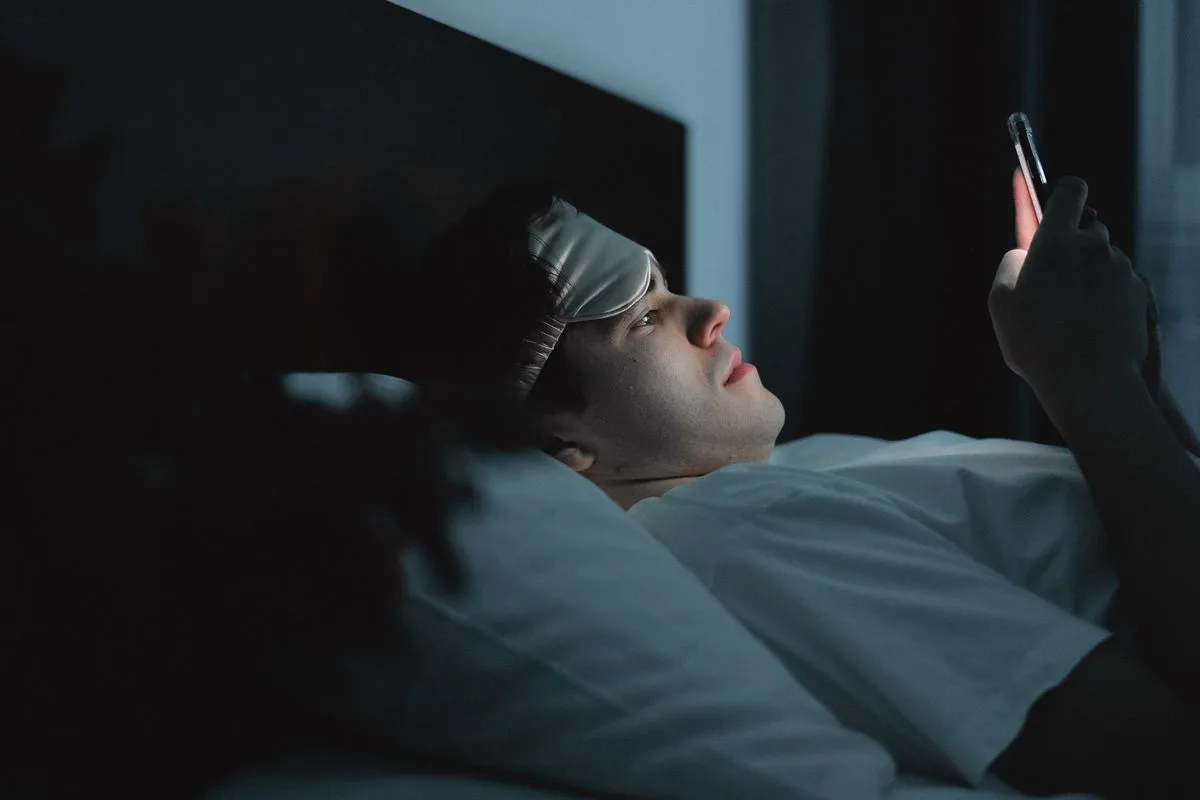
Blue light is only part of the picture. Scrolling through engaging or stressful content, such as work email, news, or an argument on social media, can be mentally stimulating in a way that delays sleep regardless of the light involved. And the simple act of staying awake to keep scrolling, rather than winding down, pushes your bedtime later independent of any light effect at all.
This matters practically because it means dimming your screen or wearing blue light glasses, while somewhat helpful, does not fully address the other two factors: mental stimulation from content, and the behaviour of staying up to keep using the device.
What actually helps
A few practical, well-supported steps address both the light and the behaviour:
- Stop screen use about an hour before bed. This is the single most effective step, since it addresses light, content stimulation and the staying-up behaviour all at once.
- Dim your screen brightness in the evening. Lower overall brightness reduces total light exposure, even if you are still using the device.
- Use night mode or a warmer colour setting. Most phones and computers have a built-in setting that shifts the display toward warmer tones in the evening.
- Keep devices out of the bedroom, or at least out of reach from bed. Removing the easy option reduces the chance of picking it up out of habit.
- Replace the habit, not just remove it. Having a specific alternative, like reading a physical book, makes the hour before bed easier to fill without a screen.
Want a full wind-down routine?
Our 30-minute wind-down routine gives you a minute-by-minute template, screens included.
Do blue light filters and glasses work?
Blue light filtering glasses and screen filters reduce blue light exposure to some degree, and some people report modest benefits. However, research on their effect on actual sleep outcomes is mixed and generally shows a smaller effect than simply reducing screen time and content stimulation before bed. They are a reasonable addition if you are going to be on a screen regardless, such as for necessary evening work, but they are not a substitute for the behavioural steps above.
If you can only do one thing, stopping screen use an hour before bed addresses more of the problem than any filter or glasses alone, since it also removes the mental stimulation and the behaviour of staying up to keep scrolling.
A realistic approach for most people
A strict, zero-screens-after-dinner rule works for some people but is unrealistic for many others, particularly if evening screen use is tied to work or family responsibilities. A more sustainable middle ground: dim brightness and enable night mode throughout the evening as a baseline, aim for a genuine screen-free hour before bed most nights, and treat any screen use that does happen closer to bedtime as something to keep brief and low-stimulation, rather than open-ended scrolling.
Common mistakes to avoid
- Relying only on a blue light filter: this addresses one factor out of three; content stimulation and staying up still delay sleep even with a filter active.
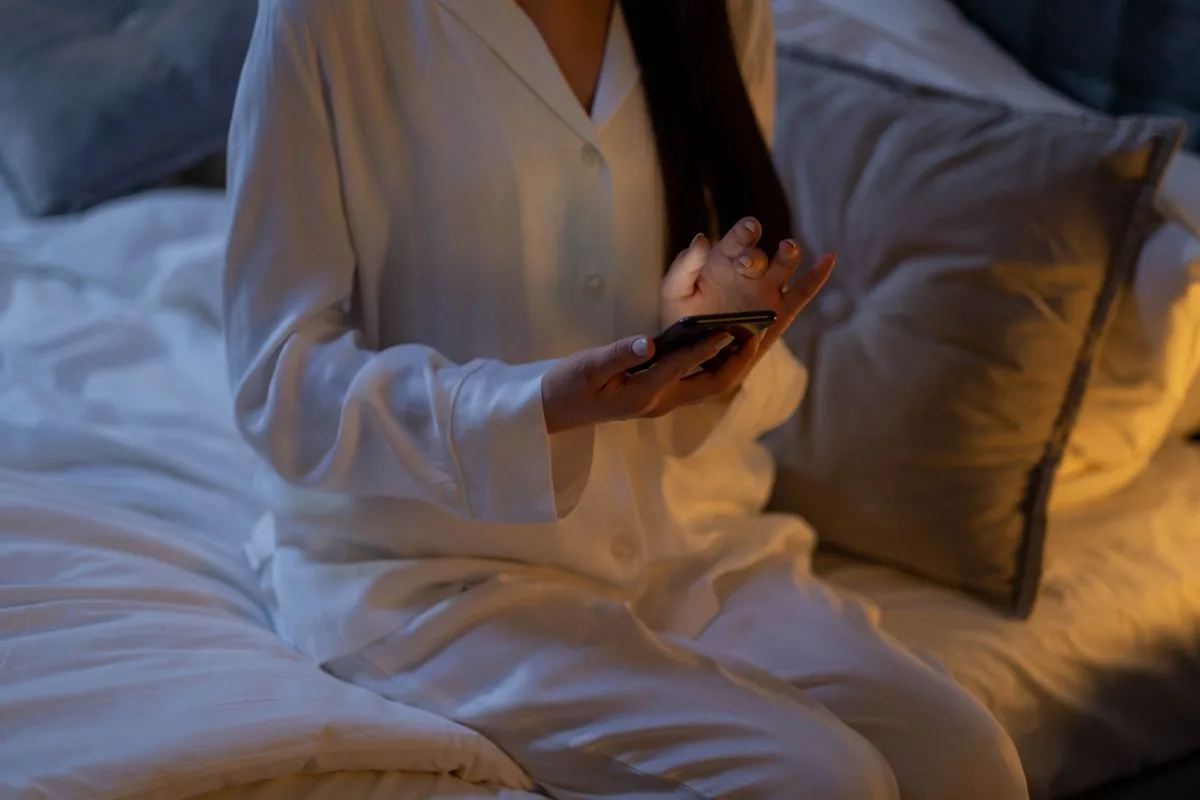
- Treating "in bed" and "asleep" as the same thing: scrolling in bed, even with the lights off, still delays actual sleep onset.
- Expecting an all-or-nothing rule to stick: a strict total ban often fails; a realistic, mostly-consistent screen-free hour is more sustainable.
- Ignoring the content itself: stressful or highly engaging content can delay sleep regardless of brightness settings.
- Assuming screens are the only factor if sleep stays poor: if reducing screen use does not meaningfully help, other causes are worth investigating.
Blue light and sleep: frequently asked questions
An hour before bed is a commonly recommended, practical target that addresses light exposure, mental stimulation and the behaviour of staying up to keep using the device.
Evidence is mixed and the effect, where found, tends to be modest, smaller than simply reducing screen time and stimulating content before bed. They may help somewhat if you must use a screen in the evening regardless.
Night mode reduces blue light output and is a reasonable, free step to take, though it works best combined with dimmer brightness and limiting use close to bedtime, not as a complete fix on its own.
The light exposure is similar, but reading tends to be less mentally stimulating than scrolling social media or news, which may make it somewhat less disruptive overall, though a physical book avoids the light question entirely.
Screens are one of several factors affecting sleep. If reducing screen use does not meaningfully help, consider other factors like caffeine timing, room temperature, stress, or an underlying sleep disorder, and consider speaking with a doctor.
Television emits blue light too, though it is typically viewed from further away than a phone, which reduces the intensity of light reaching your eyes. Content stimulation still applies in the same way as other screens.
Sources and further reading
We checked this guidance against these sources:
- NHS Every Mind Matters: how to sleep better
- Burgess HJ, et al. Human phase response curves to three days of daily melatonin. J Clin Endocrinol Metab. 2010.
- Chang AM, et al. Evening use of light-emitting eReaders negatively affects sleep. Proc Natl Acad Sci. 2015.
- CDC: About Sleep
Want more on sleep specifically? Visit the Sleep & Recovery hub, see our Better Sleep Guide, or read our sleep hygiene checklist.