

What is stress, and is it always bad?
Stress is your body's natural response to pressure, and short bursts can help, but long-lasting stress can wear you down.
The World Health Organization (WHO) describes stress as a state of worry or mental tension caused by a difficult situation.
It is a normal part of life. Most people feel it before an exam, a deadline or a big change.
Short-term and long-term stress
Short-term stress can sharpen your focus and get things done. It fades once the pressure passes.
Long-term stress is different. It keeps your body on alert and can affect sleep, mood and health.
What this guide covers
This guide is about everyday stress: work pressure, busy schedules, money worries and family demands.
It gives you simple, practical tools. It does not cover clinical mental health conditions.
This guide is general wellness information. It is not therapy and it does not diagnose or treat anxiety disorders, depression or any other condition. If you are struggling, please speak to a doctor or a qualified mental health professional.
Signs of stress to watch for
Stress can show up in your body, your mood and your habits, and spotting it early makes it easier to manage.
In your body
- Tight muscles, headaches or a sore jaw.
- Tiredness, or trouble falling asleep.
- A racing heart or a knot in your stomach.
- Getting sick more often.
In your mood and thinking
- Feeling on edge, irritable or overwhelmed.
- Trouble concentrating or making decisions.
- Feeling worried most of the time.
In your habits
- Eating more or less than usual.
- Scrolling more, or avoiding tasks.
- Drinking more alcohol or caffeine.
- Pulling away from friends.
The American Psychological Association (APA) also notes that stress can affect the body and behavior. If several signs last for weeks, take them seriously.
Know your own signals
Everyone has a personal early warning sign. Maybe it is a clenched jaw, or snapping at people you love.
Learn yours. Then you can act before stress builds.
Quick tools to calm down in minutes
Slow breathing, grounding and a short walk can settle your body within a few minutes.
You cannot always remove the cause of stress. You can change how your body responds.
Slow breathing
The NHS offers a simple breathing exercise for stress. Sit comfortably and breathe in gently and steadily through your nose.
Many people find it helps to make the out-breath a little longer than the in-breath.
- Sit or stand and relax your shoulders.
- Breathe in slowly through your nose for about four counts.
- Breathe out gently for about six counts.
- Repeat for one to three minutes.
Five senses grounding
This pulls your mind back to the present when your thoughts race.
- Name five things you can see.
- Name four things you can touch.
- Name three things you can hear.
- Name two things you can smell.
- Name one thing you can taste.
Move for two minutes
Stand up, stretch or walk around the block. Movement burns off tension and clears your head.
Splash cool water
A splash of cool water on your face, or a slow drink of water, can help you reset.

Sleep, movement and food: your stress foundation
When your body is rested, moved and fed, stress feels smaller.
Sleep
Poor sleep makes stress feel worse, and stress makes sleep harder. Try to keep a steady schedule and a calm bedtime routine.
Movement
The NHS lists being active as one way to help manage stress. A walk outside is a great place to start.
You do not need an intense workout. Regular, gentle movement is enough.
Food and drink
- Eat regular meals so your energy stays steady.
- Go easy on caffeine, especially late in the day.
- Limit alcohol, which can worsen mood and sleep.
- Drink enough water.
Time outdoors
A little time in daylight or green space can lift your mood. Even ten minutes helps for many people.
Thinking tools: journaling and reframing
Writing down your worries and testing your thoughts can make problems feel smaller.
The National Institute of Mental Health (NIMH) suggests trying a journal, relaxation exercises or mindfulness when you feel overwhelmed.
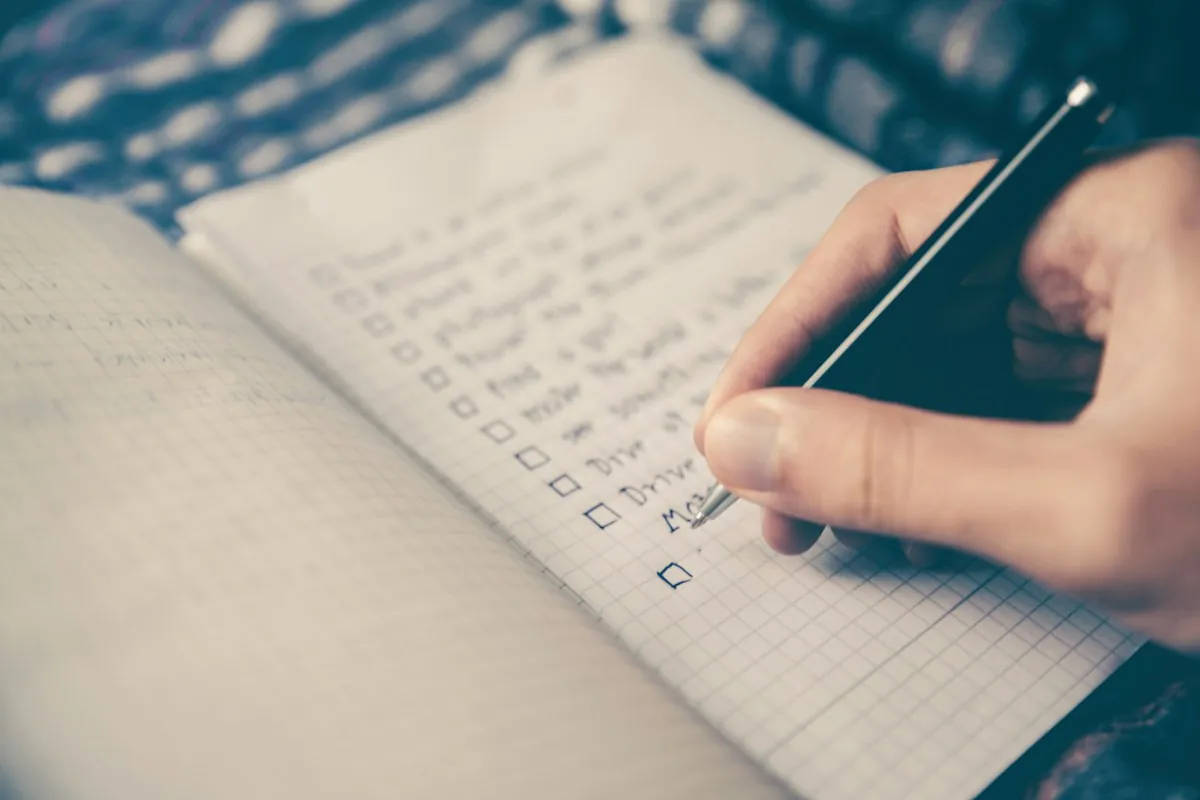
A five-minute brain dump
- Set a timer for five minutes.
- Write down everything on your mind, without editing.
- Circle what you can act on this week.
- Choose one small step for each.
Reframe unhelpful thoughts
Stress often comes with thoughts like "I can never keep up." Try asking yourself a few gentle questions.
- Is this thought a fact or a feeling?
- What would I say to a friend in this spot?
- What is one small thing I can do now?
Mindfulness for beginners
Mindfulness means paying attention to the present moment, without judging it. Try it while you brush your teeth, eat or walk.
Boundaries, time and workload
You cannot do everything, so choose what matters and say no to some of the rest.
A lot of stress comes from taking on too much. Clear limits protect your time and energy.
Sort tasks in a few minutes
| Type of task | What to do |
|---|---|
| Urgent and important | Do it today. |
| Important, not urgent | Schedule a time for it. |
| Urgent, not important | Delegate it or do it quickly. |
| Neither | Drop it or park it. |
Say no kindly
- "I would love to, but I cannot take that on right now."
- "I can help with that next week."
- "Let me check my plate and get back to you."
Protect your downtime
Set a time when work ends. Turn off notifications, and keep some part of every day for you.
Break big jobs into small steps
A huge task feels heavy. A list of small steps feels doable.
Connection and support
Talking to people you trust is one of the best ways to lighten stress.
The NHS also points to connecting with other people as a way to help manage stress.
Ways to connect
- Call or meet a friend for a walk.
- Share how you feel with someone you trust.
- Join a group, class or club.
- Volunteer for something you care about.
- Spend time with a pet, if you have one.
How to ask for help
You can be simple and direct. "I have had a hard week. Can I talk to you for ten minutes?"
Be kind to yourself
Talk to yourself the way you would talk to a friend. Harsh self-talk adds stress.
Your two-week plan and when to get help
Try one or two tools a week, keep what works, and reach out for support if stress will not ease.
| Week | Focus | What to do |
|---|---|---|
| Week 1 | Quick calm | Practice slow breathing for two minutes once a day. Take a short walk on three days. |
| Week 2 | Habits | Try a five-minute brain dump three times. Set one boundary and keep a regular bedtime. |
Keep a simple stress log
Note what stressed you, how you felt and what helped. Patterns show you where to focus.
When to get professional help
The NIMH says that if you are struggling to cope, or your symptoms of stress or anxiety will not go away, it may be time to talk to a professional.
- Stress or worry has lasted for weeks and is hard to control.
- It is affecting your sleep, work, relationships or health.
- You feel hopeless, or you have thoughts of harming yourself.
- You rely on alcohol or other substances to cope.
If you are in immediate danger or thinking about harming yourself, contact your local emergency number now. In the United States, you can call or text 988 to reach the 988 Suicide and Crisis Lifeline. Elsewhere, contact your local crisis service.
Your stress management checklist
Use this checklist as a weekly check-in. Tick what you did, and skip what you did not. Your ticks are saved on this device only.
Weekly stress management checklist
0 of 8 done
Want the printable version? Send it to my inbox.
Stress management: frequently asked questions
Try slow breathing, with a longer out-breath than in-breath, for one to three minutes. You can also try five senses grounding, a short walk or splashing cool water on your face.
No. Short-term stress can help you focus and get things done. Long-lasting stress, though, can affect your sleep, mood and health.
Regular activity helps release tension and can lift your mood. The NHS lists being active as one way to help manage stress, and a short walk is a good start.
For many people, yes. The NIMH suggests keeping a journal as one way to cope when you feel overwhelmed. Writing gets worries out of your head and into a plan.
Decide when your workday ends, turn off notifications, and use simple phrases such as "I can help with that next week." Focus on what is most important.
Talk to a doctor or qualified professional if stress or worry lasts for weeks, affects your sleep, work or relationships, or you feel hopeless. In a crisis, contact your local emergency number or crisis line.
No. It offers general wellness tips for everyday stress and does not replace therapy or medical care.
Sources and further reading
We checked stress advice against these sources. This guide covers everyday stress only.
- World Health Organization: Stress
- National Institute of Mental Health (NIH): I'm so stressed out! Fact sheet
- NHS: Tips to reduce stress
- NHS: Breathing exercises for stress
- American Psychological Association: Stress
Explore more in the Mental Wellbeing hub, or browse all HSW guides.