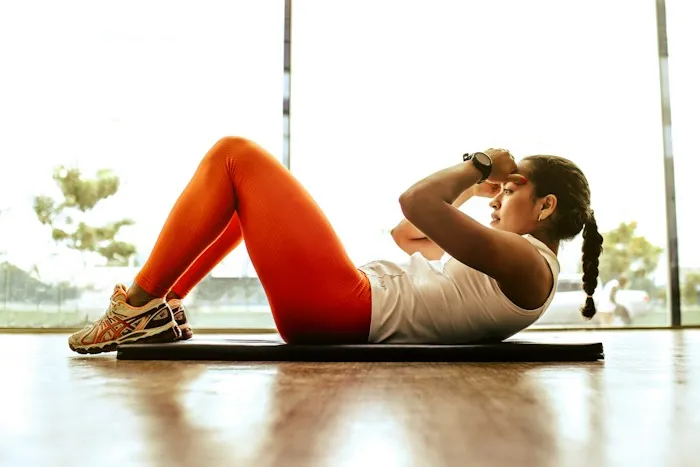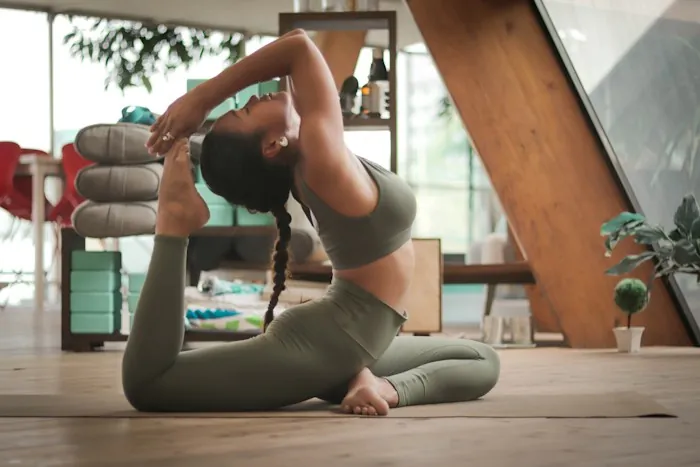

What is beginner strength training?
Strength training means making your muscles work against resistance. That resistance can be your own body weight, a band or a dumbbell.
For a beginner, the goal is simple. Learn a few basic moves, do them well, and repeat them twice a week.
You do not need to lift heavy or look a certain way. You only need to work your muscles until they feel tired, then rest.
This plan is written for healthy adults who have never lifted before, or who are coming back after a long break.
Why start strength training at all?
Strong muscles make daily life easier. Carrying shopping, climbing stairs and getting up from the floor all get simpler.
The WHO fact sheet on physical activity states that muscle strengthening benefits everyone. It also links regular activity with lower risks of heart disease and type 2 diabetes.
The Harvard Health team also notes that strength training does more than build muscle. It supports everyday movement too.
What the guidelines say
The NHS advises adults to do strengthening activities on at least 2 days a week. These should work all the major muscle groups: legs, hips, back, abdomen, chest, shoulders and arms.
That is on top of at least 150 minutes of moderate activity a week, such as brisk walking.
Before you begin
A few minutes of preparation makes your first weeks safer and more fun.
Warm up first
Spend about five minutes moving before you lift. March on the spot, swing your arms, and do a few slow body weight squats.
The NHS guide to warming up explains why a gentle start helps your body get ready.
Learn the effort scale
The NHS says to work to the point where you need a short rest before repeating the move. That is the sign you are working hard enough.
A useful test: finish each set feeling you could do two or three more good reps, not zero.
Pick your days
Choose two non-consecutive days, such as Monday and Thursday. Put them in your calendar like any other appointment.
What equipment do you need?
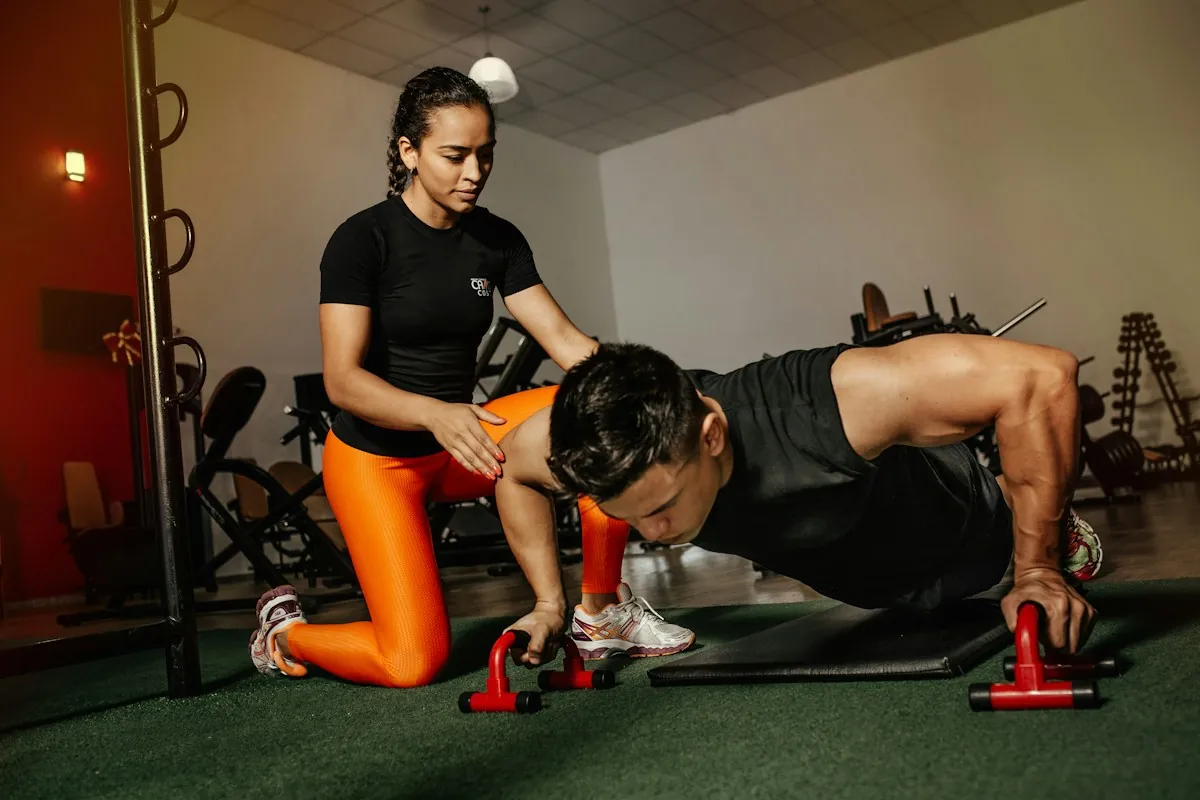
Almost none. You can start with your body weight and add tools later.
- Nothing: squats, glute bridges, wall or incline push-ups and planks all work.
- A resistance band: cheap, light and great for rows.
- One pair of dumbbells: a light pair and a medium pair cover most beginner needs.
- A sturdy chair or step: for step-ups and for support.
- A mat and flat shoes: for comfort and grip.
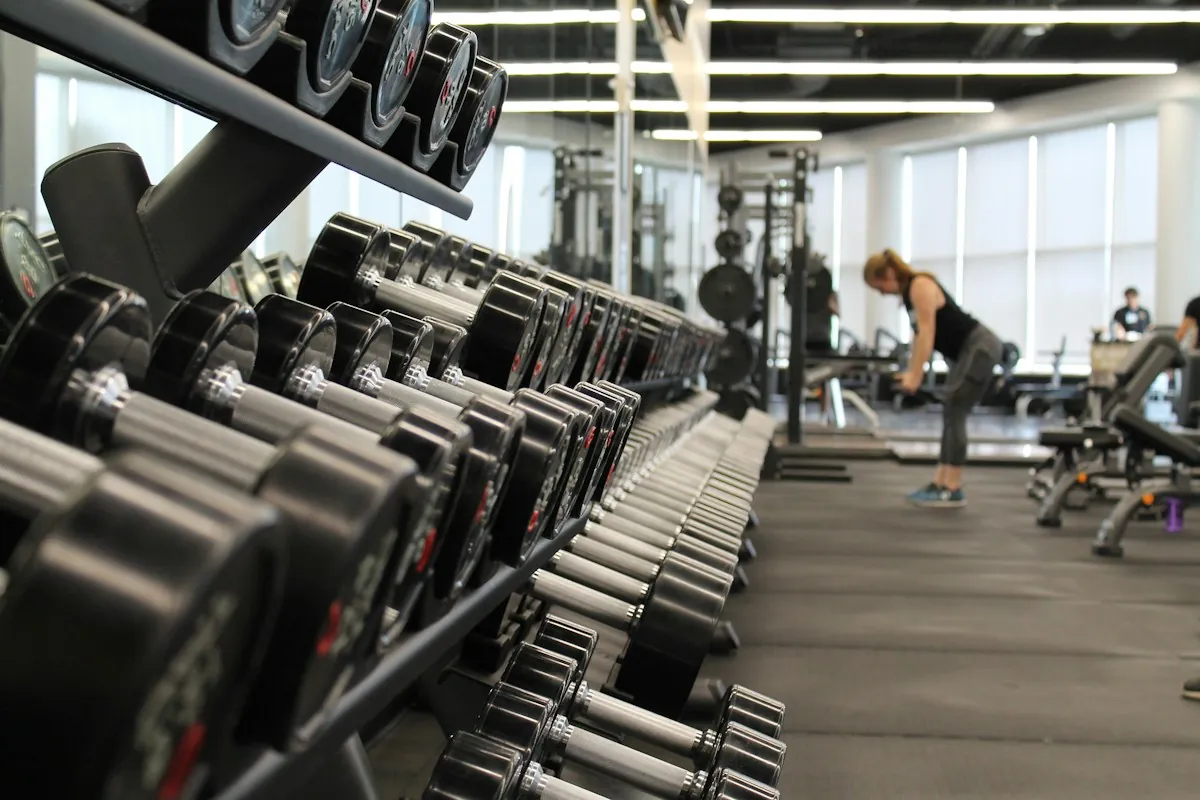
A gym is optional. If you like the idea, racks of dumbbells and machines give you more choices as you progress.
Six starter moves that cover your whole body
Each move below trains a big movement pattern. Learn these six and you can build almost any beginner routine.
Begin with body weight or very light loads. Slow, smooth reps beat fast, sloppy ones.
1. Squat
Legs and hips
Stand with feet about shoulder width apart. Sit your hips back and down as if lowering onto a chair.
Keep your chest up and your knees in line with your toes. Stand back up by pushing through your feet.
Not comfortable at depth yet? Squat to a chair and stand up again.
2. Glute bridge, then hip hinge
Back of the legs and hips
Lie on your back with knees bent. Push through your heels and lift your hips until your body forms a straight line.
Pause for a second at the top, then lower slowly.
Once this feels easy, try a hinge while standing, holding a light dumbbell.
3. Incline push-up
Chest, shoulders and arms
Place your hands on a wall, counter or sturdy bench. Keep your body in one straight line.
Bend your elbows to lower your chest toward the surface, then press away.
A lower surface makes it harder. The floor is the next step.
Want the whole fitness plan in one place?
Our Beginner Fitness Guide puts strength, walking, mobility and recovery into one simple weekly rhythm.
4. Band or dumbbell row
Upper back and arms
Hold a dumbbell in one hand and rest the other hand and knee on a bench, or loop a band around a sturdy anchor.
Pull your elbow back toward your hip. Squeeze your shoulder blade, then lower with control.
5. Plank
Core and shoulders
Rest on your forearms and toes, or on your knees if that is easier. Keep a straight line from head to hips.
Hold for 15 to 20 seconds, rest, and repeat. Stop the set if your lower back sags.
6. Step-up
Legs and balance
Place one foot fully on a low, stable step. Press through that heel to stand tall, then lower with control.
Keep a hand near a wall or rail until you feel steady.
Your first four weeks
Do the six moves twice a week. Rest at least a day between sessions.
These numbers are a sensible starting point, not a rule. Adjust them to how you feel.
| Week | Sets per move | Reps or hold | Focus |
|---|---|---|---|
| Week 1 | 1 | 8 to 10 reps, plank 15 s | Learn the movements |
| Week 2 | 2 | 8 to 10 reps, plank 20 s | Smooth, steady form |
| Week 3 | 2 | 10 to 12 reps, plank 25 s | Add a little effort |
| Week 4 | 2 to 3 | 10 to 12 reps, plank 30 s | Try a slightly heavier load |
Rest for about one to two minutes between sets. That is a common range, and you can take longer if you need it.
A full session should take roughly 20 to 40 minutes.
Missing a session is normal. Pick up at the next planned day instead of doubling up. Two sessions most weeks will do more for you than one huge push followed by a break.
Reps, sets and how heavy to go
A set is a group of repetitions done in a row. A rep is one full up-and-down of a move.
For most beginners, 8 to 12 reps per set is a friendly range. Choose a weight that makes the last few reps feel challenging but clean.
A quick way to choose your weight
- Start with a light weight and do 10 reps.
- If it felt very easy, go up slightly next set.
- If your form slipped before rep 8, go lighter.
- Write down the weight you used so next week is easier to plan.
Tempo and breathing
Lower the weight slowly for about two to three seconds. Breathe out as you push or lift, and breathe in as you lower.
Never hold your breath through a whole rep.
How to keep progressing
Your body adapts. To keep getting stronger, ask it for a little more over time.
Change one thing at a time, so you can tell what works.
- Add reps: go from 10 to 12 reps before adding weight.
- Add weight: increase by the smallest step you have, once you reach the top of your rep range on every set.
- Add a set: move from two sets to three.
- Make the move harder: lower the surface for push-ups or use a deeper squat.
- Slow it down: take longer on the lowering part of the move.
Keep a simple note on your phone. Seeing numbers rise is a strong motivator.
Fuel and rest
Sleep and food help your muscles recover. Read our guide on how many hours of sleep you need and see how protein fits in on the Nutrition hub.
Common beginner mistakes to avoid
- Doing too much too soon. Big jumps in weight or sessions raise your chance of soreness and injury.
- Skipping the warm-up. Five minutes is enough to get started.
- Chasing heavy weights over good form. Form comes first, weight second.
- Training the same muscles every day. Muscles need rest days to recover.
- Holding your breath. Keep breathing through each rep.
- Comparing yourself to others. Your only comparison is last week.
- Ignoring pain. Tired muscles are normal. Sharp pain is a stop sign.
Who should check with a doctor first?
Most healthy adults can start light strength work safely. Some people should get advice before they begin.
The NHS suggests speaking to your GP first if you have not exercised for some time, or if you have medical conditions or concerns.
- People with heart or blood pressure conditions.
- People with joint, back or bone problems, or recent injuries.
- People who are pregnant or recently gave birth.
- Anyone who feels dizzy, or has chest pain, during activity.
Chest pain, severe breathlessness, dizziness or sharp joint pain means stop right away. Contact a doctor or emergency services if symptoms are serious.
A certified trainer can also check your form in person. This article is general education, not a personal exercise prescription.
Recap: your beginner strength plan in five points
- Train twice a week on non-consecutive days.
- Use six moves: squat, hinge, push, pull, plank and step-up.
- Start with 1 to 2 sets of 8 to 12 easy reps.
- Add reps, weight or sets slowly, one at a time.
- Warm up, rest, sleep well and stay consistent.
Beginner strength training: frequently asked questions
Two days a week is a good start. The NHS advises strengthening activities that work all the major muscle groups on at least 2 days a week. Leave at least one rest day between sessions so your muscles can recover.
About 20 to 40 minutes is plenty, including a short warm-up. Six moves with two sets each fit comfortably in that time. Short, regular sessions you can repeat beat long ones you dread.
Yes. Body weight moves such as squats, incline push-ups, glute bridges and planks all count as strengthening activities. The NHS lists body weight exercises, resistance bands and lifting weights as ways to strengthen your muscles.
Pick a weight you can lift with good form for 10 to 12 repetitions while the last two feel hard but doable. If you can do 15 or more with ease, go a little heavier. If your form breaks down, go lighter.
Mild soreness that peaks a day or two after a new workout is common and usually fades. Sharp, sudden or joint pain is different. Stop the move and see a doctor or physiotherapist if it does not settle.
Yes, both matter. Adults are advised to do at least 150 minutes of moderate activity a week plus strengthening on 2 days. Strength work does not replace your walks, and walks do not replace strength work.
Sources and further reading
We checked guideline figures against these sources. Rep, set and rest ranges are common starting suggestions, not fixed rules.
- NHS: Physical activity guidelines for adults aged 19 to 64
- NHS: Strength exercises
- NHS: How to warm up before exercising
- World Health Organization: Physical activity fact sheet
- US Physical Activity Guidelines for Americans (ODPHP)
- Harvard Health: Strength training builds more than muscles
Want more? Head back to the Fitness hub for beginner-friendly articles, or read the Beginner Fitness Guide.