
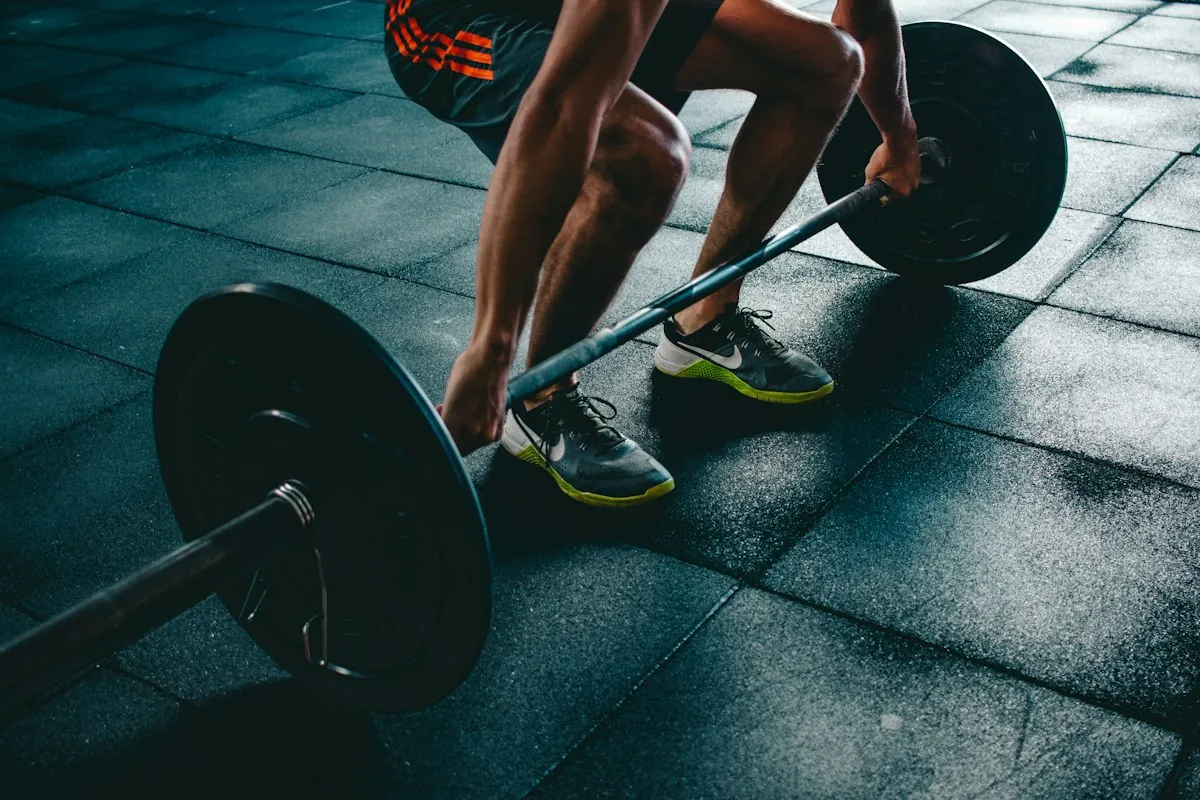
Why sleep matters for muscle growth
Muscle does not grow in the gym. Training gives your muscles a reason to adapt, and the adapting happens while you rest.
A research review on sleep and athletic performance explains that impaired sleep directly affects growth hormone release and alters cortisol secretion, both important for adapting to exercise. It also notes that poor sleep raises inflammatory markers that can hinder muscle repair.
The Sleep Foundation adds that sleep lets the body repair cells and tissues, and that it helps you consolidate memories from practice, which improves future performance.
That is why the smartest lifters and athletes treat sleep as part of the program, not an extra.
See the best sleep recovery techniquesMistake 1: Not sleeping enough
This is the biggest one. The research review notes a minimum of 7 hours for adults, and the Sleep Foundation reports that athletes self-report needing around 8.3 hours on average.
Short sleep also affects performance. The review reports that after four hours of sleep restriction, cyclists' maximum work rate dropped by about 15 watts during sustained efforts.
The fix
- Protect at least 7 hours in bed, and try 8 or more during heavy training.
- Set a bedtime alarm as well as a wake-up alarm.
- If your schedule is tight, cut something else first, not sleep.
Mistake 2: Keeping irregular hours
Sleeping at very different times from day to day leaves you feeling tired even when the total hours look fine. The NHS says a regular sleep routine makes it easier to fall asleep, even on non-working days.
The fix
- Keep your wake-up time within about an hour, seven days a week.
- Set a regular wind-down.
- Avoid big lie-ins to make up for a bad night.
Want a routine that keeps you consistent?
The Better Sleep Guide gives you a simple schedule and evening plan.
Mistake 3: Training hard too close to bed
Very intense sessions late in the day can leave you wired. The Sleep Foundation says vigorous workouts within an hour of bedtime can raise core temperature and were linked to lower sleep efficiency. Harvard Health reports that moderate to vigorous activity completed at least three hours before bedtime did not interfere with sleep in a large study.
The fix
- Finish hard sessions at least three to four hours before bed.
- Use lighter sessions or stretching in the evening.
- If you must train late, add a longer cool-down and wind-down.
Read more in our guide on how to sleep better after a workout.
Mistake 4: Skipping rest days
More training is not always better. The NIDDK suggests at least 1 day of rest between workouts for the same muscle groups. The NHS suggests spreading activity across 4 to 5 days a week, or every day, and the Sleep Foundation lists avoiding overtraining among its sleep tips for athletes.
The fix
- Plan rest days in advance.
- Alternate muscle groups.
- Use light movement, such as walking, on rest days.
- Deload for a week if you feel run down.
Mistake 5: Late caffeine, alcohol and nicotine
The NHS says caffeine can make you feel more awake, and that alcohol and nicotine can have disruptive effects on sleep, so it suggests avoiding them 1 to 2 hours before bed. Many pre-workout products also contain caffeine.
The Sleep Foundation advises athletes to avoid caffeine and alcohol before bed.
The fix
- Cut off caffeine earlier in the day.
- Skip alcohol close to bedtime, and limit it overall.
- Check pre-workout labels, and avoid caffeine-heavy products in the evening.
Mistake 6: Screens and stimulation in bed
The NHS says the blue light from screens can make it harder to fall asleep and suggests avoiding phones, tablets and computers for an hour before bed. Late-night videos and messages also keep your mind busy.
The fix
- Charge your phone outside the bedroom or across the room.
- Use a book, a podcast or a calm playlist instead.
- Write tomorrow's workout plan on paper before bed.
Mistake 7: A bedroom that works against you
The NHS suggests a quiet, dark and cool room. If your room is hot, bright or noisy, your sleep quality suffers, even if you spend enough hours in bed.

The fix
- Use blackout curtains or an eye mask.
- Use earplugs if noise is an issue.
- Open a window or adjust the temperature to make the room cooler.
Mistake 8: Ignoring food, water and stress
Recovery is more than sleep. Not eating enough, not drinking enough and carrying high stress all make recovery harder. Eat regular balanced meals with protein and carbohydrates, drink water through the day and give your mind a break.
Our guides on building a balanced plate and resetting when overwhelmed can help.
How to build a recovery plan you can actually follow
Knowing the mistakes is only half the job. You also need a simple plan. Think of recovery as a weekly rhythm, not a set of rules.
Start by writing down your current week. Note when you train, when you eat, when you go to bed and when you wake up. Most people see gaps straight away: a late session on a work night, a run of short nights or a weekend of very late bedtimes.
Step 1: protect your sleep window
Choose a target bedtime and wake-up time that give you at least 7 hours in bed, and more if your training is heavy. Treat it like an appointment. If something has to move, move your training, not your sleep.
Step 2: place your hard sessions early
Put your hardest workouts in the morning or afternoon whenever you can. Keep evening sessions lighter, and finish them at least three to four hours before bed, in line with the timing Harvard Health reports.
Step 3: schedule a rest day
Choose one day a week with no hard training. Use it for a walk, stretching or a hobby. Leave at least 1 day of rest between workouts for the same muscle groups, as the NIDDK suggests.
Step 4: keep the evenings calm
Turn screens off an hour before bed, dim the lights and avoid caffeine and alcohol late in the day. Use our 30-minute wind-down routine if you need a template.
Step 5: review each week
Every Sunday, ask three questions. How did I sleep? How did my training feel? What is one thing I will change next week?
A small change each week adds up. Big overhauls rarely last.
Myths about sleep and muscle growth
Myth 1: You can catch up on sleep at the weekend
A long lie-in after a week of short nights can feel good, but it does not fully repair a week of poor sleep, and it can upset your body clock. Steady sleep through the week works better.
Myth 2: More training always means more muscle
Muscles adapt during rest. Doing more without recovering can leave you tired and stalled. The NIDDK suggests leaving at least 1 day of rest between workouts for the same muscle groups.
Myth 3: Supplements can replace sleep
No product replaces sleep. Some supplements contain a lot of caffeine, which can make sleep harder. Talk to your doctor or pharmacist before taking any.
Myth 4: Only elite athletes need to care about sleep
Everyone who trains benefits from good recovery. The same principles apply to a beginner lifting twice a week and to a competitive athlete.
If you are a beginner or very busy
You do not need to be an athlete for these ideas to matter. If you are new to training, recovery is even more important, because your body is still learning to handle the load.
If you are busy, you may feel that sleep is the first thing to cut. It is usually the worst thing to cut, because tired training gives you less for the same effort.
- Train two or three days a week, and use the days between for rest or gentle walking.
- Choose short sessions of 20 to 30 minutes that you can repeat, and avoid marathon workouts.
- Keep bedtime steady, even when you have to shorten a workout.
- If you must choose between an early workout and an hour more sleep, sleep is often the better choice after a short night.
Over time, small consistent habits beat big bursts. Steady sleep, steady training and steady meals add up to real progress.
Signs your recovery needs attention
- Feeling exhausted for days in a row.
- Workouts feel much harder than normal.
- Strength or performance stops improving or drops.
- Trouble falling or staying asleep despite feeling tired.
- Low mood, irritability or loss of motivation.
- Getting ill or injured more often.
The research review reports that inadequate sleep is linked to a higher chance of injury. If you notice several of these signs, reduce your training for a week, improve your sleep and talk to your doctor if things do not improve.
This article is general education, not personal medical advice. Its reviewer, Meena Narayanan, holds a personal training credential, which is not a medical or sleep-medicine credential. If you have long-lasting sleep problems, loud snoring, breathing pauses in your sleep, or feel very sleepy in the daytime, please talk to your doctor.
Recap: the main points
- Muscle adapts during recovery, and sleep is a big part of that.
- Sleep at least 7 hours, and keep a regular schedule.
- Finish hard training earlier and use lighter sessions in the evening.
- Plan rest days and avoid late caffeine, alcohol and screens.
- Watch for signs of poor recovery and get help if they persist.
Sleep and muscle growth: frequently asked questions
Sleep supports recovery. A research review reports that impaired sleep affects growth hormone release and cortisol and raises inflammatory markers that hinder muscle repair.
Adults need at least 7 hours, and athletes often need more. The Sleep Foundation says athletes self-report needing about 8.3 hours on average.
It depends on the person. Harvard Health cites studies where exercise finished three to four hours before bed did not interfere with sleep, while vigorous exercise within an hour of bedtime can raise core temperature.
The NIDDK suggests at least 1 day of rest between workouts for the same muscle groups. Your ideal amount depends on your training.
The NHS says alcohol can have disruptive effects on sleep, and suggests avoiding it 1 to 2 hours before bed.
See a doctor if you feel constantly exhausted, your performance keeps dropping or you have long-lasting sleep problems.
Want the full plan? Read our Better Sleep Guide.
Sources and further reading
We checked the figures and guidance in this article against these sources. This article does not give personal medical advice.
- PMC: Sleep and athletic performance, recovery, injury risk and mental health
- Sleep Foundation: How sleep affects athletic performance
- NHS Every Mind Matters: How to fall asleep faster and sleep better
- Harvard Health: Does exercising in the evening affect sleep?
- Sleep Foundation: How exercise affects sleep
- NIDDK: Health tips for adults
- NHS: Physical activity guidelines for adults aged 19 to 64
Want more? Head back to the Sleep & Recovery hub or read the Start Here guides.