
The short answer
The scale is one tool among many. It measures the total pull of gravity on your body, and that is all.
It cannot tell you how strong you are, how well you sleep, what your blood pressure is or whether your habits are improving.
Used well, the scale can help. Used alone, it can mislead and discourage you.
Why your weight swings from day to day
Your weight is not a fixed number. It can rise or fall by a pound or two in a single day for reasons that have nothing to do with fat.
- Water. Your body holds more or less water depending on what you drink, sweat and eat.
- Salt. A salty meal can make you hold water for a day or so.
- Food in your gut. What you have eaten and not yet digested adds weight.
- Hormones. Many people notice changes across a monthly cycle.
- Time of day and clothes. You weigh less first thing in the morning than after dinner.
That is why one high reading does not mean you failed, and one low reading does not mean you succeeded.
What the scale cannot tell you
The World Health Organization describes BMI, which is based on weight and height, as a surrogate marker of fatness. It says other measures, such as waist circumference, can help.
Here is what the scale misses.
- Whether you gained muscle and lost fat.
- Where your body stores weight.
- How your heart, blood sugar and blood pressure are doing.
- How strong or fit you are becoming.
- How your sleep, mood and energy have changed.
Muscle is denser than fat. When you start strength training, you may gain muscle while losing fat. The scale can stay the same while your body changes.

What to track instead of the scale
Choose three or four measures that match your goals. Track them at the same time each week or month.
| What to track | How to do it | How often |
|---|---|---|
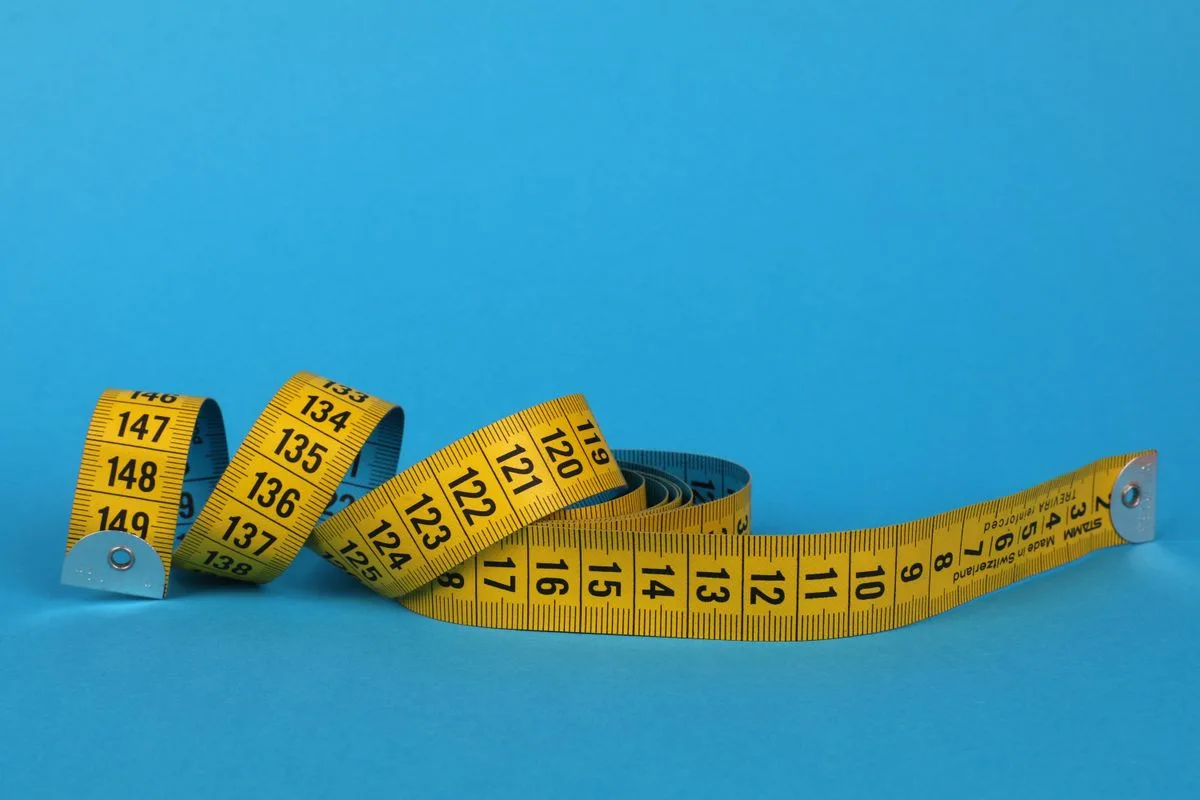
| Waist measurement | Measure around your waist with a tape, at the same spot | Once a month |
| How clothes fit | Try on the same pair of trousers or a belt notch | Every few weeks |
| Energy and mood | Rate your day from 1 to 5 | Daily or weekly |
| Strength and fitness | Note reps, weights or how far you can walk | Every 2 to 4 weeks |
| Habits | Tick off meals cooked, walks taken, bedtimes kept | Daily |
| Sleep | Note hours and how rested you feel | Weekly |
Habits are the easiest to control. You cannot make the scale go down on command, but you can take a walk today.
Non-scale wins worth noticing
- You climb stairs without getting out of breath.
- Your clothes feel looser or more comfortable.
- You have more energy in the afternoon.
- You sleep more soundly.
- You feel calmer around food.
- You lift a little more or walk a little farther.
- Your doctor's numbers, such as blood pressure, improve.
Write these down. They show progress on days the scale does not.
Want a realistic plan that goes beyond the scale?
Our Weight Management Guide gives you a 12-week roadmap built on habits, not crash diets.
How to use the scale wisely, if you choose to
You do not have to use a scale at all. If you do, make it a low-drama tool.
- Weigh yourself no more than once a week.
- Use the same scale, at the same time, such as first thing in the morning.
- Wear similar clothes, or none.
- Write the number down, then look at the trend over four weeks.
- Pair it with one other measure, such as your waist.
A trend of steady change over weeks matters far more than any single reading.
Modest change can still matter for health
The NIDDK says that if you are at risk for type 2 diabetes, losing at least 5 to 7 percent of your starting weight may help prevent or delay it.
For a person who weighs 200 pounds, that is roughly 10 to 14 pounds.
You do not need to reach an ideal number to gain health benefits. Small, steady changes count.
When weighing yourself starts to hurt
For some people, the scale becomes a source of stress. Watch for these signs.
- You weigh yourself several times a day.
- Your mood depends on the number.
- You skip meals or restrict food after a high reading.
- You avoid social events because of your weight.
- You feel anxious or ashamed about food.
If food or weight feels out of control, or you have a history of disordered eating, speak to a doctor or a qualified mental health professional. Help is available, and you do not have to deal with it alone.
A simple monthly check-in sheet
Copy this into a notebook and fill it in once a month.
| Question | This month |
|---|---|
| Waist measurement | Write it here |
| How do my clothes feel? | Tighter, the same, looser |
| My energy this month (1 to 5) | Write it here |
| What did I do most days? | Walks, meals cooked, early bedtimes |
| One habit to keep, one to change | Write it here |
Review it with kindness. Look for patterns, not perfection.
Common scale myths
- Myth: weight loss is a straight line. In real life, it goes up and down, and the trend is what matters.
- Myth: more weigh-ins mean better control. For many people, daily weighing adds stress without adding useful information.
- Myth: every pound gained is fat. Water, food, muscle and hormones all play a part.
- Myth: if the scale is not moving, nothing is working. Waist, strength, energy and habits may be improving.
- Myth: a number can define your health. Health includes fitness, sleep, mood, food habits and medical checks.
A four-week tracking plan
Try this simple plan to shift your focus away from the scale.
| Week | Focus | What to do |
|---|---|---|
| Week 1 | Baseline | Measure your waist once. Note your energy and how your clothes fit. Skip the scale or weigh once. |
| Week 2 | Habits | Tick off two habits daily, such as a walk and a vegetable at dinner. |
| Week 3 | Strength | Note one strength or fitness marker, such as how many sit-to-stands you can do. |
| Week 4 | Review | Fill in the monthly check-in sheet and choose one habit to keep. |
Repeat the cycle each month. Over time you will see patterns that the scale alone would hide.
Talking to your doctor about weight
A doctor can look at your weight in context, along with your blood pressure, blood sugar, cholesterol and family history.
- Bring your habit notes and monthly check-in sheet.
- Ask which measures matter most for you.
- Ask about safe, realistic goals.
- Mention any medicines that may affect weight.
You deserve respectful care. If a conversation about weight does not feel helpful, ask for a second opinion or a referral.
Other ways to track progress
The scale tells you one thing. These other markers show a fuller picture.
- Energy. Do you feel more awake through the day?
- Strength. Can you lift, carry or climb more easily than before?
- Sleep. Are you falling asleep more easily and waking more rested?
- Mood. Do you feel steadier, or less stressed?
- Clothes. Do they fit differently?
- Habits. Are you moving, eating and sleeping in ways you can keep?
Try a monthly check-in
Once a month, write down how you feel on each of those markers. Add a photo or a measurement if you like, but only if it does not upset you.
Look at the trend across months, not day to day.
Make a plan for stalls
Weight often moves in small ups and downs. If it stalls, check your sleep, stress, meals and movement before making big changes.
If you are worried about your weight or your health, talk to your doctor. Our BMI calculator is only a rough screening tool and does not tell the whole story.
Celebrate non-scale wins
Notice when you walk farther, sleep better or feel calmer. These wins build the confidence that keeps habits going.
Building a healthier relationship with the scale
If the scale affects your mood, it may help to change how you use it.
- Weigh yourself once a week at the same time, or take a break for a month.
- Look at the trend over weeks, not one day.
- Do not let a number decide how you feel about yourself.
- Pair the number with other markers, like energy and strength.
When to ask for help
If thoughts about weight or food feel overwhelming, or you notice unhealthy patterns, please talk to a doctor or a qualified mental health professional.
This article is general education. It is not personal advice, and its reviewer, Meena Narayanan, holds a personal training credential rather than a medical one.
Recap: beyond the scale in five points
- Weight swings daily because of water, salt and food.
- The scale cannot tell muscle from fat.
- Track waist, energy, strength, habits and how clothes fit.
- If you weigh yourself, do it weekly and read the trend.
- Get help if the number starts to run your life.
The scale and weight tracking: frequently asked questions
Water, salt, food in your gut, hormones and the time of day all change the number. A change of a pound or two in a day is normal.
If you choose to weigh yourself, once a week at the same time is plenty. Look at the trend over several weeks, not single readings.
Waist measurement, how your clothes fit, energy, strength, sleep and daily habits such as walks and home-cooked meals.
Yes, especially if you are new to strength training. That can leave the scale unchanged even though your body is changing.
It is a quick screening tool. The WHO notes that other measures, such as waist circumference, can help, and a doctor can look at the whole picture.
It can. The NIDDK says people at risk for type 2 diabetes may prevent or delay it by losing at least 5 to 7 percent of their starting weight.
Sources and further reading
We checked definitions and figures against these sources.
- World Health Organization: Obesity and overweight fact sheet
- NIDDK (NIH): Health risks of overweight and obesity
- NHS: Healthy weight
Want more? Head back to the Weight Management hub, or read the Weight Management Guide.