
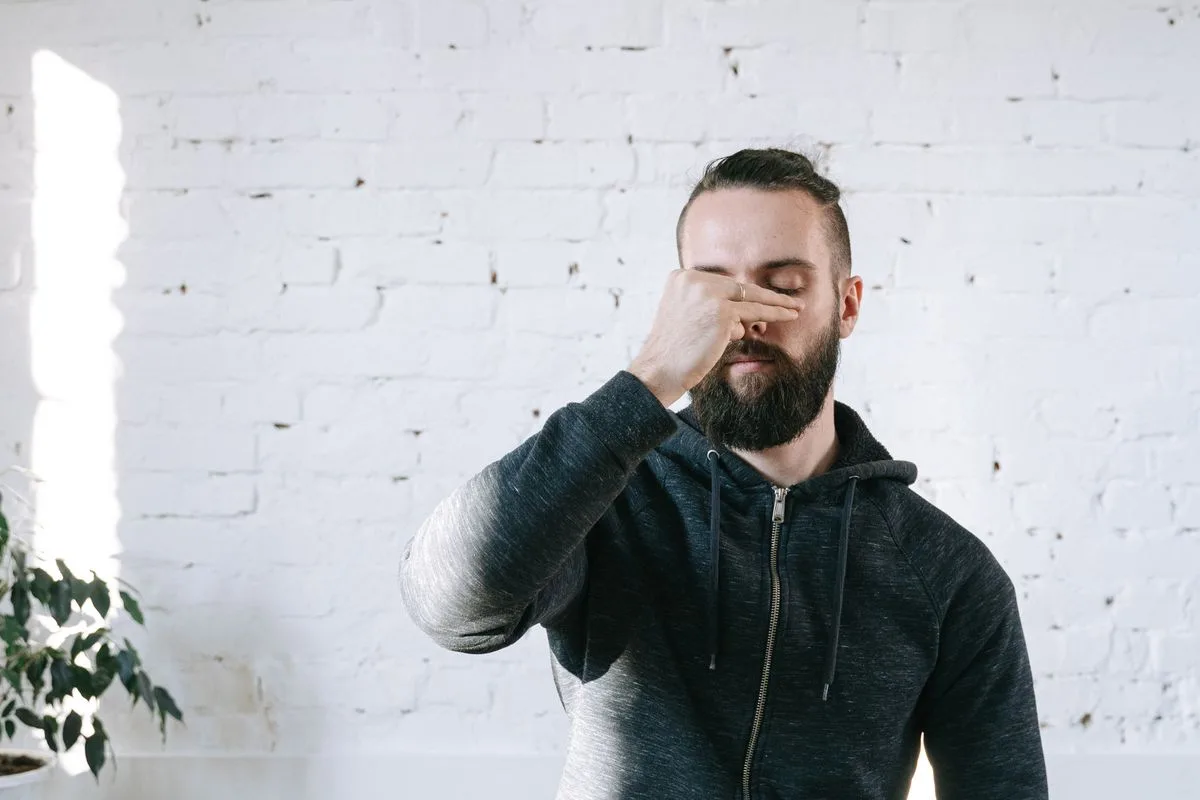
What is box breathing?
Box breathing is a way of breathing to a steady rhythm. You picture a box with four equal sides.
Each side is one step: breathe in, hold, breathe out, hold. You spend the same number of counts on every side.
The steady count gives your mind a simple job to focus on, which is why many people find it settling.
The NHS breathing exercise for stress does not use the name box breathing. It describes a related idea: slow, even breaths with a steady count, practised regularly.
Box breathing is one popular version of that idea. We include it here because many people find the four-step pattern easy to remember.
Explore more everyday stress toolsHow to do box breathing, step by step
Find a comfortable position. You can sit in a chair with your feet flat, or stand with your shoulders relaxed.
Loosen any tight clothing around your waist or chest. The NHS suggests this for its own breathing exercise, too.
The four steps
- Breathe in gently through your nose for a count of four.
- Hold your breath comfortably for a count of four.
- Breathe out slowly through your mouth for a count of four.
- Hold again, with empty lungs, for a count of four.
That is one round. Repeat for about four rounds, which takes around a minute.
You can build up to a few minutes over time.
Four counts is a common guide, not a rule. If holding your breath feels tense, use a shorter count, such as three, or skip the holds and just breathe in and out evenly.
Want a routine, not just a technique?
The Stress Management Guide shows how breathing, movement, boundaries and sleep fit together.
A simpler option: the NHS counted breath
If box breathing feels fiddly, the NHS describes a gentler version.
Let your breath flow deep into your belly, as far as is comfortable, without forcing it. Breathe in through your nose and out through your mouth.
Count from 1 to 5 as you breathe in, and again from 1 to 5 as you breathe out. The NHS notes you may not reach 5 at first, and that is fine.
Repeat for at least 5 minutes, and practise regularly for the most benefit.
The NHS also says you can do it lying down, sitting in a supportive chair or standing with your feet flat and hip-width apart.
Use whichever version feels calmest for you. The pattern matters less than the slow, steady rhythm.

When to use it in daily life
Box breathing works best when you use it as a small pause, not only in a crisis.
- Before a meeting, call or difficult conversation.
- In a queue, in traffic or on public transport, with your eyes open.
- At your desk when your shoulders have crept up toward your ears.
- In the evening as part of a wind-down. See our 30-minute wind-down routine.
- Right after you notice you feel overwhelmed. Our five-minute reset includes a breathing step.
A worked example
Say you have a call in five minutes and your heart feels fast. You sit back and drop your shoulders.
You do four rounds of box breathing, counting in your head. It takes about a minute.
You may not feel calm, but you may feel a little steadier and more ready to speak. That small shift is the aim.
Pair breathing with a mindful minuteA two-week practice plan
Breathing skills grow with repetition. A short plan keeps it easy to start and simple to stick with.
- Days 1 to 3: one minute, once a day, sitting down, at the same time each day.
- Days 4 to 7: add a second minute in a stressful moment, such as before an email you dread.
- Week 2: try it standing or walking slowly, and stretch to two or three minutes if it feels comfortable.
- After that: keep a one-minute version in your back pocket for hard moments.
Pair it with something you already do
Link your breathing to a daily cue. Try it after you sit at your desk, before you eat lunch or when you get into bed.
A cue you already have removes the need to remember.
How to know it is helping
Do not expect dramatic change. Look for small shifts, such as feeling a little less tight in your shoulders or finding it easier to pause before you react.
If it does not feel helpful, try the simpler NHS version, or try another calming habit such as a short walk or a five-minute written list.
Different tools suit different people, and that is fine.
Who might want to skip the holds
Some people find breath holds uncomfortable. That is common. If it applies to you, breathe in and out evenly without holding, and keep the same slow count.
You still get the slow, steady rhythm that makes counted breathing useful.
Safety tips and common mistakes
- Breathing too hard. Keep every breath gentle. You should never feel like you are forcing air.
- Holding too long. Use a shorter count if you feel tense or lightheaded.
- Stopping after one try. Like any skill, it feels easier with regular practice.
- Expecting instant calm. It is a tool that supports you, not a switch.
- Practising only during stress. Try it on calm days too, so it feels familiar when you need it.
Stop and breathe normally if you feel dizzy, faint or uncomfortable. People with breathing problems, heart conditions or who are pregnant should check with a doctor before using breath-holding techniques.
Box breathing compared with other simple options
Box breathing is one tool among many. Here is how it sits beside a few other easy choices, so you can pick what suits the moment.
- Box breathing: good when you want a clear four-step pattern to follow. The holds give your mind more to track.
- NHS counted breath: good when holds feel uncomfortable. It is just steady in-and-out breathing.
- Longer out-breath: good for a quick settle. Breathe out a little longer than you breathe in.
- A short walk: good when sitting still feels impossible. See our mindful walking practice.
How to choose
There is no single best method. Try each for a week and notice which one you actually keep doing.
The tool you use is better than the perfect tool you skip.
If none of them helps, that is useful information too. It may be a sign to talk to someone, or to try another self-care habit such as writing your thoughts down.
Teaching it to others
Box breathing is easy to explain to a friend, a child or a colleague. Give them the four steps and a count of three or four.
Doing it together for a minute before a stressful meeting or at bedtime can be a small, shared calm moment.
Notice your body's early stress signals
Breathing works best when you use it early. Learning your own warning signs helps you pause before stress builds.
- Shoulders creeping up toward your ears.
- A clenched jaw or tight forehead.
- Shallow, quick breathing.
- A racing mind or a short temper.
- The urge to rush or to check your phone again.
Use a signal as a cue
When you notice one of these, take one round of box breathing. That is only about 16 seconds at a four-count.
Making it small removes the pressure. You are not trying to fix the whole day. You are giving yourself one steady moment.
Pair it with a body check
After your round, drop your shoulders, unclench your jaw and let your hands rest open.
This tiny body reset takes almost no time, and it teaches you to spot tension sooner.
Be kind if it does not work every time
Some days a breathing exercise will barely touch your stress, and that is normal.
Try another small step, such as standing up, drinking water or stepping outside. Our five-minute reset combines several of these.
When to get help
This article is about everyday stress. If a feeling lasts for weeks, gets worse, or starts to affect your sleep, work, relationships or daily life, talk to your doctor or another qualified professional.
A breathing exercise can support you, but it does not replace care from a professional.
Please contact a doctor, your local emergency number or a crisis line. You do not have to cope alone, and the person on the line can point you to the right help.
Recap: the main points
- Box breathing is four equal steps: in, hold, out, hold.
- Start with a count of four, or shorter if that feels better.
- The NHS describes a related counted breath: count 1 to 5 in and out, for at least 5 minutes.
- Use it as a small pause in your day, not only in a crisis.
- Stop if you feel dizzy, and talk to a professional if stress lasts.
Box breathing: frequently asked questions
Box breathing is a counted breathing pattern with four equal steps: breathe in, hold, breathe out and hold. A count of four for each step is common.
About four rounds, or a minute or two, is a good start. You can build up to a few minutes over time.
They are similar in spirit. The NHS describes slow, even breaths counted from 1 to 5, practised for at least 5 minutes, without the breath holds.
Use a shorter count, or skip the holds and breathe in and out evenly. The goal is to feel calmer, not strained.
It is a self-help tool for everyday stress and not a treatment. If anxiety is affecting your life, speak to a doctor or qualified mental health professional.
Stop and breathe normally if you feel dizzy, lightheaded or uncomfortable, and speak to a doctor if it happens often.
Want a fuller toolkit for everyday stress? Read our Stress Management Guide.
Related reading: A 7-Day Self-Care Challenge for Improving Mental Health
Sources and further reading
We checked the figures and guidance in this article against these sources. This article does not give personal medical advice.
Want more? Head back to the Mental Wellbeing hub or read the Start Here guides.