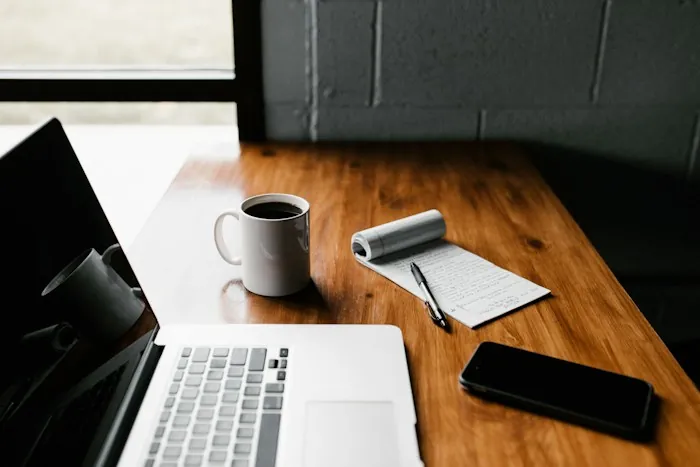

Why breaks matter
Long stretches at a desk can leave you stiff, tired and less focused. Your body is designed to move, and your mind works better when it gets a rest.
The NHS advises reducing time spent sitting or lying down and breaking up long periods of not moving with some activity. NIMH lists regular activity, healthy meals and rest among ways to cope with stress.
Breaks are not slacking. They are part of doing your job well and looking after your health.
See how boundaries protect your break timeBreak 1: Move your body
- Stand up and stretch your arms, neck and back.
- Walk to get water, or around the office or house.
- Take the stairs.
- Do a few sit-to-stands or calf raises.
- Take a short walk outdoors.
The NHS says even 10 minutes of activity a day can make a difference, and NIMH says 30 minutes of walking a day can boost your mood. Short breaks help you build up to that. See our guides to walking for fitness and quick 20-minute workouts.
Break 2: Breathe and reset
The NHS breathing exercise suggests letting your breath flow deep into your belly, breathing in through your nose and out through your mouth, counting from 1 to 5, and repeating for at least 5 minutes. The NHS says it can be done anywhere.
- Sit with your feet flat and your shoulders relaxed.
- Take five slow breaths before a meeting.
- Try box breathing.
- Use our five-minute reset when things pile up.
Want more everyday tools for stress?
The Stress Management Guide brings breaks, breathing, boundaries and sleep together.
Break 3: Step away from screens
A two-week trial of adults found that cutting recreational screen use improved self-reported wellbeing and mood. That trial was about leisure screens, not work, but the message is helpful: give your eyes and mind a rest.
- Look out of a window or at something far away.
- Put your phone in a drawer during breaks.
- Take lunch away from your desk.
- Talk to a colleague instead of sending a message.
See our article on limiting screen time.

Break 4: Eat and drink properly
The NHS advises not skipping meals, and suggests 6 to 8 glasses of fluid a day. Keep water at your desk, and take a proper lunch.
- Prepare lunch and snacks in advance. See our guide to weekly meal planning.
- Drink water rather than sugary drinks.
- Keep fruit and nuts nearby.
- Have caffeine earlier in the day.
Adapting it to your situation
- If you are just starting out: begin with five to ten minutes, and build up slowly.
- If you have a health condition: ask your doctor what is safe, and which signs mean stop.
- If you live alone: tell someone your plan, and keep a phone within reach.
- If you care for someone else: use short bursts, and share activity with them if possible.
- If you have limited mobility: choose seated or supported versions of exercises.
The habit is the same for everyone. Only the setting and the pace change.
A worked example: a break plan for a desk job
Dana works at a computer for eight hours. She sets a reminder every hour to stand and stretch for two minutes. At 11 a.m., she takes a five-minute walk. At lunch, she eats away from her desk.
In the afternoon, she does five slow breaths before a difficult meeting. By the end of the week, she has fewer headaches and feels less drained.
None of these breaks took long. Together, they changed her day.
A sample workday
- 9:00: start with a glass of water and a two-minute stretch.
- 10:30: stand, walk and look out of the window.
- 12:30: a proper lunch away from your desk, plus a short walk.
- 14:30: five slow breaths and a snack.
- 16:00: stretch, water and a quick check of tomorrow's priorities.
- End of day: switch off, and leave work behind.
Adjust the times to fit your schedule.
Keeping it going
- Pick a fixed time that suits your energy.
- Link it to something you already do.
- Use a calendar or diary to tick off each day.
- Do it with a friend or family member.
- Celebrate progress that is not about weight or speed.
- Restart the next day if you miss one.
Our article on how to build a habit that sticks has more ideas.
Common mistakes to avoid
- Working through lunch. Take a real break.
- Only breaking to scroll. Choose movement or fresh air.
- Waiting until you are exhausted. Take breaks early.
- Feeling guilty. Breaks help you work better.
- Skipping water and meals. The NHS advises against skipping meals.
Small, regular breaks add up.
Myths worth dropping
Myth 1: Breaks waste time
Short breaks help you stay focused and well.
Myth 2: You need a long break to benefit
Two minutes of movement or breathing counts.
Myth 3: Only office workers need breaks
Anyone who works, at home, on the go or on their feet, benefits from rest.
Questions to ask yourself
A few honest questions help you tailor these ideas to your own life.
- When do I feel most tired at work?
- What break would help most then?
- What gets in the way of taking breaks?
- Who could take breaks with me?
- What boundary would protect my break time?
Track how it goes
A light record helps you see what works. It takes less than a minute.
- Tick a calendar on days you do the habit.
- Note your energy on a 1 to 5 scale.
- Write one line about what helped or got in the way.
- Review every two weeks and change one thing.
You may notice that some steps make a big difference and others do little. Keep the ones that help.
When to get support
These are everyday habits. Talk to your doctor if you have a health condition, persistent tiredness, low mood lasting weeks or symptoms that worry you.
A doctor, pharmacist or dietitian can look at your situation and tailor advice.
This article is general education, not personal medical or dietary advice. Its reviewer, Meena Narayanan, holds a personal training credential, which is not a medical or dietetics credential. Talk to your doctor before you change your exercise or eating habits, especially if you have a health condition, take medicines or are pregnant.
Five desk stretches
- Neck: gently tilt your ear toward your shoulder, and hold for 10 seconds on each side.
- Shoulders: roll them back and down five times.
- Chest: clasp your hands behind your back and lift your chest.
- Back: sit tall and twist gently to each side.
- Wrists and hands: open and close your fingers, and circle your wrists.
Harvard Health suggests holding stretches for 10 to 30 seconds. Move gently, and never stretch into sharp pain.
Breaks when you work from home
- Use your old commute time for a walk.
- Take lunch away from your workspace.
- Step outside for a few minutes.
- Set a finish time, and close your laptop.
- Keep your workspace out of your bedroom if you can.
Without colleagues around, it is easy to work through breaks. A reminder on your phone helps.
Talking to your manager about breaks
- Explain that regular breaks help you focus and stay well.
- Suggest a simple plan, such as short breaks and a proper lunch.
- Ask about workload, deadlines and priorities.
- Ask about flexible options, such as a walking meeting.
- Use workplace wellbeing services if they exist.
If work stress is severe or lasts for weeks, talk to your doctor. NIMH says to seek help for severe or distressing symptoms lasting 2 weeks or more.
Look after your eyes and posture
- Look away from your screen at something far away every so often.
- Set your screen at about arm's length, with the top at eye level.
- Keep your feet flat and your back supported.
- Change position regularly, and stand for some tasks if you can.
- If you have pain, headaches or eye strain, ask your doctor or an optician.
Small setup changes and regular movement often ease the aches that come with desk work.
Micro-breaks for very busy days
- Three slow breaths before opening a new task.
- Stand up while you take a phone call.
- Drink a glass of water between meetings.
- Roll your shoulders while a file loads.
- Look out of the window for thirty seconds.
Micro-breaks are small, but they keep you from running on empty.
Break 5: Connect and get outdoors
The NHS says good relationships are important for your mental wellbeing. A chat with a colleague or a quick walk together is a great use of a break. See our article on spending time in nature.
- Have lunch with a colleague.
- Take a walking meeting.
- Call a friend on your break.
- Step outside for fresh air.
Recap: the main points
- Break up long periods of sitting, as the NHS advises.
- Move, breathe, rest your eyes, eat and drink properly and connect.
- Even short breaks help.
- Protect your break time with clear boundaries.
- Talk to your manager or doctor if work stress feels constant.
Taking better breaks at work: frequently asked questions
Break up long periods of sitting with movement, as the NHS advises. Many people find a short break every hour or so helpful.
Two to five minutes is enough for a stretch or breathing. Take a longer break for lunch.
Walking, stretching, breathing exercises, a glass of water and stepping outside.
If you can, take some breaks without your phone, so your eyes and mind rest.
Talk to your manager about priorities and workload. Use very short breaks, such as three slow breaths.
NIMH says to talk to a professional if you have severe or distressing symptoms lasting 2 weeks or more.
Want a step-by-step start? Explore the Start Here guides.
Sources and further reading
We checked the figures and guidance in this article against these sources. This article does not give personal medical advice.
- NHS: Physical activity guidelines for adults aged 19 to 64
- NIMH: Caring for your mental health
- NHS: Breathing exercises for stress
- NHS Better Health: Lose weight
- PMC: Effects of limiting digital screen use on well-being, mood and biomarkers of stress in adults
- NHS: Five steps to mental wellbeing
- NHS: Eight tips for healthy eating
Want more? Head back to the Healthy Living hub or read the Start Here guides.