What is a habit, and why do most habits fade?
A habit is an action you do almost without thinking. You brush your teeth, put on your seatbelt or reach for your phone without making a decision each time.
Researchers describe this as a link between a cue and an action. The cue is something in your day, such as waking up, and the action follows on its own after enough repeats. You can read a good overview in this paper on the psychology of habit formation.
Most new habits fade for a simple reason. They ask too much, too soon.
A plan to "exercise every day" or "eat perfectly" needs a lot of motivation. Motivation rises and falls, so the plan breaks on a tired Wednesday.
Habits run on cues, not on willpower
A habit that sticks does not rely on how you feel. It relies on a clear cue, a small action and a bit of repetition.
When the cue shows up, the action starts. Over time it takes less effort and less thought.
How long does it take to build a habit?
It takes longer than most people expect. In one well-known study from University College London, habits took about 66 days on average to feel automatic.
The range was wide. Some people got there in a few weeks, and others needed many months, depending on the person and the habit.
The popular "21 days" idea is a myth. Do not panic if week four still feels like effort.
What this means for you
- Expect to keep at it for a couple of months, not a couple of weeks.
- Simple habits usually settle faster than complex ones.
- Missing one day did not seem to derail progress in that research, so a slip is not a failure.
Your goal is not perfection. Your goal is to return to the habit quickly after a gap.
The 66 day figure is an average from one study. Your own pace may be faster or slower, and that is normal.
How to build a habit that sticks: 7 simple steps
These steps work for almost any healthy habit. Use them one at a time.
Pick one tiny habit
Choose one habit and shrink it until it feels almost too easy. Aim for about two minutes or less.
"Walk for an hour" becomes "put on my walking shoes." "Meditate for 20 minutes" becomes "take three slow breaths."
A tiny start removes the excuse. You can grow it later.
Attach it to something you already do
Link the new habit to an action that is already solid in your day. This is often called habit stacking.
Use this simple sentence: "After I [current habit], I will [tiny habit]."
For example, "After I pour my morning tea, I will drink one glass of water."
Make it obvious
Put a visual reminder where you cannot miss it. Leave your water bottle on the kitchen counter or your yoga mat by the bed.
If you cannot see it, you will forget it.
Make it easy
Remove steps between you and the habit. Lay out your workout clothes the night before. Wash and cut fruit so it is ready to grab.
Every extra step is a chance to skip. Cut steps and the habit gets easier to keep.
Repeat it in the same place and at the same time
A steady setting helps the habit link to its cue. Try to do it at about the same time and in the same spot.
Over weeks, the place and the time start to prompt the action for you.
Track it and celebrate
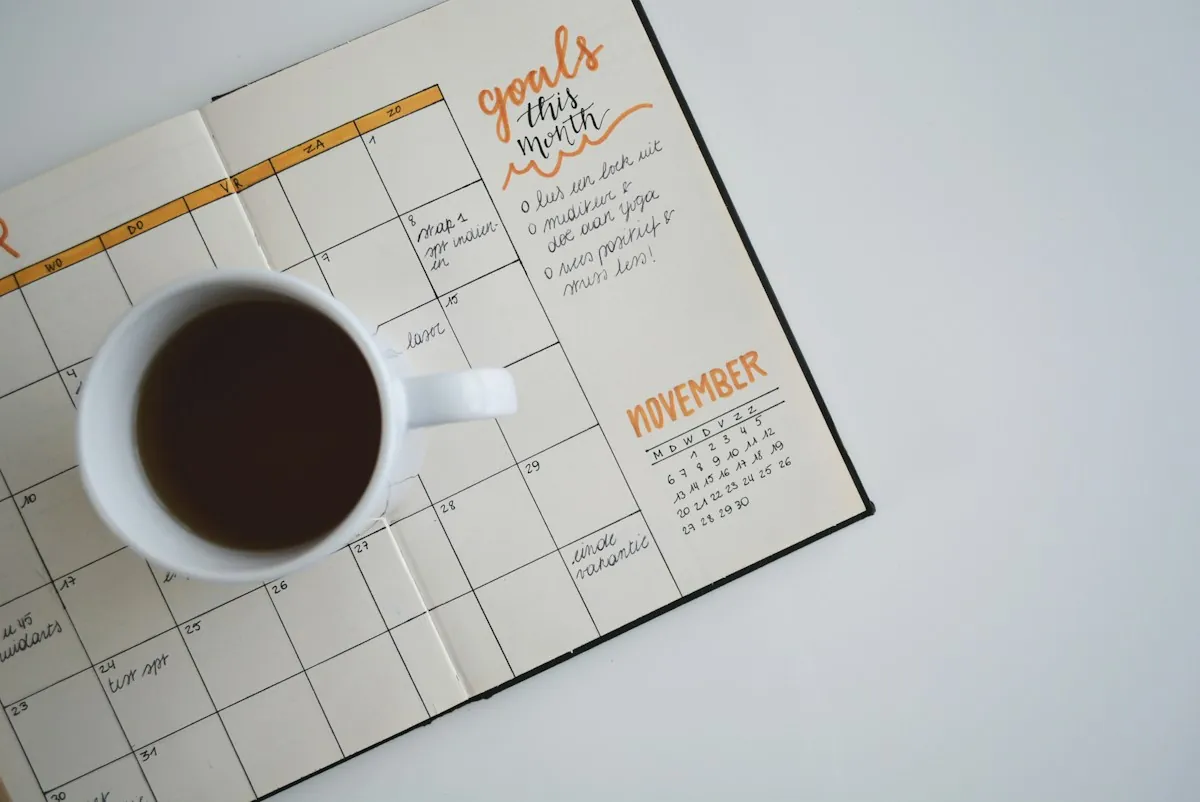
Mark an X on a calendar each time you do the habit. The growing chain of Xs is a small reward on its own.
Add a quick moment of pride, like a smile or a "nice work." Feeling good right after the habit helps your brain want to repeat it.
Plan for the slip up
You will miss a day. Decide in advance what you will do when it happens.
A good rule is to never miss twice in a row. One missed day is a blip, and two starts to become a new pattern.
Tiny habit examples you can copy today
Here are simple ways to turn the steps above into real habits. Each one starts small and can grow.
| After I... | I will... | Later I can... |
|---|---|---|
| Pour my morning tea or coffee | Drink one glass of water | Finish a water bottle by lunch |
| Brush my teeth | Stretch for 30 seconds | Do a 5 minute stretch |
| Arrive at work | Walk for 2 minutes | Take a 10 minute walk at lunch |
| Sit down to dinner | Add one vegetable to my plate | Fill half my plate with vegetables |
| Plug in my phone at night | Read one page of a book | Read for 10 minutes |
Notice how each habit is tied to a moment that already happens. That link is what makes it stick.
Healthy habit ideas by area of life
Not sure what to build first? Choose one area and start with a tiny action.
Movement
Public health guidance for adults is about 150 minutes of moderate activity a week, according to the NHS and the World Health Organization.
That sounds big, so start with a two minute walk after a meal. Build from there.
Looking for ideas? Browse our Fitness articles for gentle ways to begin.
Food
Small food habits add up. Add one vegetable to dinner, keep fruit on the counter or drink water before a snack.
Our Nutrition hub has simple swaps you can try one at a time.
Sleep
A steady bedtime routine is a habit too. The NHS sleep advice encourages regular sleep and wake times and a calm wind down.
Try dimming the lights and putting your phone away at the same time each night. See more in Sleep & Recovery.
Mind and mood
Take three slow breaths when you sit down at your desk, or write one thing that went well each evening.
These are gentle everyday habits. If you feel very low or anxious for a long time, please speak to a doctor.
Why habits fail, and how to fix them
If a habit keeps slipping, the problem is rarely you. It is usually the plan.
Starting too big
Big goals need big motivation. Shrink the habit until it takes under two minutes, then let it grow.
Changing everything at once
Each new habit takes attention. Focus on one, or two at most, until it feels automatic.
Having no clear cue
"Sometime this week" is not a cue. Tie the habit to a specific moment, like "after I lock the front door."
Being harsh after a miss
Guilt makes people quit. Treat a missed day as information, adjust the plan and carry on.
Choosing a habit that does not fit your life
A 5 a.m. workout will not last if you are a night owl with young children. Pick a time and a size that suit your real day.
If a new habit involves exercise, fasting or a big diet change and you have a health condition, are pregnant or take medicine, speak to a doctor first. This article is general education only.
Troubleshooting: when a habit will not stick
Almost everyone struggles to keep a new habit at some point. Here are common problems and simple fixes.
- It feels like too much. Shrink it. Do the two-minute version until it feels automatic.
- I keep forgetting. Add a visible cue, such as leaving your walking shoes by the door.
- I got bored. Change one small detail, like the route, the music or the time of day.
- I missed a few days. Start again at once, without punishing yourself.
- Life changed. Adjust the habit to fit your new schedule instead of dropping it.
Look at what is really in the way
Sometimes the habit is not the problem. Low sleep, high stress or a heavy workload can make everything harder.
If that sounds familiar, protect your sleep and simplify your day first. Our daily routine guide can help you build a steadier base.
Review once a month
Ask three questions. What worked? What felt heavy? What is one small change for next month?
This short check-in stops habits from quietly fading, and it keeps you in charge of the plan.
Recap: your habit plan in five points
- Start with one tiny habit that takes about two minutes.
- Attach it to something you already do every day.
- Make it obvious and easy, and repeat it in the same place.
- Track your progress and expect it to take a couple of months.
- If you miss a day, restart the next day.
Building habits: frequently asked questions
It depends on the person and the habit. In one well-known study, habits took about 66 days on average to feel automatic, and the range was very wide. Simple habits like drinking a glass of water tend to settle faster than bigger ones like exercise.
No. The 21 day idea is a popular myth. Research on habit formation found that the time needed varies a lot between people and between habits, and it often takes more than three weeks.
Just start again the next day. In the study above, missing a single day did not seem to ruin the process. What matters most is returning quickly, so try to never miss twice in a row.
Pick one small habit that matters to you and takes under two minutes, such as drinking a glass of water after waking or stretching for 30 seconds. Small wins build the confidence to add more.
Most people do best with one new habit at a time, or two at most. Once a habit feels automatic, you can add the next one. Trying to change everything at once is a common reason habits fail.
Less than you might think. Habits work by repeating an action in the same setting until it runs on autopilot. Making the habit easy, visible and tied to a daily cue does most of the work for you.
Related reading: The Top 10 Healthy Habits to Improve Your Overall Wellbeing · The Top 5 Healthy Hacks for Boosting Your Energy Levels
Sources and further reading
We checked habit research and activity guidance against these sources. Study findings vary by person, so treat the numbers as averages.
- British Journal of General Practice via PubMed Central: Making health habitual, the psychology of habit formation
- NHS: Physical activity guidelines for adults aged 19 to 64
- World Health Organization: Physical activity fact sheet
- NHS: Sleep and tiredness
Want more everyday ideas? Head back to the Healthy Living hub or start with our wellness guides.