Why resistance bands actually work
Resistance bands create what is called variable resistance: unlike a dumbbell, where the weight stays constant throughout the movement, a band gets harder to stretch the further you pull it. This means the resistance curve roughly matches how your muscles naturally generate more force in the middle to end range of many movements, which some research suggests can be an effective training stimulus in its own right.
Crucially, muscles respond to tension and effort, not specifically to the type of equipment creating that tension. A band pulled to genuine, challenging resistance produces a real training effect, comparable to equivalent free-weight exercises for building strength, particularly for beginners and intermediate lifters.
Choosing the right bands
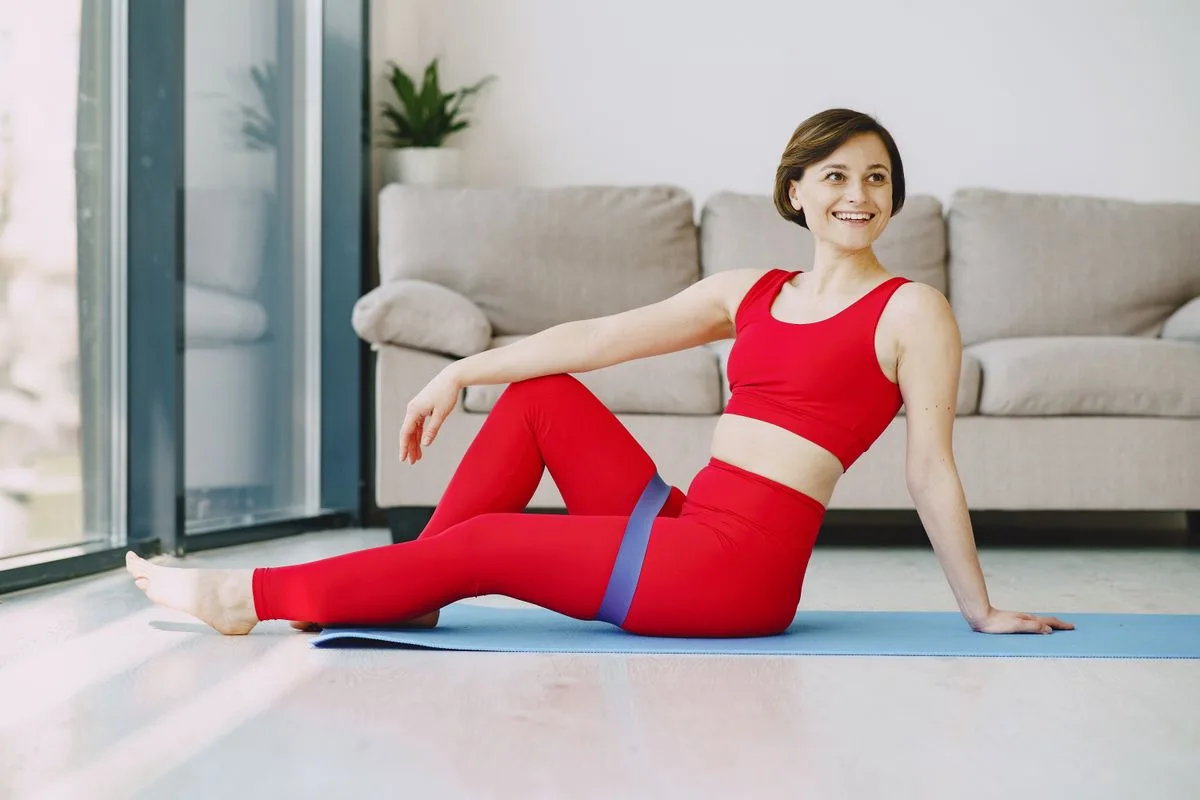
A set of three to four loop or tube bands, ranging from light to heavy resistance, covers the vast majority of exercises you will want to do. Flat loop bands are versatile for legs and glutes; tube bands with handles work well for upper-body pulling and pressing movements. Colour-coding for resistance level varies by brand, so check the specific tension rating rather than assuming colour meanings are universal.
A full-body routine you can do anywhere
| Exercise | Target area | Sets and reps |
|---|---|---|
| Band squats | Legs and glutes | 3 sets of 12 to 15 reps |
| Standing rows | Upper back | 3 sets of 12 to 15 reps |
| Chest press | Chest and triceps | 3 sets of 12 to 15 reps |
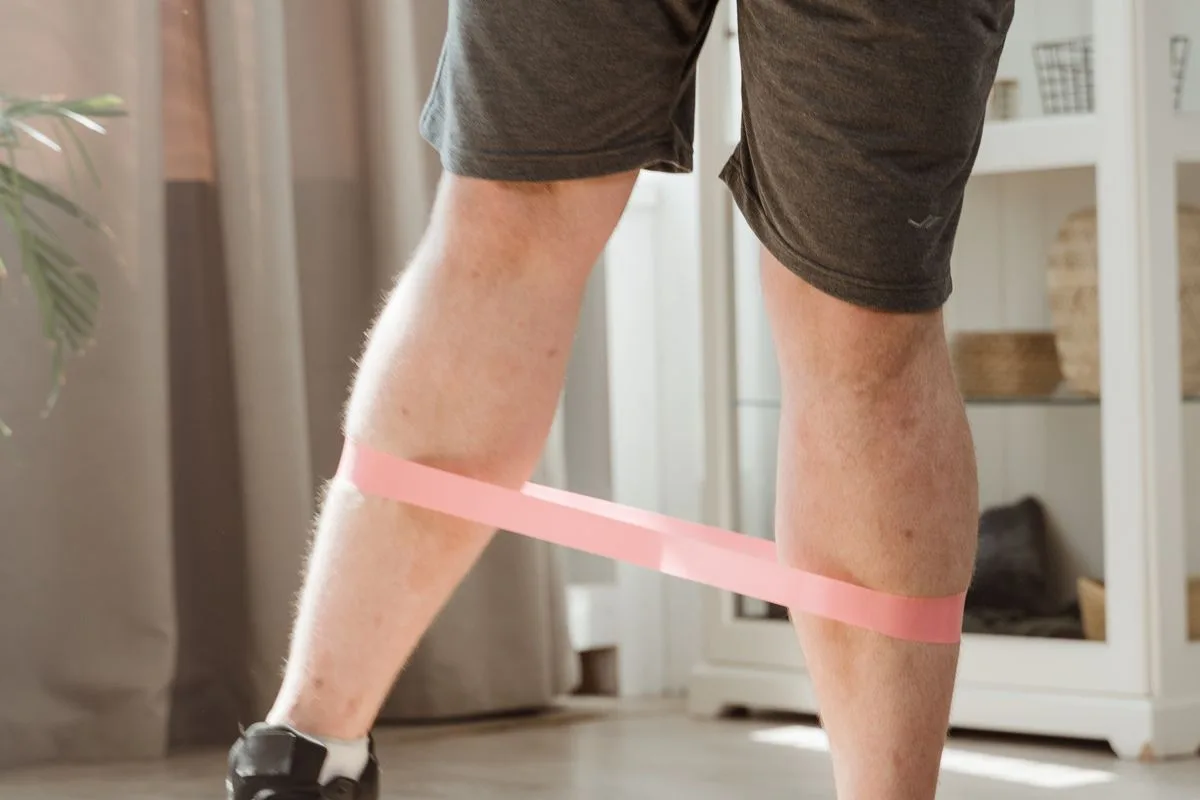
| Lateral band walks | Hip and glute stability | 2 sets of 10 steps each direction |
| Band deadlifts | Hamstrings and glutes | 3 sets of 10 to 12 reps |
| Overhead press | Shoulders | 3 sets of 10 to 12 reps |
How to make band exercises harder
Bands are easy to progress once you know the levers available. Switch to a stronger band once your current one no longer feels challenging by the last couple of reps. Slow the tempo, particularly the lowering or returning phase of a movement, to increase time under tension. Increase your range of motion where the exercise allows it. Or combine two bands for a heavier load than either provides alone, a common trick once a single band is not enough.
A common mistake is letting the band snap back quickly once you have pulled it. Controlling the return phase just as carefully as the working phase both increases the training effect and reduces the risk of the band slipping or catching awkwardly.
When bands are especially useful
Bands particularly shine in a few situations: travel, since a full set weighs very little and packs flat; small living spaces where a rack of dumbbells is not practical; and rehabilitation or returning to exercise after a break, where the lighter, more controllable resistance at the start of a movement suits a gradual reintroduction to load.
Want more no-equipment options too?
Our simple home workouts guide gives you a no-equipment routine and a four-week plan.
Common mistakes to avoid
- Using a band that is too light to feel genuinely challenging: if the last few reps feel easy, the band is not providing enough stimulus to build strength.
- Letting the band snap back uncontrolled: this reduces the training effect and increases the chance of an awkward catch.
- Anchoring the band poorly: make sure door anchors or anything the band loops around is secure before pulling hard against it.
- Ignoring worn or damaged bands: check for small tears or thinning before each use, and replace bands showing wear.
- Skipping warm-up: bands can still cause strain if you go straight into heavy resistance without warming up the relevant joints first.
Resistance bands: frequently asked questions
For building strength, particularly for beginners and intermediate lifters, research suggests bands can produce comparable results to equivalent free-weight exercises, provided the resistance is genuinely challenging.
A set of three to four bands, ranging from light to heavy, covers the vast majority of common exercises for most people.
Yes. Bands are often recommended as a beginner-friendly entry point to resistance training because of the more controllable, gradual resistance curve compared to free weights.
Check before each use for small tears, thinning, or cloudiness in the material, and replace any band showing these signs rather than waiting for it to snap.
Yes, with sufficient tension and progressive overload applied over time, bands can support muscle growth in a similar way to other forms of resistance training.
No. Many effective exercises, like squats, lateral walks and bicep curls, only require standing on the band, without needing a door anchor or other attachment point.
Sources and further reading
We checked this guidance against these sources:
- NHS: strength exercises for adults
- Lopes JSS, et al. Elastic resistance training for older adults: a systematic review. J Sports Sci Med. 2019.
- Aboodarda SJ, et al. Elastic resistance affects force production and quality in multi-joint exercise. J Sports Sci Med. 2013.
- American College of Sports Medicine: Physical Activity Guidelines Resources
Want more ways to train at home? Visit the Fitness hub, see our Beginner Fitness Guide, or try bodyweight exercises for another no-equipment option.