
Why leg strength matters every day
Think about how often you sit down and stand up. Chairs, sofas, toilets, cars and beds all ask your legs to do the work.
The sit-to-stand and the squat train exactly that movement. They are useful because they copy real life.
What stronger legs help with
- Getting out of a chair or car with less effort.
- Climbing stairs.
- Walking farther without feeling worn out.
- Keeping steady when you step off a curb or turn quickly.
Strength training is part of the guidance for adults, and it becomes even more useful as we get older. For more on why, read our article on strength training after 40.
The moves here are gentle, and you can do them at home.
See why strength matters after 40How to do the sit-to-stand
The NHS strength exercises guide describes the sit-to-stand as a simple starter move.
Set up
- Use a stable chair with no wheels.
- Place it against a wall so it cannot slide.
- Sit toward the front of the seat with your feet flat and about hip-width apart.
- Wear flat, supportive shoes.
The steps
- Lean slightly forward from the hips.
- Stand up slowly, using your legs and not your arms.
- Stand fully upright, then lower yourself back down under control.
- Repeat for 5 repetitions.
The NHS notes that moving slowly gives better results. Take a count of about three to sit back down.
If you need to, cross your arms over your chest so you are not tempted to push with your hands.
Want a full plan, not just one move?
The Healthy Aging Guide shows how strength, balance and daily movement fit together in a simple week.
How to do the mini-squat
The mini-squat is a small version of a full squat. It is a good next step once the sit-to-stand feels comfortable.
The steps
- Stand with your feet about hip-width apart, holding the back of a chair or a kitchen counter.
- Slowly bend your knees as far as is comfortable, keeping them facing forward.
- Keep your back straight the whole time.
- Slowly straighten up. Repeat for 5 repetitions.
Do not worry about how deep you go. A small, controlled bend is a real squat.
Your knees should point in the same direction as your toes and should not fall inward.
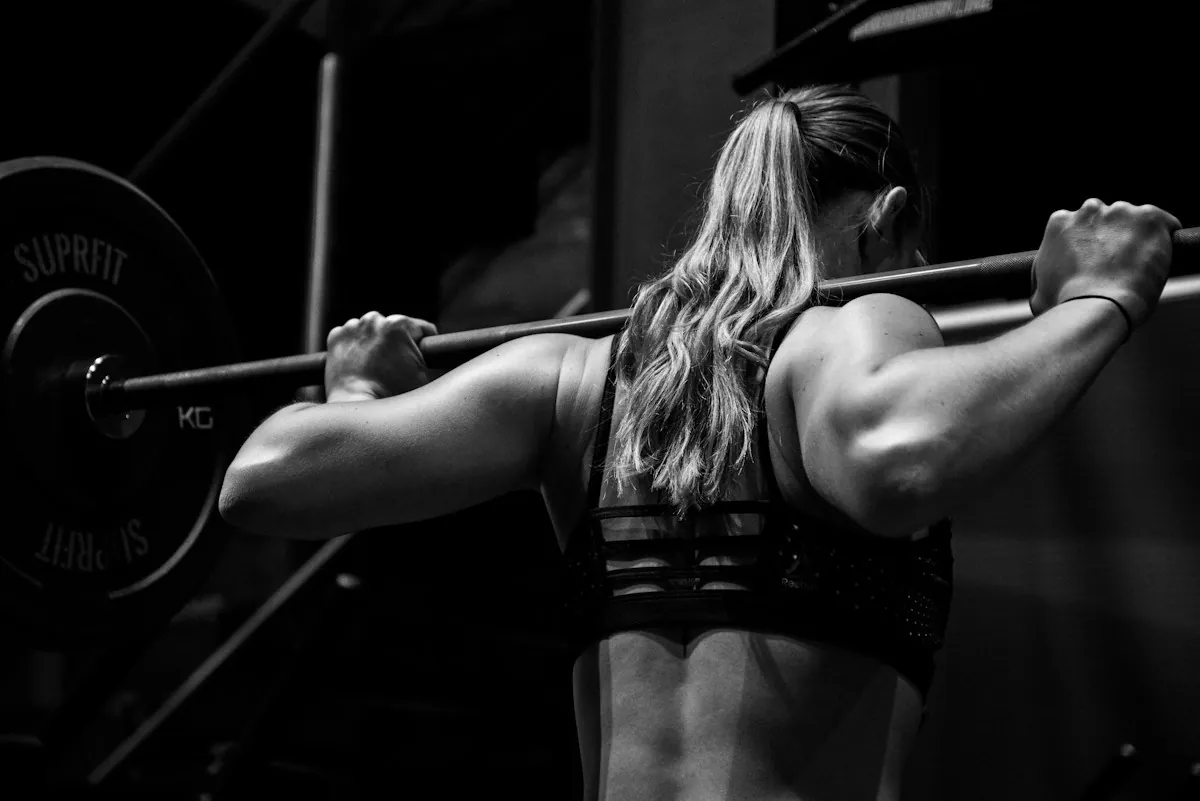
Stop if you feel sharp pain in a joint or feel dizzy. Mild muscle effort is normal. Sharp or worsening pain is not.
A beginner plan you can follow
The NHS suggests doing strength exercises at least twice a week. This plan keeps things short.
- Sit-to-stand: 5 slow repetitions.
- Mini-squat: 5 slow repetitions.
- Rest: about a minute between moves.
- How often: at least twice a week, with a rest day in between.
Ways to make it easier
- Sit on a higher seat, such as a firm cushion on the chair.
- Hold a counter for the mini-squat.
- Do fewer repetitions and build up over a few weeks.
Ways to make it harder
- Lower the count to sit down more slowly.
- Use a lower chair, only once it feels safe.
- Add a few repetitions, then a second round.
- Hold a light object at your chest.
A small change every week or two is plenty. The goal is steady progress, not a hard workout every time.
Add simple balance moves nextUsing the movement in everyday life
The best exercise is the one you can repeat. Squats and sit-to-stands fit into a normal day with no special set-up.
Turn chores into practice
- Stand up slowly from the sofa, using your legs, whenever the ad break starts.
- Do a mini-squat while you wait for the kettle, holding the counter.
- Sit down slowly and with control each time, rather than dropping into the seat.
- Use the toilet seat or a firm chair as a target for a slow lowering.
These small moments are not a replacement for your twice-weekly session, but they keep your legs working between sessions.
A worked example
Say you find it hard to get out of a low armchair. You start with a higher, firmer chair and do 5 sit-to-stands on Tuesday and Friday.
After three weeks, you use your hands less and the movement feels smoother.
In week five, you move to a slightly lower seat.
The chair did not change. Your legs did.
Rest and recovery
Muscles get stronger while you rest. Mild soreness for a day or two after starting is common.
Sharp, sudden or lasting pain is not normal and is worth checking with a professional.
Sleep and regular meals help your body adapt. Our guide to how many hours of sleep you need explains why rest matters.
Three myths about strength work later in life
Myth 1: It is too late to start
Muscles respond to use at any age. Starting with 5 slow repetitions is still a real start.
The size of the first step matters less than taking it.
Myth 2: Squats are bad for your knees
A small, controlled squat with good form is a normal movement your knees do all day, every time you sit.
Pain is a signal to adjust the depth or get advice, not proof that squats are harmful.
Myth 3: You need a gym
A stable chair and a counter are enough for the moves in this article.
A gym or a trainer can help later, but they are not a starting requirement.
If you would like personal guidance, look for a qualified trainer who has experience with older adults.
Common mistakes and how to fix them
- Pushing with your arms. Cross your arms or rest your hands on your thighs to focus on your legs.
- Dropping into the chair. Lower yourself slowly and under control.
- Knees falling inward. Think of pushing your knees gently outward, in line with your toes.
- Rounding your back. Keep your chest up and your back straight.
- Holding your breath. Breathe out as you stand up.
- Doing too many too soon. Five good repetitions beat twenty rushed ones.
How to progress over eight weeks
Progress works best in small steps. Here is one way to build over two months. Adjust the pace to suit you.
- Weeks 1 and 2: 5 slow sit-to-stands and 5 mini-squats, twice a week, near a wall or counter.
- Weeks 3 and 4: keep the same numbers, but lower yourself more slowly, taking about three counts to sit.
- Weeks 5 and 6: add a second round of each move, with a minute of rest between rounds.
- Weeks 7 and 8: use less support, or try a slightly lower chair, only if it feels safe.
Keep a simple log
Write down the date, the exercise and how it felt. A note like "felt easier than last week" is enough.
A log helps you see progress that is easy to miss day to day. It also helps you spot when you need an extra rest day.
What to do if you plateau
Every body has flat weeks. If things stop improving, check your sleep, meals and stress before you push harder.
You can also change one detail, such as tempo or chair height, for a couple of weeks. Small changes often restart progress.
If you feel stuck or worried, a physiotherapist or qualified trainer can look at your form in person.
Celebrate the real wins
The real result is not a number. It is getting off the sofa without a sigh, or climbing the stairs with a lighter step.
Notice those wins. They keep the habit going.
Warm up and cool down
A short warm-up prepares your muscles and joints. It takes about two minutes and lowers the chance of feeling stiff.
- March gently on the spot for 30 to 60 seconds.
- Roll your shoulders back a few times.
- Circle each ankle slowly.
- Take a few easy breaths before your first repetition.
Cool down
After your session, walk around slowly for a minute. Then stretch your thighs and calves gently, holding each stretch only until you feel a mild pull.
Never stretch into sharp pain. A comfortable stretch is all you need.
What soreness should feel like
Mild, dull tiredness in your legs the next day is common when you begin. It usually eases within a couple of days.
Sharp pain, swelling, or pain that does not settle is a reason to pause and speak to a health professional.
Fit it into your week
Pick two days that suit you, such as Tuesday and Friday, and link the session to something you already do, like after your morning tea.
A fixed slot makes it easier to keep going when motivation dips.
Who should check with a doctor first
These exercises are gentle, but they still put load on your legs and heart.
Talk to your doctor or a physiotherapist first if you have knee, hip or back pain, a heart or blood pressure condition, recent surgery, or a history of falls.
They can tell you what is safe for your body and whether you need changes.
This article is general education. Meena Narayanan reviewed it as a Certified Personal Trainer, which is not a medical credential.
Recap: the main points
- Leg strength helps with everyday tasks like standing, stairs and walking.
- Do the sit-to-stand and mini-squat for 5 slow repetitions each.
- Aim for at least two sessions a week.
- Use a stable chair, keep your back straight and stand using your legs.
- Check with a doctor first if you have joint, heart or fall concerns.
Sit-to-stand and squats: frequently asked questions
Start with 5 slow repetitions, at least twice a week, as the NHS suggests. Add a few repetitions or a second round as it gets easier.
A small, controlled squat holding a counter or chair is a gentle option for many people. If you have joint pain, heart concerns or balance problems, check with a doctor first.
Use a higher seat, such as a firm cushion, and push lightly with your hands at first. Work toward using less help over several weeks.
The NHS suggests at least twice a week. Leave a rest day between sessions.
Focus on keeping your knees in line with your toes and bending only as far as is comfortable. Sit your hips back a little, as if you were sitting on a chair.
No. A stable chair with no wheels and a wall or counter for support are enough to begin.
Want the full picture? Read our Healthy Aging Guide.
Sources and further reading
We checked the figures and guidance in this article against these sources. This article does not give personal medical advice.
Want more? Head back to the Healthy Aging hub or read the Start Here guides.