
Why falls happen at home
Falls are the leading cause of both fatal and non-fatal injury among adults over 65, and most of them happen during ordinary daily activities in familiar surroundings, not during anything unusual or risky. A rug edge catching a foot, reaching for something on a high shelf, stepping out of the shower, getting up quickly in the dark: these everyday moments account for the bulk of falls.
Fall risk usually comes from a combination of factors rather than one single cause: reduced leg strength and balance, vision changes, certain medications, and hazards in the home environment itself. Addressing the home environment is often the most straightforward place to start, because the changes are concrete, inexpensive and immediate.
Room-by-room safety checklist
| Room | What to check |
|---|---|
| Bathroom | Grab bars by the toilet and in the shower or tub, a non-slip mat or strips, a shower chair if standing is unsteady |
| Bedroom | A clear path to the bathroom, a lamp within reach of the bed, a bed height that allows feet to reach the floor easily |
| Kitchen | Frequently used items stored at waist to shoulder height, a stable step stool if reaching higher shelves is unavoidable |
| Living areas | Loose rugs removed or secured with non-slip backing, clear walkways free of cords and clutter |
| Stairs and hallways | Handrails on both sides where possible, secure carpet or non-slip treads, bright, even lighting including at the top and bottom |
| Entryways | Even, well-lit steps, a sturdy handrail, a mat that lies flat rather than one that can bunch or slide |
Lighting and footwear
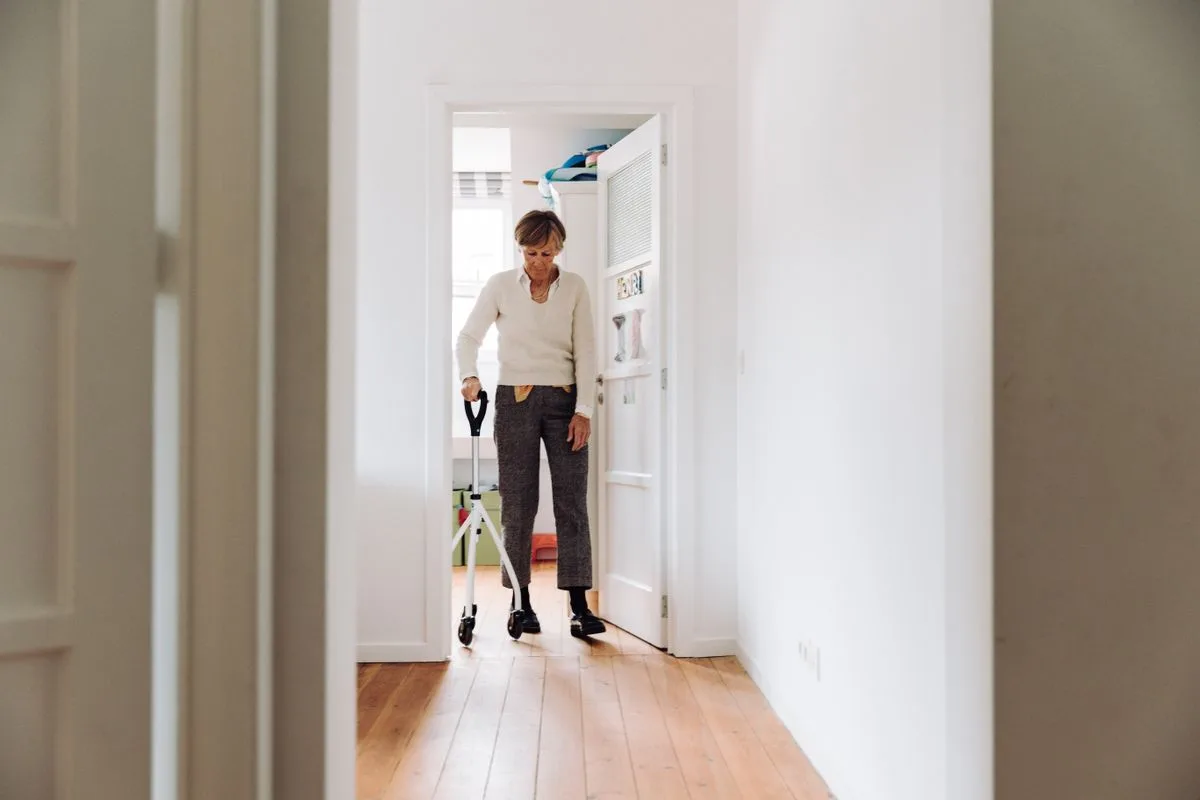
Good lighting is one of the simplest, highest-impact changes available. Add night lights along the path from bedroom to bathroom, make sure light switches are easy to reach from the bed and the room entrance, and address any dim or flickering lights promptly rather than working around them.
Footwear matters more than many people expect. Well-fitted shoes with non-slip soles, worn consistently around the house rather than loose slippers or walking in socks on hard floors, meaningfully reduce slip risk.
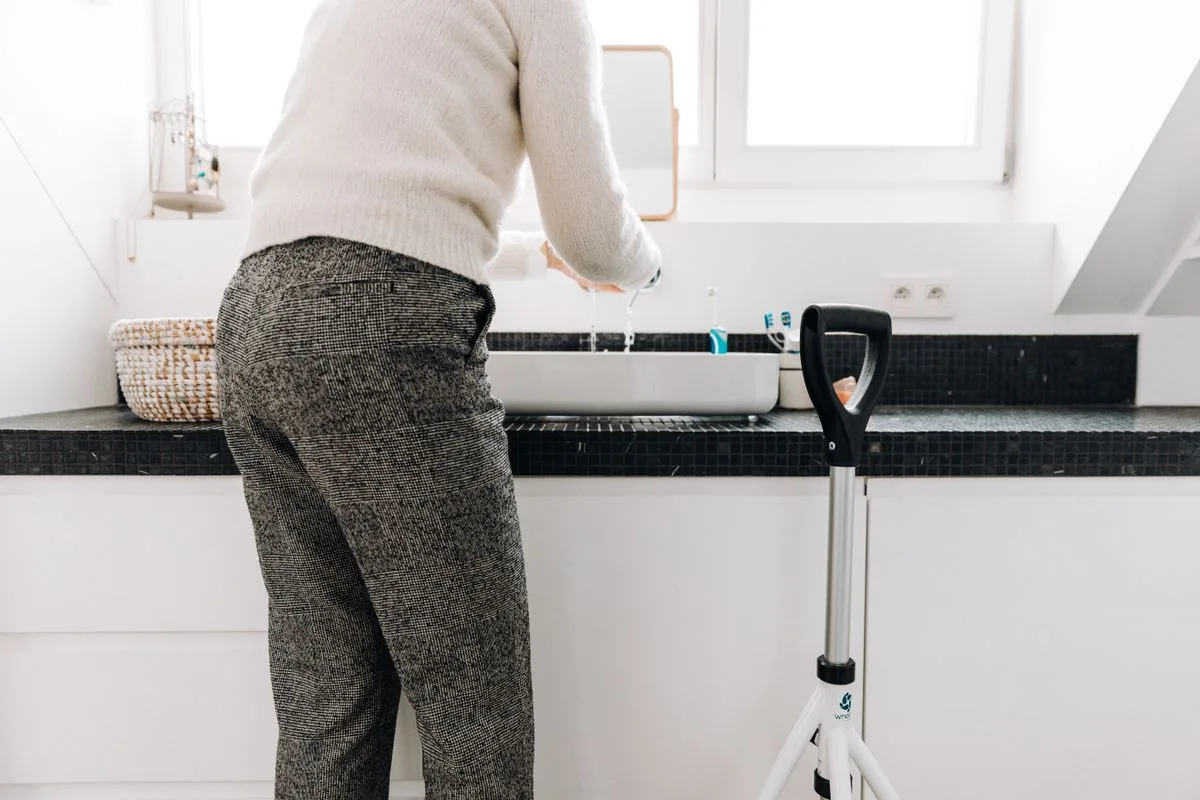
Hard, often wet surfaces and the physical demands of getting in and out of a tub or shower make the bathroom the single highest-risk room in most homes. If you can only make changes in one room first, make it this one.
Strength and balance still matter most
Home modifications reduce hazards, but they work best alongside the strength and balance that let you recover from a stumble before it becomes a fall. Leg strength, particularly in the muscles that straighten the hip and knee, and balance control both decline gradually with inactivity, and both respond well to regular, simple exercise, even starting later in life.
Build the strength side of fall prevention
Sit-to-stand and squats are two of the most evidence-backed exercises for the leg strength that prevents falls.
Medications and vision checks
Certain medications, including some for blood pressure, sleep and anxiety, can cause dizziness or affect balance, particularly in combination or when a dose is adjusted. A regular medication review with a doctor or pharmacist, especially after any new prescription, is a worthwhile part of fall prevention. Vision changes are easy to overlook too; an annual eye check, and wearing the correct, up-to-date prescription, meaningfully supports safer movement around the home.
What to do after a fall, even a minor one
A fall, even one with no apparent injury, is worth mentioning to a doctor. A previous fall is one of the strongest predictors of a future one, and it is often a signal worth investigating rather than dismissing as a one-off. If you or someone you care for falls, check for pain or injury before standing, move slowly, and if standing feels unsafe or there is significant pain, it is reasonable to call for help rather than push through.
Fall prevention: frequently asked questions
The bathroom, because of hard, often wet surfaces and the physical demands of getting in and out of a tub or shower. Grab bars and a non-slip mat are a strong starting point there.
Grab bars need to be anchored into wall studs or with appropriate wall anchors rated for body weight, not just stuck to tile, so professional installation or at least careful DIY with the right hardware is worth it.
Not necessarily, but loose rugs with curling edges or no non-slip backing are a common and easily fixable hazard. Securing them with non-slip tape or backing, or removing them from high-traffic paths, reduces the risk.
An annual review is a reasonable baseline, with an additional check whenever a new medication is started or a dose changes, since interactions and side effects can shift fall risk.
Yes. A fall without injury is still the single strongest predictor of a future fall, and it is a useful opportunity to review home hazards, medications and strength together with a doctor.
Yes. Leg strength and balance training are both associated with meaningfully reduced fall risk, independent of home modifications, which is why the two approaches work best together.
Sources and further reading
We checked this guidance against these sources:
- CDC: Older Adult Fall Prevention
- NHS: falls prevention
- Sherrington C, et al. Exercise for preventing falls in older people living in the community. Cochrane Database Syst Rev. 2019.
- National Institute on Aging: falls and fractures in older adults
Want more on staying steady and independent? Visit the Healthy Aging hub, see our Healthy Aging Guide, or learn how to stay independent at home.